Even if the word isn’t recorded, you may recognize a Drensey when you see one on screen. As described in this lively account of Bruce Dern’s life and acting career, his “additional dialogue or behavior is not found in the written dialogue.” It’s a glare or a smirk or a line like the one that Quentin Tarantino, one of the most frequent speakers in this documentary, refers to. In Tarantino once upon a time in hollywood, When Brad Pitt woke up Dern, as the owner of Nap Ranch, and told the barely awake man that his name was Cliff Booth, Dern’s confusing and hilarious response: “John Wilkes Booth?” Derenci was an improviser.
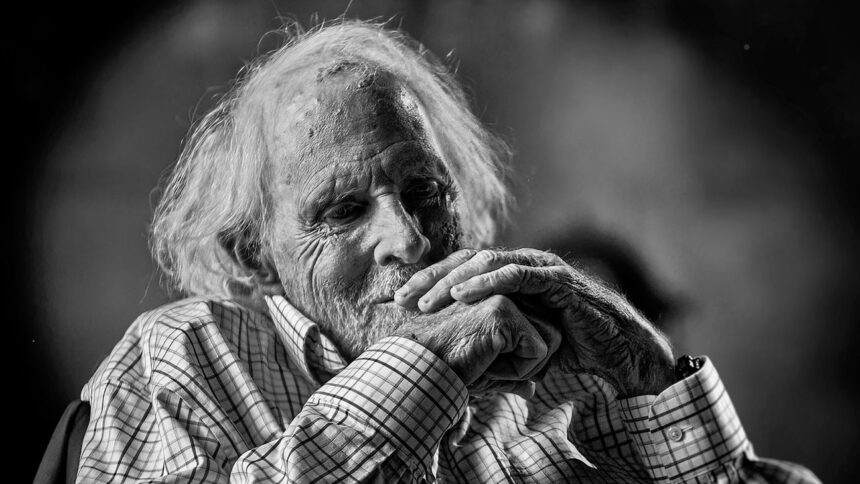
Director Mike Mendes, best known for his horror films including… Big ass spider!the film was based on recent interviews with Dern conducted over several years. There are also interviews with his daughter, Laura Dern, and colleagues including Alexander Payne and Walton Goggins. But mostly the camera is close to his face as we listen to an old man with wiry gray hair and a distinctive raspy voice—Dern is now 89—as he tells stories. Fortunately, he’s a great storyteller, as frank as you might expect, but much smarter and warmer. In the manner of such documentaries, the film’s tone is grainy, but Dern’s no-nonsense attitude cuts through most of the dark material.
Dearness
Bottom line Unexciting style, but great actor leads.
place: Cannes Film Festival (Cannes Classics)
ejaculate: Bruce Dern, Laura Dern, Quentin Tarantino, Alexander Payne, Billy Bob Thornton, Walton Goggins, Walter Hill, Patty Jenkins, Will Forte, Joe Dante, Fred Spector
exit: Mike Mendez
author: Benjamin Epstein
1 hour and 51 minutes
Given his daring on-screen image, the most surprising aspect of Dern’s real life is his background illustrated with family photos. During his privileged childhood in Chicago, the family had a maid and a chauffeur. His grandfather was governor of Utah and Secretary of War under Roosevelt. Adlai Stevenson was his father’s law partner before he ran for president, and the young Bruce called him “Uncle.”
As Dern says, he had none of the luxury of his family, and they moved away when he decided to become an actor. He went to New York and the Actors Studio, where Elia Kazan made him do scenes without speaking for a year. Kazan, whom Dern still calls “Mr. Kazan” here, told him that his talent was in “behavior.”
Although the film doesn’t explicitly connect the two, this comment goes a long way toward explaining the Deerense family. His most enduring performances, which appear in inevitable but wisely chosen passages, are full of behavior that transcends dialogue and gives us acting masterclasses that range from the damaged veteran to the damaged… Go home (1978) of a determined older man on a road trip in… nebraska (2013).
His short and early career ended when he left for Hollywood. “The reason I never went back to theater is because of what we do,” Dern says here” – and pointed sternly to the camera recording him – ” Him Forever“His violent tone is radiant throughout the film, and his deep affection for the film is evident.
His comments about his personal life, at least those mentioned by Mendez, were brief but direct. He tells a colorful but ambiguous story about his first marriage as a young man, which seems more like a struggle with two women who he says were girls known to other women and who robbed him of all his money. His famous marriage to actress Diane Ladd was a sad story. Their 18-month-old daughter drowned in their swimming pool while he and the boys were outside and the maid was looking after the child. He and Ladd had been together too long, he says, “because we shared the tragedy,” but those extra years gave them to Laura. Bruce says that early in Laura’s acting career, he advised her not to allow herself to type even if it meant missing work. It’s clearly a piece of advice that, with a host of forgettable villainous roles, he hasn’t always carried himself.
The film’s editing is smooth and fast paced. But Mendes is smart about letting Dern do most of the talking, because the interviewees don’t add much beyond the expected praise, and the style often strains to be more than pedestrian. One of Mendes’ formal flourishes is the addition of animation, including puppets, behind Dern’s voice here and there. There is a Jack Nicholson puppet leading up to the clip the King of Marvin Gardens (1977) and one of Hitchcock’s films, which directed Dern’s film Family plot (1976). These work well enough as great feedback and a way to keep the film from being visually static.
Less successful, the live entertainment in which Dern plays himself on a hospital gurney after a heart attack is offbeat and creepy. The film largely highlights the fact that Dern, a lifelong runner, has run hundreds of marathons. The frequent references make it an outdated metaphor for his professional ability.
You can quibble with this or that detail. Dern won the Best Actor award at the Cannes Film Festival nebraska “Actor’s Palme d’Or,” which is not a thing. But why would we choose such a gentle film, which feels like spending time listening to stories told by a familiar and dear friend?