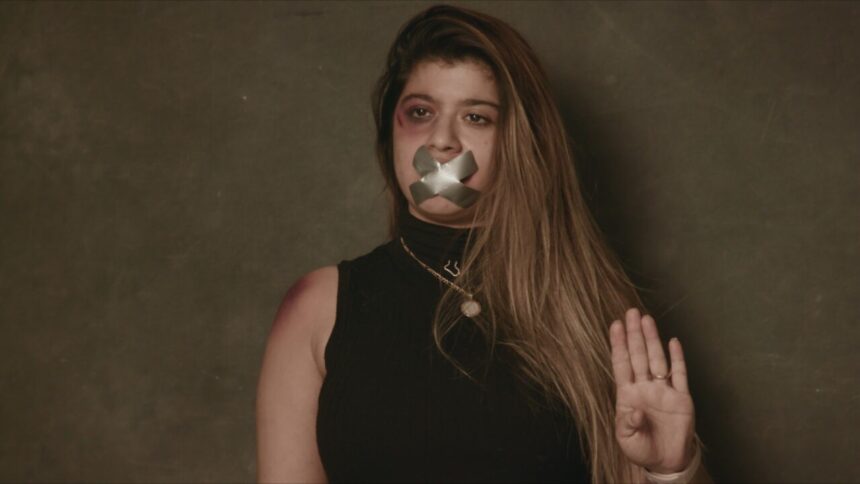
Tamara Amer is waging a “fierce battle against negative social control, the culture of silence, and the oppression of women in Iraq, where she grew up.” You should watch the new documentary Burning voiceHowever, for a more detailed picture the press notes for the film indicate. After all, since founding the online Iraqi women’s rights platform in 2011, Amer has used her voice and dual position as an insider and insider in Baghdad to help educate Iraqi women about their rights. Now, her work and struggles are coming to the big screen.
Burning voicedirected by Anna Brun Norager in her feature film debut, has its world premiere on Friday 13 March in the Human Rights Competition at the 23rd Copenhagen International Documentary Film Festival.
“She inspired Iraqi women to dare to break the silence and report abuses,” a summary of Amer said. “But speaking out about such issues is never safe for women in Iraq. Tamara herself has lived with serious harassment and threats for more than a decade. Not only from people trying to sabotage her work for women’s liberation, but also from her violent ex-husband, from whom she fled with their son. He now refuses to grant her a divorce or leave her alone. But instead of collapsing, Tamara is channeling all the resistance she faces into her activism and tremendous care for her family and sisters across the country. The World Who They also fight for life and freedom.
Brun Norager and Amer, in email interviews with THRShared insights into the experience of making Burning voicethe plight of women’s rights in Iraq, as well as in other parts of the world, and the inspiration they hope the film will provide audiences.
Anna, how did you find out about Tamara and her work? What inspired you to make this film?
Brun Norager I met Tamara through research I did for a short documentary[#[#Follow me]in 2019 about this online network of Iraqi women who use social media to challenge norms and traditions in their country. I continued to work on this topic, and Tamara and I found each other in a common goal around women’s rights.
Initially, she began documenting her work as an activist and volunteer. I photographed many different cases, but at some point, the project naturally evolved into Tamara’s story. I find the relentless energy of the fight for justice so fascinating and inspiring, and I think that’s what ultimately inspired me to make this film.

Tamara, how did you get to make a film about you and share your struggle and vulnerability for the world to see?
Amer Opening my private life to the world was never easy, but I saw this film as an essential extension of my mission. My goal was to document the unique and invisible reality of being a feminist from a distance. Over my 15 years of volunteering, I’ve proven that distance has no limits to impact. Through our digital platform in Denmark, I have led campaigns addressing deep social issues such as harassment, gender-based violence, school violence, and the growing threat of digital blackmail.
My happiness lies in seeing a woman overcome these difficulties. If this film offers one person a road map to safety, then every moment of vulnerability captured was worth it.
How did you approach this story as a director? I feel like it balances out the specificity and focus on it It focuses on Tamara and Iraq, but it also has global repercussions for women around the world.
Brun Norager The Iraqi legal system that protects men when they kill their wives, sisters, or daughters represents a structural problem. Especially since the murders of women are increasing all over the world. It is not a matter of country or culture. It’s a question of being a woman – something half the world’s population can relate to in different ways, depending on how much rights and protections they were born with. But to narrow this theme into a film, you need to be precise in order to view the personal story in a larger context.

I like the title of the movie. How did you find that?
Brun Norager It was a journey to find a title, and for a long time, we had a lot of different ideas and versions written on the wall in the newsroom. One of the things I’ve heard Tamara say over and over again is that she won’t shut up. “I will not shut up.” As a person, she has this strong energy and courage that seems like fire to me. So, in the end, the word “burn” came along with the word “sound” – and suddenly it seemed right.
Tamara, what is the situation of your NGO in Iraq now?
Amer Currently, my NGO, Support Organization, is inactive. After facing continued threats and attempts to compromise the safety of our volunteers in Iraq, we made the heartbreaking decision to cease operations last year. My dream was to build safe shelters where none existed, but the environment became too dangerous. The assassination of Yanar Muhammad, founder of the Women’s Freedom Organization in Iraq, just last week, confirms that it is no longer reasonable or safe to maintain a physical presence there. We cannot protect others if we cannot protect the defenders themselves
What are your hopes for the impact the film can have on women’s rights in Iraq and beyond, given the global backlash against women’s rights?
Brun Norager Since Tamara and I started filming in Iraq, the risk of being a feminist has increased. Recently, Yanar Muhammad, a woman Tamara had also known and cooperated with, was killed on her home street. This is just one example of how extreme conservative forces are trying to suppress the struggle for women’s rights. I truly hope that this film – regardless of those who try to silence our voices – will reach its Iraqi audience, inspire young women and push for a legal system that actually protects women.

Amer One of the film’s goals is to highlight the extreme dangers faced by women’s rights advocates today. I hope that by sharing my story and the reality of working from Denmark, we can spark a global conversation about the urgent need for protection and real shelters in Iraq.
I hope this film moves people from passive sympathy to active support for those of us fighting on the front lines, both remotely and on the ground.
I, Will we see more films from you in the future? Do you have any new projects in the works?
Brun Norager This movie is definitely just the beginning. I know I have a lot of films to do. But for now, I’m focused on Tamara and getting our film out into the world. And then I’m sure I’ll know later what my next project is.