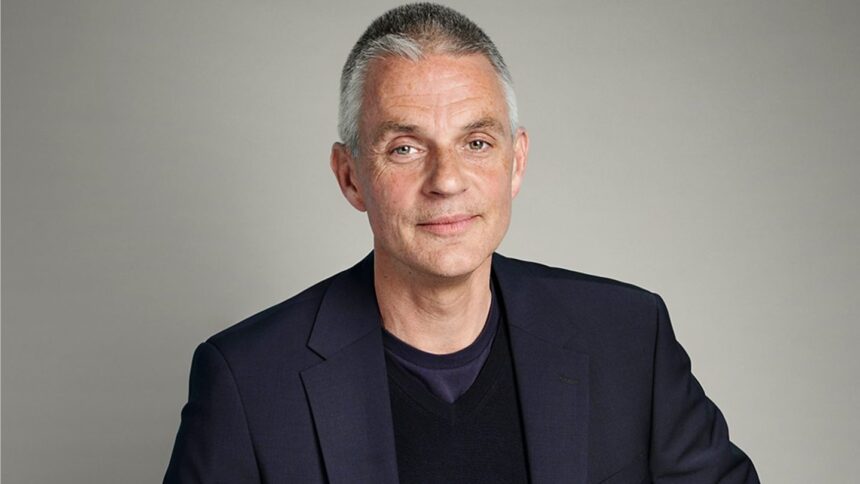
The BBC needs confident and decisive steps, and a willingness to take risks, amid a “total crisis of confidence” faced by major organisations, including the UK’s public broadcaster, in the age of social media and fake news and amid a “brutal” financial situation, outgoing director-general Tim Davie said during a keynote speech at a Royal Television Society (RTS) Q&A in London on Thursday.
In what was seen as a farewell public appearance before his departure on April 2 and what sounded like a call to action, he spoke about the future of the BBC in central London amid challenges such as expanding restrictions on journalism around the world, artificial intelligence, as well as misinformation and disinformation. In a wide-ranging speech, he even addressed massive media mergers, such as Warner Bros.’ recent showdown. Discovery.
“It’s not about disavowing the past,” Davie highlighted the future of the BBC. However, “we need to develop a little swagger,” he offered in a call to bring a touch of pride and confidence to the American way. “The game’s not over yet… We can shape things.”
His view on what the BBC needs is to “reinvent to avoid decline”. “Today the BBC is strong, but it is on the edge of the abyss,” Davie claimed, which requires risk-taking and decisive action.
“Despite the hurricanes, we have succeeded,” he said, explaining that we “remain relevant” and pointed to the reach and trust among audiences in the UK and beyond, the wide range of talent the BBC works with and successful content such as bluish and Night manager.
He also admitted, “Of course we made mistakes, and that didn’t help us.” He stressed that his team had to make “difficult choices to deal with the harsh financial situation,” including reducing staff and services. In this context, Davy called for more long-term planning rather than “short-term deal-making.”
He even shared some news as it was revealed via a press release, a new three-year deal struck by the BBC Traitors and Celebrity traitors. The agreement will keep the hit show on the BBC until at least 2030.
Davie’s speech follows the BBC recently beginning negotiations with the UK government, led by Labor leader Keir Starmer, on a new royal charter that will govern the broadcaster for the next decade, by publishing a consultation document for review. Among other things, it suggested the possibility of opening up the BBC’s iPlayer streaming platform to other public broadcasters in the UK, such as ITV’s ITVX, and Paramount’s Channel 4 and Channel 5 broadcasters. The paper also included a similar proposal for a BBC Sounds service that hosts audio files from third parties.
The BBC document also stated that if more people were forced to pay the annual license fee paid by UK taxpayers, the fee would likely be reduced for the first time in history. “A reformed model that requires more families to contribute at a lower cost could enhance equity and sustainability while maintaining universal access to reliable, high-quality services,” the BBC said.
Davie suggested on Thursday that the upcoming charter should be viewed as an open institution rather than a ten-year institution for the BBC. He called for a “radical overhaul” of the BBC’s funding structure, highlighting that it was still designed for a different era.
He talked about consolidating the industry. The BBC chief said: “In an era where Netflix and Paramount feel the need to scale, we must act urgently to secure scale.” “We’re in a game where we need more scale.” Davey didn’t go into detail about how to reach this scale but mentioned partnerships with major industry players and technology, which have been a focus for him and his team, including a collaboration with Disney.
Davy spoke very freely and frankly before he went out. Late last year, Davie and Deborah Turness, the chief executive of BBC News, said they would step down after controversy over an edited speech by US President Donald Trump. The BBC was criticized for editing a speech Trump gave on January 6, 2021, before the attack on the Capitol building in Washington. The letter was edited for the BBC panorama Critics noted that the documentary was misleading and cut out portions of Trump’s statements where he asked his supporters to demonstrate peacefully.
In an appearance on Thursday on RTS, Davie also said running the BBC meant, among other things, “stimulating civic and commercial returns”. In this context, he said that ignoring short-form content would be “fatal,” saying, “Accessibility is different from ignoring.” The comments are part of a debate about whether, and to what extent, the BBC, as a public broadcaster, should look to reach younger and other audiences in newer, shorter forms of media.
Few can imagine the pressures and pleasures involved in running the BBC. Davey shared this about the job he’s leaving: “I’m going to miss it.” He described it sarcastically: “It’s not a breeze. Boy, it’s been days! A rollercoaster.”
After his speech, Davey was interviewed by Murder Club Thursday Author Richard Osman, who jokingly referred to scandals such as the recent BAFTA Tourette’s controversy and the downfall of disgraced BBC presenter Hugh Edwards. He asked Davy about the biggest crisis he faced during his tenure as head of the BBC. Davey’s response sparked laughter: “There were a lot.”