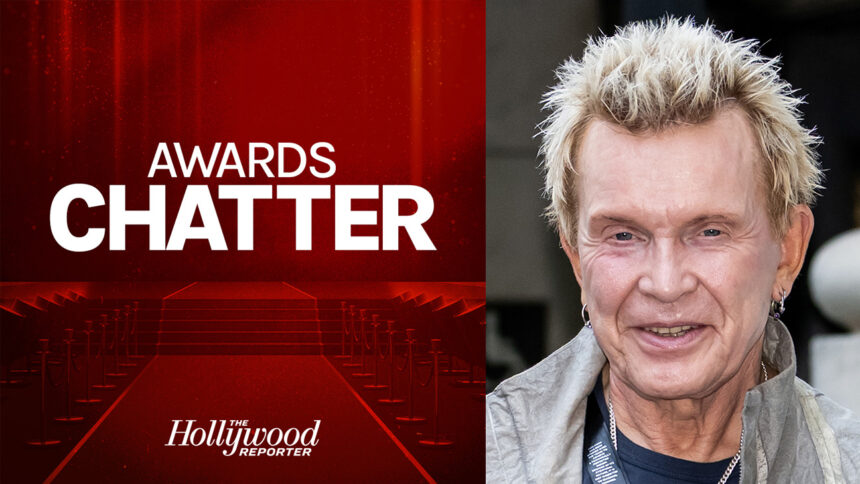
It’s hard to believe that Billy Idol, the English singer-songwriter turned punk-rocker who was a staple of MTV’s “Second British Invasion” in the 1980s — whose hits include “Dancing With Myself,” “White Wedding,” “Cradle of Love,” “Eyes Without a Face” and a cover of the chart-topping “Money, Money” — is now 70 and a grandfather. But rest assured: his trademark sarcasm, spiky blonde hair and seductive voice are still there. His career, now in its 50th year, is still going strong.
In fact, since the darkest days of the pandemic, when “Dancing with Myself” saw a resurgence in popularity (for obvious reasons), he has released two EPs (2021). roadside And 2022 The cage) and a studio album (his first album in 11 years, 2025 Dream about it); He toured North America with his old friend Joan Jett; She collaborated with avid fan Miley Cyrus on “Night Crawling,” a song from her 2020 album. Plastic hearts. He was also honored with a star on the Hollywood Walk of Fame in 2023 and has been nominated for induction into the Rock and Roll Hall of Fame in 2025 and 2026.
Late last year, Idol had a big “first”: it was shortlisted for the Academy Award for Best Original Song. The honor came for “Dying to Live,” a meditative song he wrote with former Oscar nominee J. Ralph, which plays in the closing montage of Jonas Åkerlund’s documentary about his checkered life. Billy Idol must die. This film had its world premiere at the Tribeca Film Festival in June 2025, to great acclaim and opened in select theaters at the end of February 2026.
During a recent conversation at Idol’s home high in the Hollywood Hills, on the expansive estate he’s owned since moving from New York to Los Angeles in 1988, Idol talked about his life and career, as well as the doc, the song, and the feeling of being on the Oscar shortlist. You can listen to the full conversation above or on any major podcast app, or you can read an excerpt, slightly edited for clarity and brevity, below.
About the reason for his decision to cooperate with the documentary film starting in 2019..
“When you get into your 60s and 70s, you have a perspective that you didn’t have before, and you can see the landscape of your life, really, and you’re in a position to look at it and measure it and be able to talk about that in a serious way, which maybe you couldn’t do earlier in your life because you weren’t far enough along the way. And I think that’s what happened. It made sense to do a documentary. And also we started thinking about the fact that you want to catch people while they’re still here. My father died in 2014, then my mom died in 2020, so we only I got it in the documentary. There were things like that that started happening that made you realize, ‘If we really want to capture people while they’re still here, this is the moment to make a documentary,’ and a serious, serious film.”
On the inspiration behind the song “Dying to Live”…
“We created a montage piece at the end of the documentary, before the credits, almost in a short form that shows you what you’ve just seen. What we didn’t have was music to go with it. In the rest of the documentary, you’ve seen my life, but now we wanted you to.” feel What I went through, we came up with “Death for Life”. When I met Josh Ralph, it made sense to do it with a string quartet, which I had never done before; I had some orchestral instruments Underground Kings and Queenswhich is an album I made, but we didn’t actually do anything where I was singing to a string quartet. I mean, I grew up with the Beatles and stuff like that, so I loved “Eleanor Rigby,” and some of George Martin’s arrangements of “I Am The Walrus” are pretty cool. Tony Visconti also did some arrangements of some of Marc Bolan’s songs in the documentary He was born to BougieThey did three songs, and I think one of them was “Children of the Revolution,” where Mark was singing his songs to a string quartet — and I loved that. This got me thinking, “What if we tried something I’ve never tried before?” Which was just me singing with a string quartet – it’s actually called a double quartet. ‘What if I sing that?’ Perhaps this will highlight the lyrics, highlight the emotional content of this montage, and help you feel “What I went through.”
To the words of the song “Dying for Life” …
“It’s the story of my musical life, really – what I decided to do with my life from punk rock onwards, when I had the opportunity to live my dream of playing music and having an artistic life. So, now you’ll feel the emotions of someone who lived their dream and had an artistic life, and it’s still going. It’s not ending. It’s continuing. It’s growing.”
On “Dying to Live” being shortlisted for the Academy Award for Best Original Song…
“It’s unbelievable. I mean, you can’t imagine things like that, especially if you go back and think about my youth, even before punk — could I have ever imagined what would happen, that one day you’d even be on a shortlist with all these other great people doing amazing work? I mean, it’s pretty incredible. And that in itself is an award.”