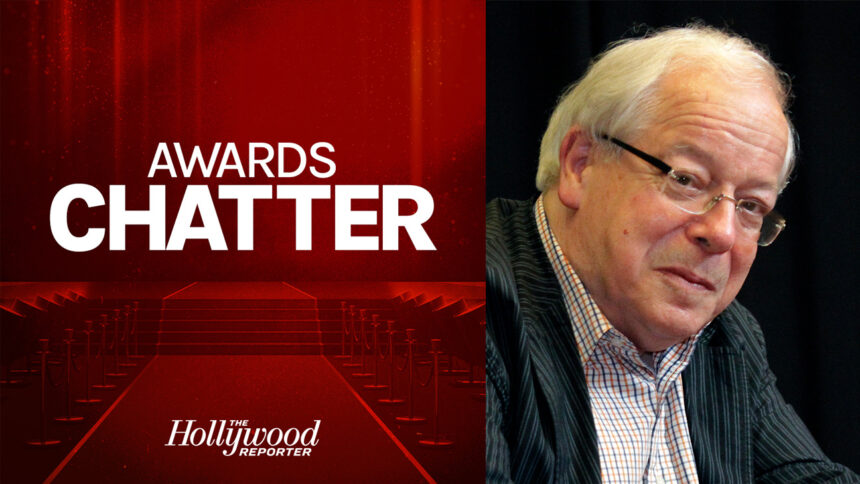
David Thompson He is a revered British film writer – critic, historian and author of more than 40 books – and has described it Los Angeles Times As “undoubtedly the greatest living film historian”; by New York Times As “among the most ardent cinephiles of the last half-century… sometimes his books offer greater pleasure than the multiplex”; And by Atlantic As the writer of “the most interesting and provocative prose about film since Pauline Kael.”
Thompson is best known for his giant volume, first published in 1975 under the title Biographical Dictionary of CinemaIt has been updated and reissued five times since then, most recently in 2014 The New Biographical Dictionary of Film. In this book, he profiles a wide range of figures throughout the history of cinema—from household names like Cary Grant and Julia Roberts to behind-the-scenes masters like graphic artist Saul Bass and film editor and sound designer Walter Murch—with not only facts but also opinions, often contradictory and always thought-provoking.
the Biography Dictionary He was selected in a 2023 survey of film industry heavyweights he conducted THRwas named one of the 100 greatest movie books of all time, and in a 2010 poll of critics and writers coordinated by Sight and sound As the best movie book ever. The late film critic Roger Ebert once declared that it “does the best job in the fewest words of capturing the essence of hundreds of its subjects,” and award-winning author Jeff Dyer called it “not only an indispensable book on cinema, but one of the most ambitious and absurd literary achievements of our time.”
thompson’s latest books, A Sudden Flash of Light: A Revisionist History of FilmIt was published by Simon & Schuster on Tuesday and became an instant bestseller on Amazon. In this article, the former Dartmouth College professor dissects the evolution of the medium and provocatively argues that the glorification of anti-heroes on screens big and small over the past century — from Citizen KaneCharles Foster Kane to the Corleone family godfather Movies of Peak TV’s most memorable characters, e.g The sopranoTony Soprano and Very badWalter White – Helped pave the way for Donald Trump’s presidency and other assorted global problems.
In this episode of Hollywood Reporter‘s Awards talks podcast, the 85-year-old spoke via Zoom from his home in San Francisco, reflecting on how a humiliating childhood stutter sparked a fascination with language and a desire to express his opinions; How he ended up being asked to write a book for the first time, which it became in 1967 Movie manand how the first edition of Biography Dictionary It crystallized after only a few years; Why is he proudest, of all his books, of the trilogy he wrote that mixed fact and fiction? Why have his books in recent years tended to focus on the impact of films on those who watch them? Plus much more.
You can listen to the full conversation via the audio player at the top of this post or any major podcast app; Or you can read memorable excerpts below, some of which have been lightly edited for clarity and/or brevity.
How a humiliating childhood stutter sparked a fascination with language and a desire to speak his mind…
“Stuttering was the most annoying thing about my childhood… I was barely able to say a word, and I felt very embarrassed by it, and kind of ashamed… It made me very angry because there were things I wanted to say… I think that sparked a love of language and a desire to speak. And even though I once dreamed of becoming an actor, my stuttering was bad enough that I took up speech. I think it was a tremendous kind of energy that drove me to that.” me towards writing.”
When he was first asked to write a book, it was in 1967 Movie man…
“I was working in publishing. I had a friend at another publishing house who talked to me and knew how interested I was in film. He said, ‘Can you take a look at a manuscript we just submitted for the film and give us a report on it?’ You He could write a book about the movie. I had never dreamed of writing a book before then.”
On the backstory of Biography Dictionary…
“The idea initially was to make an encyclopedia, and there would be entries about artistic terms and national cinemas and notable people. It was thought to be a big book in terms of length, so I went and started writing it – and I found that I was kind of getting carried away with writing biographical entries for people, and I wasn’t doing the other parts of the book. I showed what I had to the publisher and said, ‘I don’t know if you’d approve of what I was doing.’ Biographical sketches of directors, actors, actresses, producers, writers and a few others… Over the years and six editions that the book has gone through now, it has become known as a provocative yet informative and stimulating book and is certainly the best-selling book I have ever read.
About why there are no other versions of Biography Dictionary…
“The book, in its most recent form, may have been twice as long as the first edition. It has grown enormously… It is now over a thousand pages long, and to keep going at that rate, it would be difficult to bind it and hold it in the hand. In other words, there would have to be two volumes. And I think this worried the publishers, and for good reason… The book was becoming somewhat obsolete technologically, as a form. And Knopf, the book’s publisher, here. [in the United States]they got to a point where they said, “We’re not sure it’s economically feasible to keep making this book bigger and bigger and bigger, when most of the people who might be potential buyers of the book already have one edition, or maybe two or even three, because they’ve been keeping up with it.” So they came to the decision, which kind of hurt me at the time, that they weren’t going to do a seventh edition. This meant that I was able to stop taking notes the way I used to. And I see now, which they probably saw and didn’t want to tell me, that I’m a little old for the labour, which was rather intense. So I was freed from it in a way. “There will never be another edition.”
In the Metafiction Trilogy – 1985 Suspects1990s Silver light And 2023 Connecticut – and he is more proud of it than of any of his other books…
“A publisher came to me after dictionary They came up and said they liked the look of the biographical sketches… and said, “How about a dictionary of characters from the movies?” I liked the idea and thought about it and said, “I think this could be great, but I don’t think you can mix genres.” I think the entire book should have characters of one type or another. Film noir was the obvious film to start with. So I proposed a book that would be, say, a hundred characters from film noir, and I would write a biographical outline that would include what we know about the characters from the films they’re in, but I would also go back to before that and then after that so you could tell the character’s story as if the film was just one part of that life, and that turned into Suspects. It’s called metafiction now, but as I was doing it it seemed to me that it was fiction, but a kind of cinematic commentary that got at the bottom of what films were most about. That was a turning point for me because I discovered by doing that what genre it was I: The absolute confusion between fact and fiction. Over the years, I have written two other books, Silver lightwhich is the western one, and Connecticuta screwball comedy. I feel like this is the trilogy of books I’d give away for the best I’ve ever done and probably will ever do.
In his controversial 2006 book Nicole Kidman…
“I was trying to learn about who she was and what she did, but also about M You don’t mean him as an iconic figure. This book was written some time ago, when she was still young. She’s transitioned into a career in middle age, and she’s clearly going to be an old lady, and she’s interesting enough and smart enough to make those periods as interesting as they were when she was a very young, very interesting, exciting woman. I’m not saying it’s not exciting yet. But I get a lot of information criticizing her, teasing her, based on the idea that I like her a lot, but I don’t think I like her.
On how screen heroes helped pave the way for Donald Trump’s presidency…
“There is something scary The godfather. Let’s just say, it’s one of the best films ever made. It did very well at the box office. It has won awards, well deserved. But it is a shameful fantasy. The men who watch it – and it’s really a movie for young men – want to be in that gang. They find security and companionship so attractive and attractive that they dream of becoming Corleones. I think this is a very dangerous situation. This kind of thinking in particular made me realize that we have a president [Trump] Which, in my opinion, acts as if it were in a movie, which is a copy of it The godfather — I mean, he’s the Emperor as a gangster. I don’t think this process can be simply written off by movie buffs. “I think that’s the nature of the medium.”
On his current feelings about film versus TV…
“We are fooling ourselves if we do not understand that Ozark or Babylon Berlin Or any of those long chains films. It’s like old soap operas, where you can watch them for 40, 50, 60 hours. We’ve found a way to make movies that last forever, that audiences love… You couldn’t think of making a list of the greatest American films of the last 30 years without including them The soprano, Very bad, Ozark And many others. It’s great business. It’s beautifully crafted in the way it’s shot, acted and written – very high quality work – and it’s about TRUE Country in a way that movies don’t these days. There came a time, for me, when it became increasingly clear that what was being shown on television was in fact more compelling than what was being shown on cinema screens, and that it would have been silly not to take that into consideration and acknowledge it. So I spent more and more time watching and writing about these things. I think it’s fundamental to the modern experience.
On how he managed to be such a prolific writer…
“I don’t sleep much, which is a problem, but it gives me more time. Also, for decades, I’ve had problems with depression – manic depression – and nothing treats it better than writing. Writing, for me, is not just writing a sentence or a book, it’s creating myself, my inner self. So I do it to stay well and stay alive, really. There’s something deeply organic about that for me.” He owns To write. In fact, if I didn’t write for two days in a row, I wouldn’t be very emotional, and I would probably become very depressed.”
On the topic of the book he is writing now…
“Mickey Mouse.”