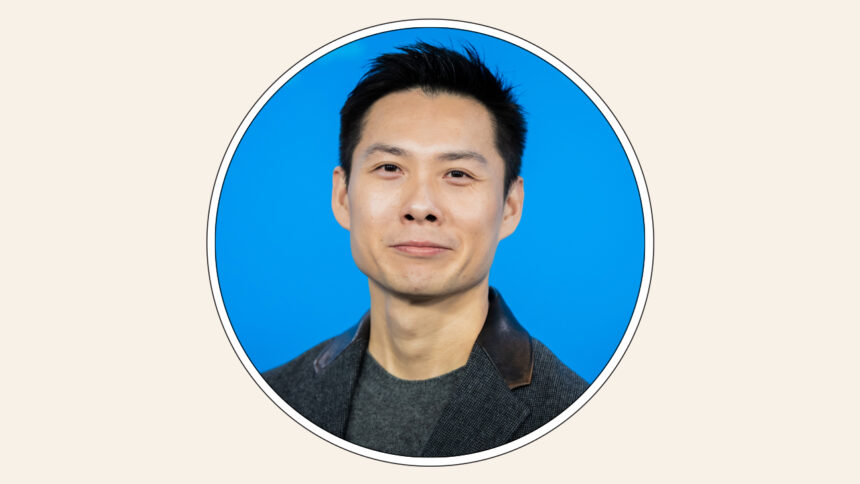
It’s been an all-time high for Singaporean director Anthony Chen so far in 2026. He’s been on the road with his latest production, We are all strangerswhich bowed in competition in Berlin in February before opening the Hong Kong International Film Festival and the Italian Far East Film Festival in Udine in April.
The film, a multi-layered family drama, concludes what Chen calls his “growth” trilogy, following its Camera d’Or-winning debut at Cannes. Elo elo (2013) and 2019 Wet season In delving into the rise and fall of relationships as well as life in his homeland.
But now comes the Shanghai International Film Festival, and with it time to recharge — and perhaps even reflect — as Chen serves as head of the Chinese event’s New Asian Talent jury. Elo elo -It was- that launched his career and elevated him to the awareness of the global film industry through the acclaim and awards that followed.
So Chen knows the good that festivals can do. Along with directors Camila Andini (Indonesia), Liu Jiayin (China), and Ferkht Sharipov (Kazakhstan), as well as Taiwanese actress Wen Qi, he will have 12 films from across the region – all from first- or second-time filmmakers – to evaluate.
As Chen explained on the eve of the festival, the new Asian talent section wears its heritage with pride, with the likes of Chinese hitmaker Ning Hao (Mongolian ping pongAnd Japanese anime author Makoto Shinkai (The promised place in our early days) was discovered by its competitor. He knows there may be tough choices ahead of him – but with plenty of coffee in hand, he’s ready to take on the challenge.
Can you share your first impressions of this year’s new Asian Got Talent lineup?
There are already a few titles and directors that have caught my attention, so I’m excited. I can tell there will be some real gems to discover.
What process do you follow for jury duty? Do you do research before your presentations, or do you prefer to know as little as possible?
Despite what I just said about my excitement for some titles, I actually like to watch the movie quietly. I never read reviews or plot summaries. I like to be surprised. And so I will do it in Shanghai, just as I have always done. However, I take the jury seriously. I’m not a big coffee drinker, but I drink it a lot when I’m on jury duty, just so I don’t fall asleep. For me personally, that’s basic respect for a director and their work, when you’re judging them.
In what ways have festival and award screenings of your early films influenced your career?
I’ve been very lucky. my first movie, Elo elohas won more than 40 awards around the world, including the Camera d’Or at Cannes and several Golden Horse Awards in Taiwan. It launched my career and opened a lot of doors and opportunities. That’s why I really believe in the value of film festivals, they are important launching pads for young filmmakers.
What do you look for in the films you watch, and has this evolved over time?
I like to be moved on a human level, not in an emotional, tear-jerking way, but in a visceral way. These films usually make you think and ponder questions about your humanity. As a director, you can’t help but be drawn to the masterful design and cinematic language. But the best are always those who understand “less is more.”
What role do you see the Shanghai Festival playing in Chinese and Asian cinema?
The New Asian Talent section, in particular, is a shining example of Shanghai’s role in discovering young Asian filmmakers. If you look at the list of filmmakers who have come across this section, it is very illuminating. The late Pema Tseden – whom I miss very much and admire greatly – Ning Hao, Makoto Shinkai, and Tom Lin are just some of the great talents released in Shanghai.
Is there any news about your work with Chinese industry? Will you find time to explore partnerships during the festival and market?
I have a 12-part series that I developed at my company, Giraffe Pictures. It’s my first time delving into the world of episodes, and I’m excited to make this show. We are scheduled to start production in the next few months. It combines food and family – themes that are universal, but also what I personally value most. This is set up as a co-production between China and Singapore and I am a partner [producer] Meng Xie again on this, which worked for me Break the ice.
What about the city itself, is there a place you always come back to when you visit?
I love Shanghai. It’s one of my favorite cities in the world, and it’s very different from any other Chinese city because of its heritage that combines East and West. I love walking the tree-lined streets of the French Concession, and I never get bored of the old-world charm. There are moments when you might forget and think you are in Europe. I love the cafes, the galleries, the fashion stores, everything. That’s why it didn’t take me long to say yes to being the head of the judging panel for the New Asian Talent section.