

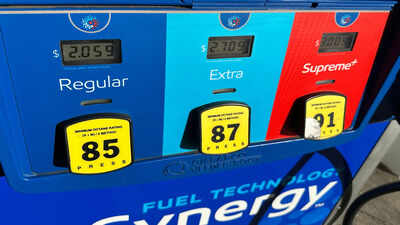
As tensions continue to escalate in the Middle East, the effects are no longer limited to the conflict zone, but are starting to appear in daily routines across economies. In the United States, high fuel costs resulting from the war against Iran are now seeping into daily life, quietly reshaping how businesses operate and how much consumers pay.
What started as a geopolitical flashpoint is steadily turning into an economic pressure point, as transportation costs rise and companies adjust their prices to keep up.
He watches
‘Ship caught fire’: IRGC Navy targets ‘Israel-linked’ ship near Hormuz | the details
Gasoline prices have risen significantly, reaching $4.09 a gallon on Friday, up more than $1 from levels seen before the conflict began, and the highest since August 2022. Diesel has seen a steeper rise, jumping from $3.64 a gallon a year ago to $5.53 a gallon, according to American Automobile Association (AAA) figures.
Press Ti reported that this increase is particularly important given the widespread use of diesel in sectors such as agriculture, construction and transportation.In response to these rising costs, companies have begun to shift the burden. Amazon announced it will impose a 3.5% fuel surcharge on third-party sellers starting April 17. Airlines have also begun increasing fees on checked baggage to offset fuel-related expenses.
The US Postal Service is also seeking a temporary surcharge. It said on Wednesday that it plans to implement an 8% fuel surcharge on parcel and courier deliveries. This proposal, if approved by the Postal Regulatory Commission, would go into effect on April 26 and remain in effect until January 17, 2027.The broader economic impact could deepen if the conflict continues, with pressures on the supply chain expected to increase over time.“I don’t think the United States will avoid it,” Rachel Ziemba, a New York-based analyst who advises companies on geopolitical risks, was quoted as saying by the Washington Post. “These are global markets.”“The experts were worried even a week ago,” she said. “Now they are even more worried.”Economists also warned of a broader impact on prices. “If transportation costs start to rise, other prices will continue to rise,” Austin Goolsbee, president of the Federal Reserve Bank of Chicago, was quoted as saying by CBS.“So I think in the near term, but not immediately, you’ll start to see that pressure on the consumer — they’ll get sticker shock. People were already very concerned about affordability and the cost of living, and this would pile on them,” he said.At the heart of the turmoil is the closure of the Strait of Hormuz, which has already removed hundreds of millions of barrels of oil from global supplies, according to a JPMorgan client memo cited by The Washington Post.
The impact will be felt in phases, depending on shipping times from the Arabian Gulf.Asian countries were the first to face this shortage, as their governments implemented steps to legalize and preserve the environment. Europe is expected to face material shortages by mid-April as the last pre-war shipments arrive at its ports.
reconnaissance
What measures do you think companies should adopt in response to rising fuel costs?
The United States is likely to experience impacts later due to longer transit times of 35 to 45 days. While prices are expected to rise nationwide, shortages of refined fuel products from late April or May will likely remain limited to California, which is geographically isolated from the nation’s broader fuel distribution network, the JPMorgan report said.