
MUMBAI: For local consumers, the India-UK Comprehensive Economic and Trade Agreement (CETA) means more options on retail shelves as new British brands are expected to enter the market.
In fact, initial inquiries and conversations have already begun.But the deal may not immediately translate into sharp price cuts for shoppers across the board, as the rupee’s depreciation against the pound has made imports more expensive, making it difficult for brands to pass on the full benefit of tariff cuts to consumers, industry executives said. However, consumers will be provided with some protection against broader price rises as a result of rupee depreciation and war-induced volatility of input costs.British cosmetics brand Lush, for example, temporarily halted planned price hikes (due to currency depreciation) in India after the agreement came into effect, and will cut prices in categories where fee benefits are more important such as shower gels and soaps, said Vishal Anand, founder and CEO of Bilberry Brands, Lush’s exclusive partner in India.
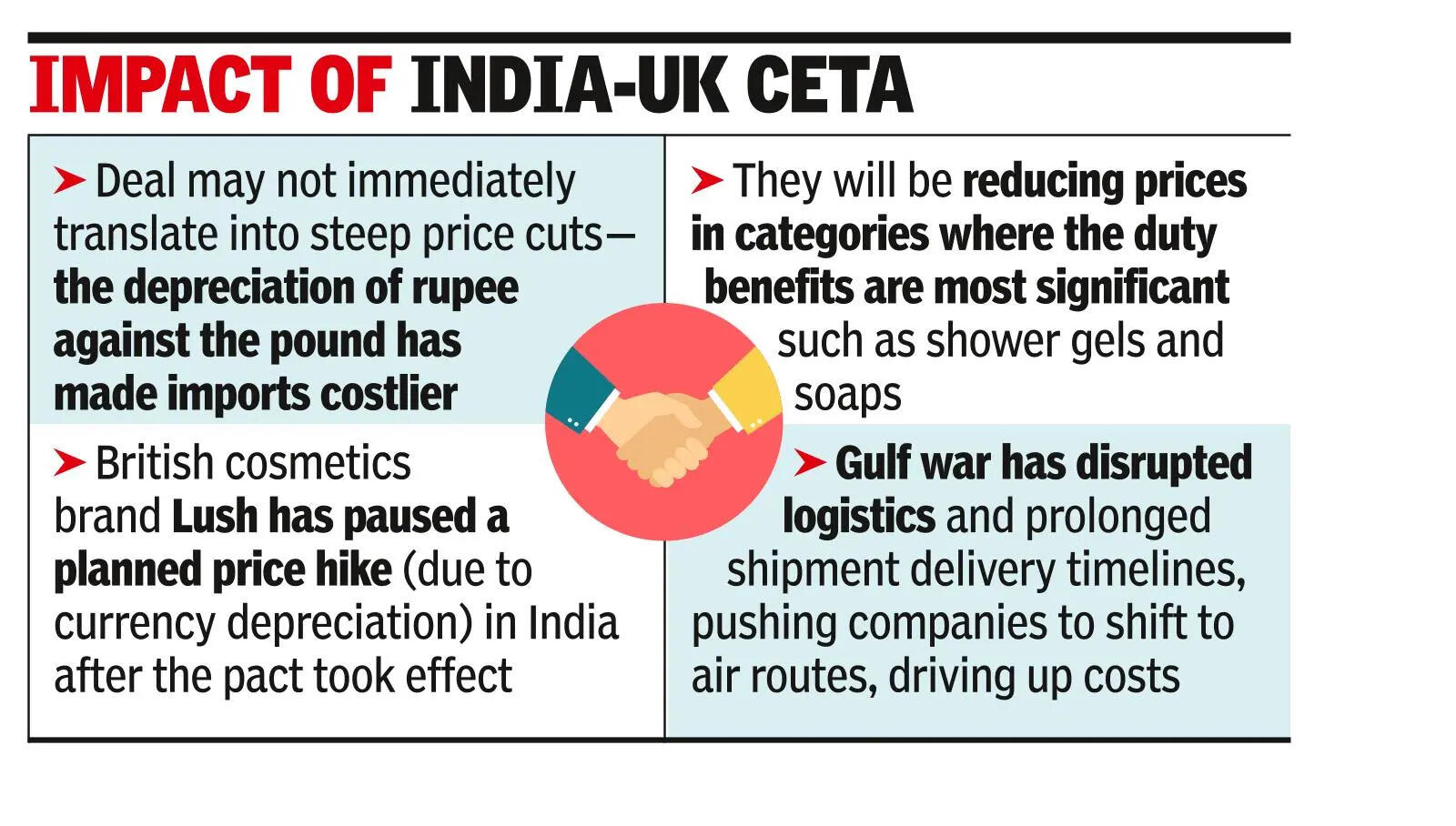
However, Anand noted that price cuts for all products would not be feasible, especially in cases where the impact of currency depreciation outweighs the gains from tariff reductions.
“In the long term, with the gradual reduction of import duties under the FTA, consumers can expect to benefit from more competitive prices across a wider range of products,” Anand said. The rupee has depreciated by about 12% against the pound over the past year.Furthermore, the West Asian War disrupted logistics and lengthened shipment delivery timelines, prompting companies to switch to air routes rather than sea, resulting in higher costs.
“Tariff cuts free up margins, but rupee volatility and global supply chain costs mean no one should expect MRP prices to fall overnight.” said Radhika Ghai, Founder and CEO of Kindlife, a local online marketplace that launches and distributes global beauty brands.Kindlife is currently working with 12 British brands spanning clinical skincare, body care and wellness, all of which are gearing up to launch in India in the next two-three quarters, Ghai said, adding that most brands are chasing the affordable price range of Rs 700-1,500.
“The question of brands has changed. Was it common for us to enter India? Now it’s how do we expand here the right way?” Guy said.Many British watchmaking brands will now be interested in coming to India, said Pranav Saboo, MD and CEO of Ethos, which runs a chain of luxury watch stores. “For smaller brands, the FTA will allow talks (about launching in India),” Sabo said. Sanskriti Gupta, spokesperson for bakery and confectionery chain Ben’s Cookies India, said it is targeting to launch 8-10 stores this financial year.