

 The survey, which included 10,342 borrowers across 10 states, shows a mature market where formal credit has become the main source of financing for rural and semi-urban households. According to the report, microfinance is now the main driver of livelihoods and not a backup option.Digital adoption has reshaped spending, with nearly 100% of loans now being credited directly to the bank accounts of 75 million women borrowers.
According to the survey, this has reduced leakages and improved time to implementation, with loan disbursement completed on average within six days. However, repayments remain largely cash-based. Only 12% of borrowers use digital methods like UPI, while 88% continue repayment through cash collection conducted during group meetings.
The report said this gap reflects a digital divide, with 61% of borrowers owning smartphones but are still hesitant to transact digitally due to low financial literacy and concerns about fraud.
The survey finds that microfinance lending is mostly income-generating rather than consumption-led. More than 75% of loans are used in project activities. According to the data, 48.1% of borrowers used credit to expand existing businesses, 14.4% to start new projects, and about 13% for agriculture and related activities. “Microfinance has become a bridge towards opportunity and financial independence,” the report said, adding that 78% of borrowers contribute to family income.
Informal borrowing collapses by 45 points in 14 years
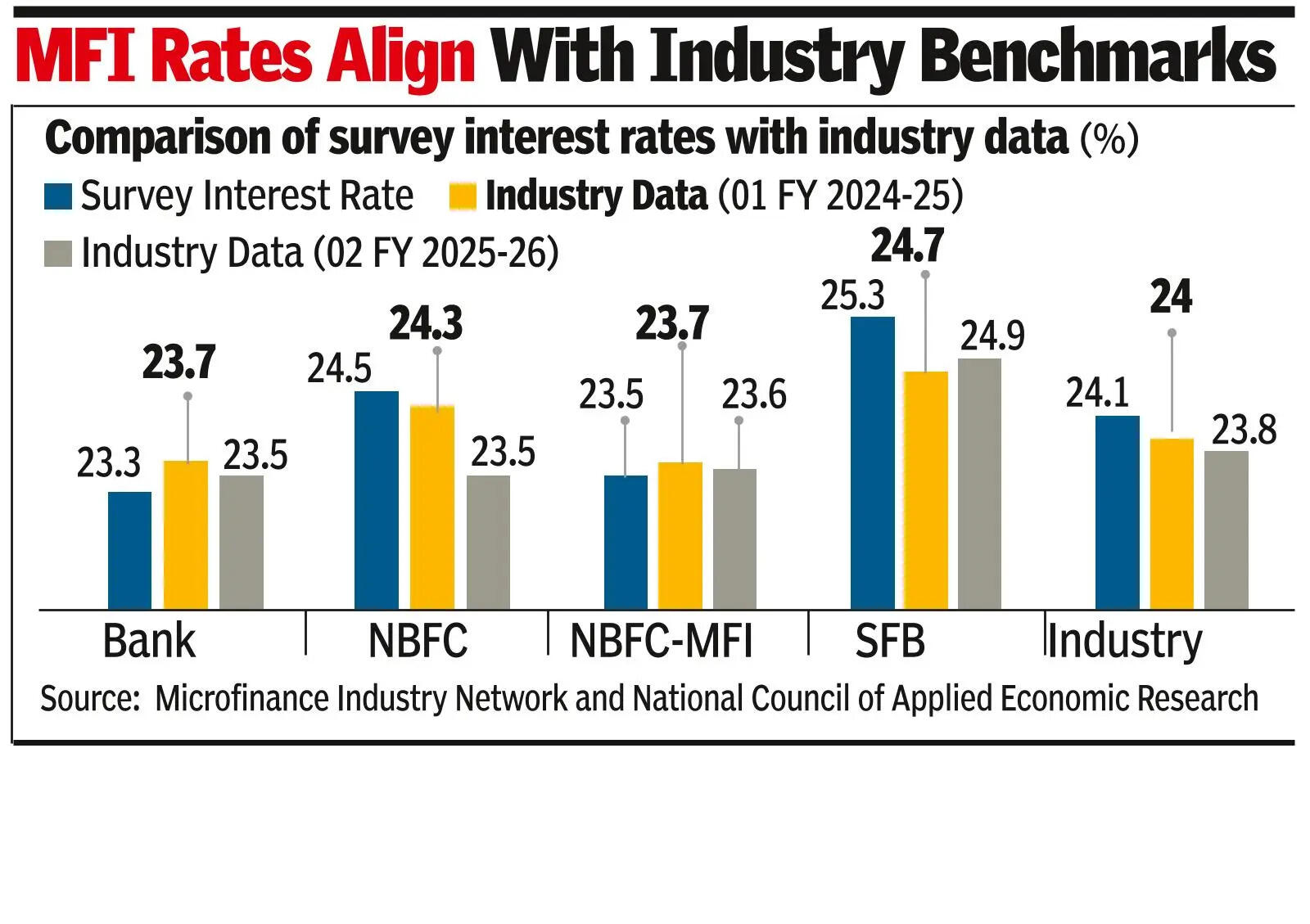
Cost arbitrage remains a major driver of the shift away from informal credit. The average effective interest rate for regulated microfinance is about 33%, which is much lower than the rates charged by informal lenders. According to the qualitative findings of the report, moneylenders charge fees ranging between 97% and 178% annually and often demand gold as collateral.
reconnaissance
Do you think digital loan disbursement improves financial outcomes for borrowers?