
As part of its key deliverables, the post India AI Impact SummitDelhi is likely to push for a more “democratic” use of AI. With a key focus on affordability and access to the technology, government officials say the move runs counter to the general direction of AI development in the West, where AI development is concentrated in the hands of a few companies and individuals.
“The pitch is in line with India’s G20 narrative and how Delhi wants to assert its hegemony in the Global South. We want to show that we are speaking for the region’s interests,” said a senior government official. The Indian Express On condition of anonymity.
India is expected to reiterate its longstanding insistence that AI requires international cooperation and multi-stakeholder engagement across countries. However, such cooperation shall be done while respecting national sovereignty.
In the declaration for the AI Summit, which Delhi is currently working on, India may also mention a charter for the spread of AI in a “democratic” way, the official said. It may be a voluntary and non-binding framework, but will primarily focus on “promoting access to basic AI resources” while “respecting national laws”.
 India AI Impact Summit 2026 at the Bharat Mandap in New Delhi on Wednesday. (Photo by Praveen Khanna Express)
As such, the promotion of open-source AI services is also likely to feature in the upcoming Delhi Declaration, a sign that AI will face development in the West, where frontier models such as OpenAI’s ChatGPT and Google’s Gemini are proprietary services.
“Open-source AI applications and other accessible AI approaches and wide-scale diffusion of AI use cases will facilitate the scalability, replicability and adaptability of AI systems across sectors,” the official said.
India may endorse the development of a voluntary platform to facilitate exchange of learning, knowledge and scalable practices to advance AI adoption for social empowerment. It may also recommend creating a platform to connect scientific communities and pool AI research capabilities across regions.
The story continues below this announcement
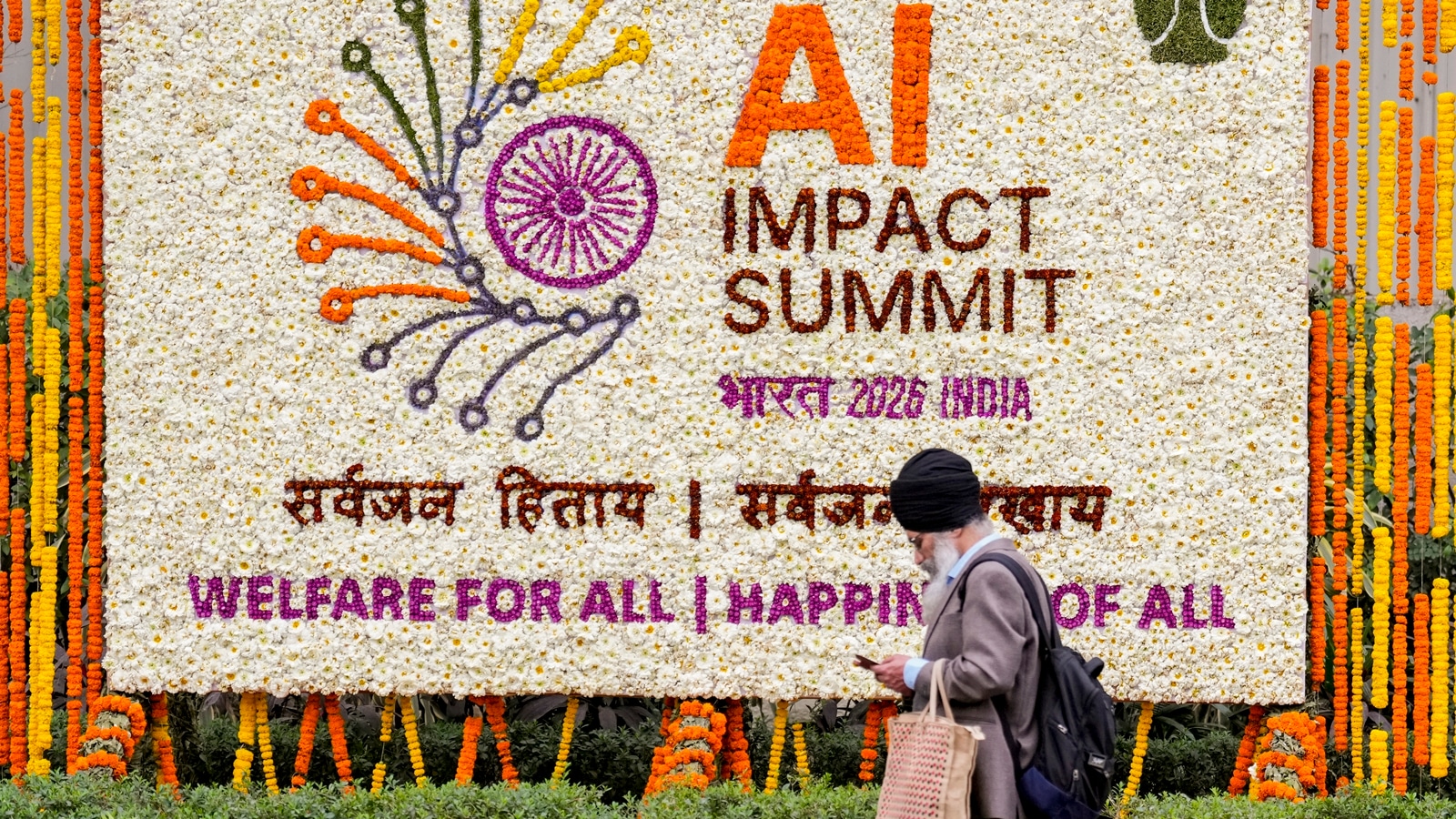 A man walks past the signage board of the AI Impact Summit in New Delhi, Wednesday, February 18, 2026. (PTI)
India is likely to encourage countries to recognize in the declaration the development of a voluntary and non-binding “Trusted AI Commons” that integrates technical resources, tools, benchmarks and best practices. Along with that, a “Global AI Impact Commons” could also be developed, a voluntary initiative that would provide a platform to encourage and enable the adoption, replication and scale-up of successful AI use cases across regions.
The key idea behind why Delhi is pushing for a democratic narrative, the official said, is that the government sees AI as having the potential to “genuinely uplift all sections of society by increasing people’s knowledge, cross-border AI solutions, information, services, opportunities and participation in social and economic activities”.
India will also address AI’s growing energy needs and is likely to include language in the declaration to reflect a dual focus on developing energy efficient AI systems and renewables to power this effort.
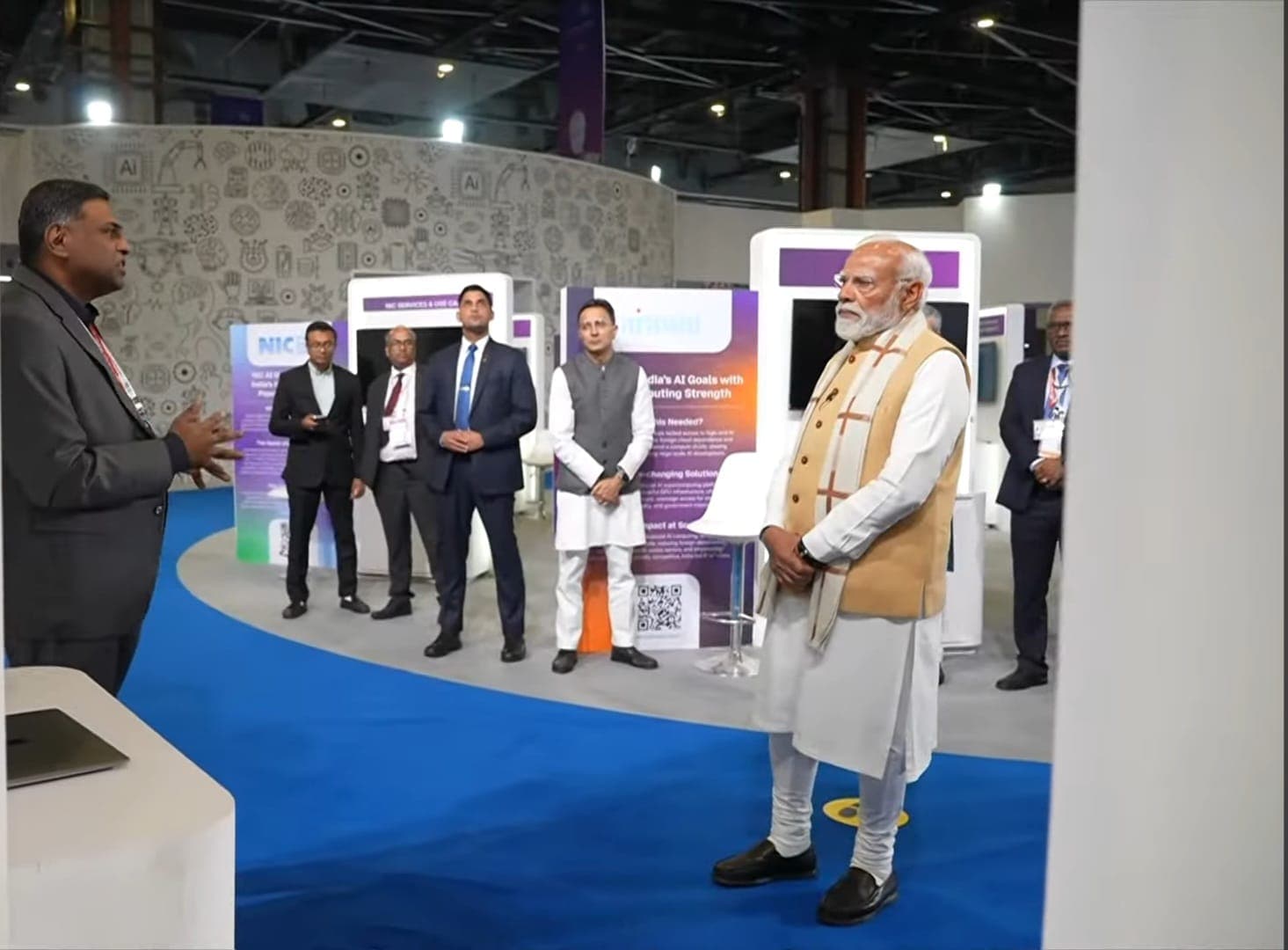 PM Modi at AI Impact Summit
Noting that the promise of AI requires equipping people with relevant skills by expanding AI human resource development, Delhi can also endorse specific initiatives such as education, AI workforce development, training of government officials, raising public awareness of AI capabilities, increasing AI literacy as well as upgrading professional and training ecosystems.
The story continues below this announcement
There may also be voluntary guiding principles for reskilling and a playbook on AI workforce development.