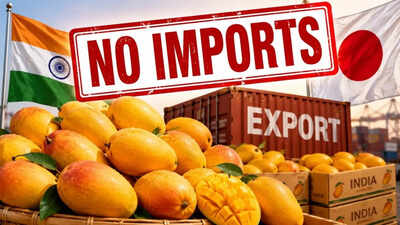
Mango exports to Japan require a phytosanitary certificate issued by the Directorate of Plant Protection, Quarantine and Storage, Faridabad. (Amnesty International image)
In a major setback for Indian mango exports, Japan has reportedly stopped importing fresh mangoes from India for the current season. The move has disrupted shipments of Indian mango varieties widely consumed in Japan, including Kesar, Alphonso, Langra and Panganapalli.
During 2025-26, Gujarat’s Kesar mango has emerged as the largest contributor to India’s mango exports to Japan, accounting for shipments worth about $0.2 million of the total $1.54 million earned from fresh and processed mango exports to the country.India’s top five mango export destinations in terms of value during 2025-26 – including fresh mango, pulp and processed products – were the US, UAE, UK, Netherlands and Saudi Arabia.
Why did Japan stop imports of Indian mangoes?
According to an ET report, after Japan’s plant quarantine officials identified deficiencies in fumigation and other disinfection procedures at Indian processing facilities during an inspection in March, the imports were halted.Although the Indian government has not issued any public statement on the issue, the peak export season from April to June is expected to pass unresolved, even though Japan is not one of the biggest destinations for Indian mango exports.
Consignments accompanied by inspection certificates issued in India on or after March 25, 2026, will not be allowed in, a statement issued on March 31 by the Yokohama Plant Protection Society, citing a notification from Japan’s state-run Plant Protection Station, said.The notification in Japanese also said that fresh mango imports from Indian facilities will remain suspended until authorities in Tokyo are satisfied that operating and processing standards have improved, the ET report said.The Yokohama Plant Protection Association is an industry body that works closely with Japan’s plant quarantine authorities of the Ministry of Agriculture, Forestry and Fisheries.
Air freight cost problems for mango exporters
Meanwhile, rising air freight costs have also emerged as a challenge for exporters.One mango exporter in Gujarat, who spoke on condition of anonymity, said Japan’s suspension caused some export losses, but the biggest concern in the industry was the sharp rise in air freight charges to the United States. According to the source, freight costs have risen to approximately INR 580-590 per kg this year from around INR 250-350 per kg last year due to conflict in West Asia, rising aviation fuel prices and uncertainty surrounding airline route adjustments.The source added that discussions are ongoing between the Indian authorities and their Japanese counterparts to address phytosanitary compliance requirements.Mango exports to Japan require a phytosanitary certificate issued by the Directorate of Plant Protection, Quarantine and Storage in Faridabad, which operates under the Ministry of Agriculture.A Pune-based source said he did not know the exact reasons behind the restrictions imposed by Japan on Indian mango shipments, but confirmed that exports to Japan did not take place this year.He added that the United States remains a more important market for exporters, and noted that a major challenge currently is the frequent offloading of mango shipments by airlines, which often prioritize higher value shipments such as pharmaceutical products over perishable shipments.