A resident of Sonari, the headquarters of Charadeo district in Assam, and family members including elderly parents had barely finished eating dinner on July 18 when floodwaters rushed into their ground-floor house. It rains heavily in the area, but the house that was flooded was the first of its kind for the family.
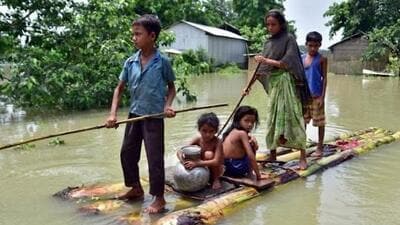
The water level continued to rise, forcing the family to evacuate the house and move to the first floor, which was rented to another family. They managed to take some important belongings but left behind most of the heavy household items including furniture and appliances.
“The water, which had risen to more than five feet, slowly receded by Tuesday evening,” one resident said on July 26. “But nearly 50% of the items inside, including beds, mattresses and the refrigerator, were damaged.” The family’s two-wheelers were damaged by floodwaters, silt and sediment, as was the government employee’s car.
Read also:Why Assam floods: The obvious answer is the Brahmaputra, but there is much more to it than that
He added: “The last time our area experienced some flooding was in 2018. But it was on a much smaller scale and the floodwaters did not enter our homes. The kind of devastation we saw this time was something else. A few homes in our city, where ground levels were much higher, barely managed to escape.”
The situation is similar for most residents of Charadeo and Sibsagar, the two districts in Assam that witnessed unprecedented floods; Thousands are still affected.
Assam witnesses floods almost every year during monsoon, and this time too, 25 out of the 35 districts of the state have been affected. But Sibsagar and Charadeo, two areas where flood damage is usually minimal, bore the brunt this round.
As of Saturday, 66 people have died across the state due to floods – 48 of them from Sibsagar and Charedo. Nearly 400 villages and about 500,000 people (out of a total of 654,000 affected) in the two districts remain affected and nearly 15,000 people have taken refuge in relief camps.
Heavy rainfall in Nagaland, amounting to 85 mm rainfall as against 30.3 mm (up 181%) between July 18 and 20, has led to a sudden rise in water levels in the two neighboring districts of Assam, Chief Minister Himanta Biswa Sarma said on Friday, after a review meeting on the flood situation.
“While Nagaland as a whole received 181% more rainfall in those three days, Mokokchung district in the state received 493% more rain than normal during that period. There was heavy rainfall in Wuka and Mon districts as well on those days,” Sarma said.
Charaideo district in Assam also received 436% more rain than normal in those three days, and Sibsagar district received 104% more rain, he said.
Read also:Assam flood death toll rises to 62, PM Modi assesses situation; More than 7 lakh people are affected in the state
“Therefore, the excess volume of water flowing from Nagaland coupled with above-average rainfall in Assam districts has submerged many areas in Sibsagar and Charadeo districts and led to an unimaginable situation. Usually these two districts do not experience floods, but it happened this time,” Sarma said.
He said that unlike the usual annual floods in the state, which are caused by rising water levels in rivers due to rainfall and dam ruptures, this time rainfall above normal in just three days led to heavy flooding in areas, many of which had not been affected for decades.
“Usually residents of areas that get flooded annually are prepared for such calamities. But residents of the areas where floods occurred in Sibsagar and Charideo did not experience such floods and hence were unable to take necessary precautions,” the chief minister said.
Sibsagar MLA Akhil Gogoi, who is from Raijor Dal, said on Saturday that apart from heavy rainfall in Nagaland, other factors like mining along the Assam-Nagaland border areas (legal and illegal), removal of stones and sand from river beds in the region also contributed to the deluge.
“The Indian Meteorological Department (IMD) clarified that there was no cloudburst in Nagaland, which led to floods in Assam. One factor was heavy rainfall there. Another factor was illegal mining, which led to the formation of large craters. Once these craters were submerged, the excess water seeped into the side of Assam,” Gogoi said.
Experts believe that although the floods in the two regions were widespread, the incident is part of a pattern seen in several regions in the northeast over the years, particularly in Assam, a large flood plain surrounded by hill states.
“This kind of disaster has been occurring sporadically in different parts of the state. Different places are affected at different times, which is a reality now. No one living in Assam can be considered safe from such incidents,” said Mirza Zulfikar Rahman, a researcher at the Brahmaputra River Basin.
“The causes of the floods are weak embankments in places that are not flood hotspots. Excessive mining in Nagaland, degradation of wetlands, and large-scale infrastructure development such as construction of highways, which are several feet higher than surrounding areas, are other factors,” he added.
Al-Rahman said that the focus was primarily on finding quick repair solutions and providing compensation to those affected, without focusing on allocating sufficient funds in the long term to properly study floodplains and address loopholes to prevent such large-scale floods.
“There is a need for scientific measures to predict such disasters, lessons learned from past disasters, international cooperation to find solutions, and proper coordination between the government and other sectors. Otherwise, we will only continue to respond when a disaster strikes and forget about it within days or weeks,” he said.