The United States announced a new 10% tariff on imports from India, saying the move targets countries that have failed to ban or impose adequate restrictions on goods made using forced labor. The tariff, announced by the Office of the US Trade Representative (USTR), is part of a broader measure covering 60 economies and will replace a temporary 10% global tariff imposed earlier this year.
While India was able to secure a lower tariff than the originally proposed 12.5%, the move adds another layer of uncertainty to the ongoing trade negotiations between India and the United States. It also raises concerns for exporters, especially since India remains the subject of a separate Section 301 investigation into manufacturing overcapacity.
What is the US forced labor definition?
The tariffs stem from investigations launched by the Trump administration in March 2026 under Section 301 of the Trade Act of 1974. Section 301 allows the US government to investigate whether another country’s trade practices are unreasonable or discriminatory and, if necessary, to impose retaliatory measures such as tariffs.
Unlike temporary tariffs imposed under other provisions, Section 301 tariffs have no expiration date and are not subject to a maximum rate, although they do require a formal investigation before they can be implemented.
The recent investigation examined whether 60 economies had failed to ban or effectively enforce bans on the import of goods produced wholly or partly through forced labour. Washington concluded that such failures distort trade, burden U.S. commerce, and amount to unfair trade practices.
Read also: Why did the US Trade Commission impose new tariffs on India?
Announcing the decision, US Trade Representative Jamison Greer said that the measure aims to address concerns related to human rights and unfair trade practices.
“Today’s action will begin to correct what constitute human rights abuses and distortive business practices to improve the well-being of workers everywhere,” Greer said.
Why was the customs tariff on India reduced to 10%?
Initially, India was among the countries expected to face a 12.5% tariff because Washington believed it was not doing enough to limit imports of goods made using forced labor.
But during the public consultation process, Indian officials and industry groups claimed that India’s Constitution prohibits forced labor and highlighted measures taken to address the issue.
The White House later said that India had imposed a ban on importing forced labor after investigations began. As a result, India has moved into the lower tariff category of 10% along with countries like Bangladesh, Pakistan, Sri Lanka, Malaysia, Indonesia and the UK.
What does it mean for India?
The immediate impact is that Indian exports to the US will face an additional 10% duty under the new Section 301 measure, unless they fall under exempt product categories specified by the US administration.
Although the tariff is lower than initially proposed, it still creates uncertainty for exporters because India is also facing another Section 301 investigation related to alleged excess manufacturing capacity. If additional tariffs emerge as a result of this investigation, Indian goods may become less competitive than those from neighboring countries that are not the subject of multiple investigations.
Mark Linscott, former assistant US trade representative for South and Central Asia, said India wants clarity that it will continue to enjoy preferential tariff treatment compared to regional rivals before concluding an interim trade agreement with Washington.
How does this affect trade talks between India and the US?
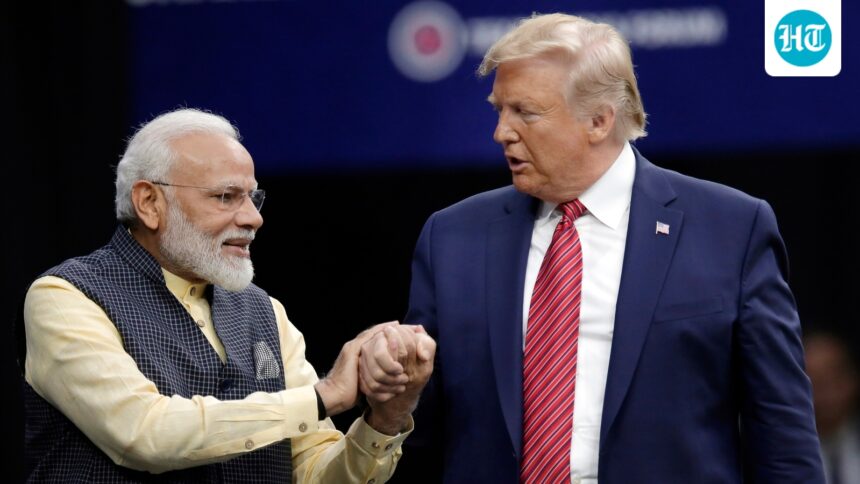
The tariff announcement comes as New Delhi and Washington continue negotiations on a broader bilateral trade agreement.
Earlier this year, the two sides agreed in principle to a framework that would reduce US tariffs on Indian goods from 50% to 18% in exchange for increased market access for US exports and increased Indian purchases of US products.
Read also: Al-Masry says Modi asked Trump to speed up trade talks
However, subsequent legal developments in the United States, including the Supreme Court’s rescission of the Trump administration’s global reciprocal tariff framework, have complicated those negotiations and created uncertainty about the final tariff regime.
Trade experts believe the new forced labor tariff is unlikely to end negotiations but could become another issue for the two sides to resolve before finalizing an interim trade deal.