

The United States of America is believed to have begun in Philadelphia on July 4, 1776 when the Founding Fathers signed the Declaration of Independence. From the city’s tavern where the Founding Fathers planned the American Revolution to the Carpenters’ Halls where the colonies united against the British to Independence Hall where the United States Constitution was signed in 1787, the city contains all the mementos of America’s past.
For this reason, it is the center of the Fourth of July festivals every year where millions gather to celebrate the country.But what most Americans fail to realize is that this place was once part of a little-known Swedish colony known as Nya Sverig (New Sweden), according to a BBC report. From 1638 to 1655, this forgotten Swedish settlement extended across the Delaware Valley into present-day New Jersey, Pennsylvania, Delaware, and Maryland.
It was the smallest, least populated, and shortest-lived European colony in the United States.“It started as a secret colony,” said Debor Jan Hoffman, a board member of the New Sweden Center. “The Swedes weren’t planting science like the French or the Spanish. The idea was to create an under-the-radar colony where the Dutch wouldn’t see them.” Although it only lasted 17 years, it played a pivotal role in shaping the nation and new Swedish settlers provided one of the most iconic American frontier buildings, the log cabin.
They also brought Lutheran Christianity to the New World, led one of the earliest civil uprisings in the American colonies and left their mark on two future American cities.
Call to action
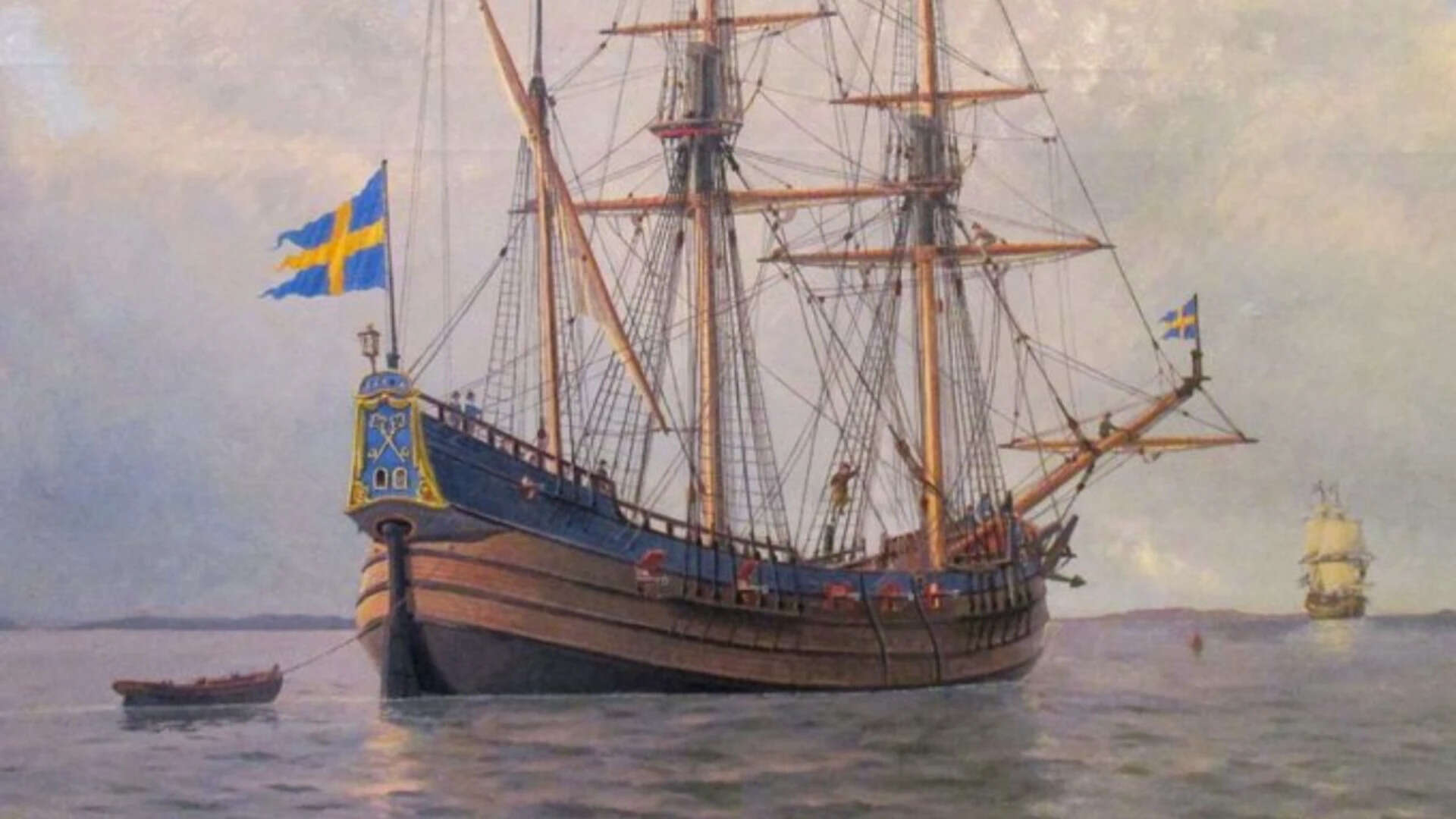
In December 1637, Minuit led two ships out of Gothenburg with 25 would-be settlers on board
By 1637, European powers had covered much of the American Atlantic coast when Peter Minuit, the agitated former governor of the colony of New Netherland, approached the Swedish crown. Minuit famously purchased the island of Manhattan for the Dutch and spent years exploring the mid-Atlantic in search of a place to establish New Netherland.
But after he was suddenly fired in 1632, he sought revenge on his former employers.To answer them, he went to Sweden and said: “You are the only major power in Europe that does not have a colony, and you are missing out on the beaver and tobacco trade. I know where you can start one,” according to Hoffmann. With a map, he showed Swedish officials that between England’s claim to Virginia and New Netherland, there was a vast area uninhabited by Europeans.
Minuit knew that although the Dutch claimed the entire Delaware River, they had purchased only one side of it along their southern Lenape border.
He also knew that they were much more interested in defending New Amsterdam (modern-day Manhattan) than in defending the Delaware Valley.In December 1637, Minuit led two ships out of Gothenburg with 25 would-be settlers to cut off the Dutch monopoly on lucrative trade with the indigenous peoples.
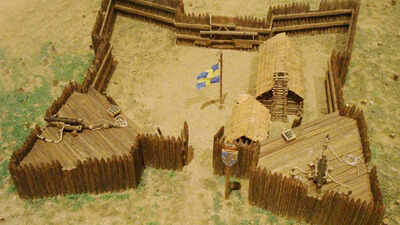
After four months at sea, they quietly dropped anchor along a narrow, winding tributary of the Delaware River claimed by the Dutch at present-day Wilmington, hoping its isolated location would not attract too much attention. While the Dutch knew about it immediately, Minuit knew that they did not have enough manpower to expel them.In 1638, he purchased a 67-mile tract of land overlooking the Delaware River from five Native American tribes, and settlers built a stronghold they called Fort Christina, after the 12-year-old Queen of Sweden.
It was the first permanent European settlement in the Delaware Valley, and the first permanent European structure in what would become the first American state.
Swedish nation
Only five months after founding New Sweden, Minuit sank in a Caribbean hurricane. Penniless and hungry, the twenty-five settlers turned to their indigenous neighbors for help. “Unlike the Dutch and English, the Swedes understood and respected the indigenous tribes. About 80% of the settlers were actually ‘forest Finns’, because Finland was then part of Sweden, and they had a deep appreciation for living off the land,” Hoffman said.The colony remained merely a fledgling, remote outpost until 1643, when a 7-foot-tall, 400-pound (2.13 cm, 181 kg) giant of a man named Johann Printz was appointed governor. Nicknamed “Big Belly” by the Lenape, Printz was a commanding presence and set about securing a foothold for Sweden in the Americas. Over the next decade, he built two more strongholds along the Delaware River, expanded the colony from present-day Cecil County, Maryland to Trenton, New Jersey and established a new capital south of Philadelphia on Tinicum Island.Despite its territorial expansion, New Sweden never achieved the commercial success it considered it to be. The colony never numbered more than 400 people, and from 1648 to 1654, the Swedish Crown did not send a single supply ship. Interest in immigration was so low that the Swedish Empire resorted to sending petty criminals and deserters as a form of punishment. In 1653, when a quarter of the colony’s male population signed a petition accusing Printz of abusing his powers, he declared it a “rebellion,” but resigned—marking one of the first successful political protests in U.S. colonial history.By 1655, New Netherland Governor Peter Stuyvesant had grown tired of the Swedes and sent seven armed ships to the Delaware. The outnumbered Swedes surrendered without a shot, marking the end of Swedish sovereignty in the Americas. New Sweden was soon absorbed into New Netherland, but Stuyvesant allowed it to continue as a “Swedish nation”, allowing settlers to choose their own government, form their own militia, and retain their lands.
New Sweden in America today
The first three log cabins in America were built at Fort Christina Park in Wilmington, Delaware, where the Swedes’ first fort once stood. Their original landing place, known as The Rocks, is still there. Old Swedes Church, built in 1698, is considered the first Lutheran church in the New World and the oldest in the United States and is still used for worship in its original state.For its entire existence, New Sweden was the only European colony in the United States that never went to war against the indigenous people.
Many descendants of Swedes in the area still attend the church’s Sancta Lucia candlelight Christmas celebration every year in December. Not only that, they also gather with traditional folk costume customers at Midsommarfest to eat smörgåstårta sandwich cakes and cranberry sorbet.“As you know, he was a descendant of New Sweden [John Morton] “They cast the deciding vote here in Pennsylvania in support of declaring independence and secession from Britain,” Tracy Peck, executive director of the Swedish American Historical Museum, told the BBC.Today, much of this history is buried in the land and society itself, escaping minds and books. But New Sweden was vital in the past for America’s standing in the present.