

The campaign, which was intended to protect China’s food supply, became one of history’s most glaring examples of environmental misjudgment. In 1958, Mao Zedong’s government targeted sparrows as part of the nationwide Four Pests Campaign, because the birds were thought to consume valuable grains.
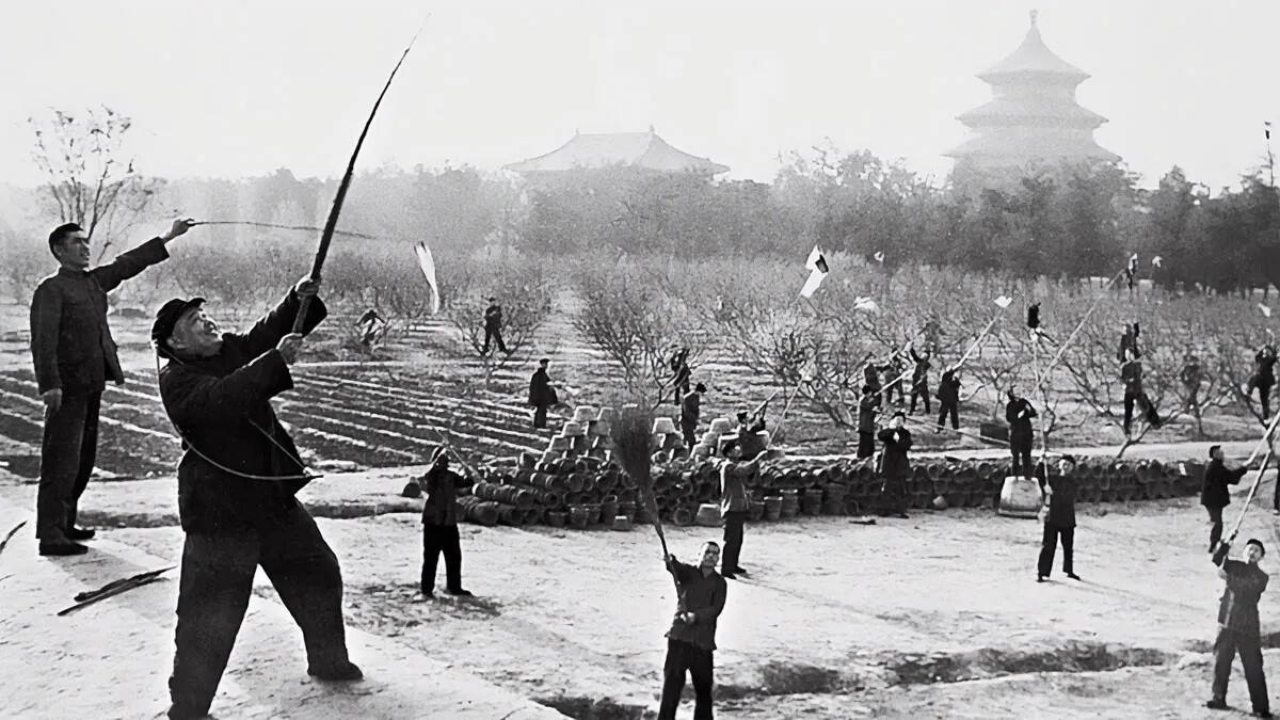
Millions of citizens were mobilized to destroy nests, break eggs, and drive birds from the sky. This strategy ignored an important part of the food chain: finches also consumed insects that damaged crops. As bird numbers declined, agricultural pests faced fewer natural predators, contributing to worsening infestations and adding further pressure on China’s struggling farms during the disastrous Great Leap Forward.
Why did China declare war on birds in 1958?
The campaign emerged during the Great Leap Forward, Mao’s ambitious program to rapidly transform China’s economy and increase agricultural and industrial production. Birds, along with rats, flies and mosquitoes, have been classified as pests that authorities believe must be eradicated.The logic seemed clear. The birds ate the grains, so killing them would theoretically leave more food for people.
What followed was an extraordinary mass mobilization that included citizens, workers, and students across the country.People destroyed nests and eggs, while crowds used drums, pots and pans to constantly scare away the birds. Some birds were prevented from landing and resting, and eventually collapsed from exhaustion. The campaign has reduced their numbers significantly, although exact estimates of the death toll remain uncertain.
Environmental error that allowed pests to multiply
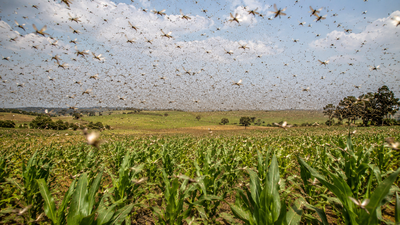
The strategy failed to take into account the sparrow’s broader place in the food chain. In addition to seeds and grains, birds consume insects, especially when feeding their young.As the number of birds they hunt decreased, crop-eating insects faced less natural predation. Historical accounts link declining bird numbers to worsening outbreaks of agricultural pests, including locusts, which have placed additional pressure on already vulnerable farmland.This incident demonstrated a basic ecological principle: removing one species can lead to unforeseen consequences elsewhere in the ecosystem. Primarily seen as a competitor for food, the bird also provided a natural form of pest control.However, it is important not to overdo the communication. Although the eradication of sparrows is widely cited as contributing to increased pest problems, evidence does not prove that it alone caused a single record locust epidemic.
Chinese farms were already facing a much bigger crisis
The environmental disruption occurred during one of the most turbulent periods in modern Chinese history. The Great Leap Forward introduced sweeping changes to agriculture and rural life, including widespread collectivization and the shift of labor toward industrial enterprises.Agricultural production was also affected by unrealistic targets and inaccurate reporting. Local officials facing political pressure sometimes exaggerated harvest figures, creating a distorted picture of how much food was actually available.The state continued to buy grains even as the shortage became more severe in some areas. Combined with broader policy failures and difficult environmental conditions, these decisions have contributed to a catastrophic decline in food availability.Therefore, the additional pressure from agricultural pests arrived when China’s agricultural system was already under enormous pressure.
the The Great Chinese Famine He follows
From approximately 1959 to 1961, China experienced the Great Chinese Famine, one of the deadliest humanitarian disasters of the 20th century.
Estimates of excess deaths vary widely, but historians generally place the number of casualties in the tens of millions.The famine cannot be attributed solely to the killing of birds. Researchers identify policies associated with the Great Leap Forward, collectivization, grain purchasing, distorted production data, and political failures among its main causes. Weather and natural disasters also affected agricultural conditions.The environmental consequences of the Four Pest Campaign are best understood as a problem that contributes to this larger catastrophe. Increased pressure from crop pests may have led to further crop damage at a time when food production and distribution were already in severe crisis.
Eventually, China reversed its campaign against the sparrows
Authorities eventually realized that eliminating the birds had led to unintended consequences. By 1960, sparrows had been removed from the list of four pests, and bedbugs took their place as a target.This decline has highlighted how the original policy underestimated the complexity of agroecosystems. Sparrows have been judged largely by the grains they consume, while their role in controlling insect populations has received little attention.The campaign attempted to simplify nature into categories of beneficial and harmful species. Its failure demonstrated that animals considered pests can still perform important ecological functions.
A lasting lesson about interfering with ecosystems
China’s campaign against sparrows remains a cautionary example of the risks involved in large-scale environmental interventions based on an incomplete ecological understanding.Food webs depend on relationships between predators, prey, plants, and other organisms. Removing a species can have consequences that extend beyond the original intent, sometimes creating new problems rather than solving existing ones.This incident does not mean that wildlife or agricultural pests should never be managed. Rather, it highlights why modern pest control increasingly relies on scientific research and integrated approaches that take into account entire ecosystems.What began as an attempt to protect grains eventually revealed a powerful lesson: changing one part of nature can lead to a series of consequences that are difficult to predict or reverse.