Why do you hate cruises so much, Netflix?
In just over a year, Netflix has released the definitive documentaries about three of the greatest (read: worst) cruise ship disasters of our time: Amy Bradley is missing, Trainwreck: Cruise and Shipwreck: A Nightmare at Sea. It’s as if Ted Sarandos is some kind of landowner.
Hollywood Reporter It has been covered extensively Amy Bradley is missingreleased on July 16, 2025. For those who have survived this true crime horror story, to recap: In 1998, 23-year-old Amy Bradley disappeared overnight from the Royal Caribbean cruise ship on which she and her family were vacationing. A search of the ship found no trace of Bradley, leading officials to believe she had likely jumped or fallen overboard on her way to Curacao. However, her body was never found, and in the following decades, numerous people reported seeing Bradley alive on several islands of the region. Amy Bradley is missing It provides compelling evidence that it may have been smuggled off the boat instead.
Trainwreck: Cruisereleased on June 24, 2025, chronicles the disgusting—and legitimately dangerous—events that have occurred since the 2013 Triumph Carnival disaster. The ship departed from Galveston, Texas, headed toward Cozumel, Mexico, for an enjoyable four-day voyage, though it was anything but. When an engine fire knocked out power and plumbing for five days, 4,000 passengers were stranded amid overflowing sewage — including feces — spoiled food and unbearable heat. No one died, thank God, but it was a terrible ordeal.
Amy Bradley is missing Made the top 10 international series on Netflix for four weeks; Trainwreck: Cruise I did it twice (but for movies).
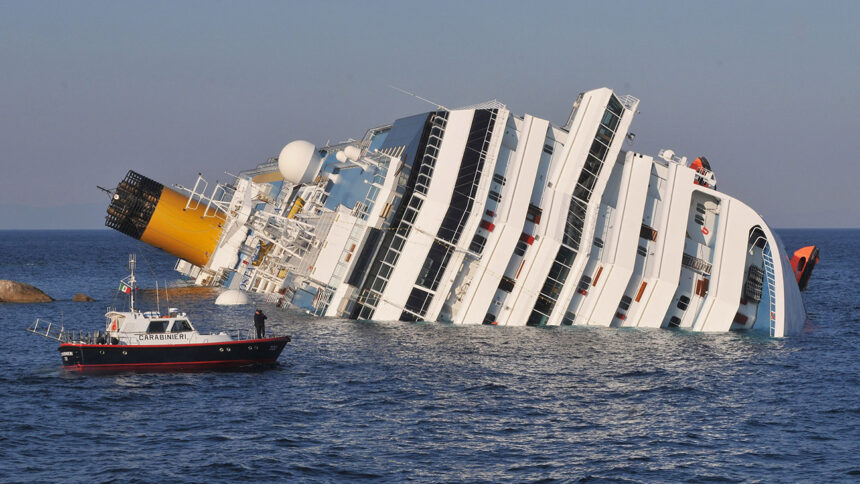
And now we have it Shipwreck: A Nightmare at Seawhich set sail on Netflix on Friday. In just its first two days, the feature-length documentary has racked up 9 million views, the streaming site reported Tuesday, second only to Millie Bobby Brown’s three films. Enola Holmes 3 (12 million views during full even-numbered days). Shipwreck: A Nightmare at Sea The film recounts the harrowing ordeal faced by passengers and crew aboard the Costa Concordia (Costa Cruises is a subsidiary of Carnival), which in January 2012 collided with a giant rock off the coast of the island of Giglio, Italy, flooding the engine room, capsizing the boat and causing the deaths of 32 people. It’s the worst modern cruise ship disaster ever seen, and the documentary makes for tough viewing.
As we say in the news world, three is the trend. In the content space, it feels like an agenda. With its 325 million subscribers and the popularity of all its latest cautionary tales, can Netflix upend the cruise industry? (Maybe he wouldn’t mind putting Disney Cruise Line out of business…)
“Absolutely not,” said cruise journalist Ashley Kosiolek. THRwhich killed my theory instantly and completely. “Cruises are more popular than ever. Prices are the highest they have ever been because of the demand [and] Ships are booking more in advance than they used to.
She’s right. Last year, a record 37.2 million people took an ocean cruise, according to industry group Cruise Lines International Association. The lobbying organization estimates the number will reach 42.1 million by 2029. Both industry leaders (and companies involved in the Netflix doc), Carnival and Royal Caribbean, have reported record revenues in 2025: $26.6 billion and $17.9 billion, respectively. This should fund some backup generators.
Although the COVID-19 pandemic nearly ended the cruise industry, it ultimately created an urgent need to hit the high seas once restrictions were lifted.
“People have gone from a ‘I want to take a cruise someday’ mentality to a ‘seize the day and book the cruise’ mentality,” Kosiolek said.
Additionally, you are 200 times more likely to be struck by lightning than to be involved in a catastrophic cruise ship accident.
“Anyone who travels knows that these are rare incidents,” Kociolek said. “I think what the general public needs to understand is that ships are like small towns. They are not immune to accidental hazards or human error.”
Okay, but do you know your assembly station anyway, mmkay?