

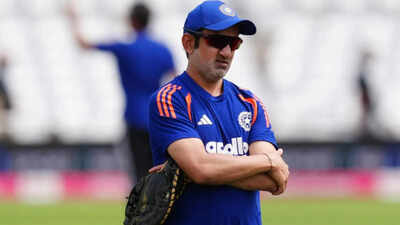
Indian national team coach Gautam Gambhir
New Delhi: On March 8, India wrote history by becoming the first team to successfully defend their T20 World Cup title. Exactly four months and four defeats later, the Indian cricket team, under new skipper Shreyas Iyer, has stumbled into uncharted territory, losing four of its last five matches and is yet to open its account in the new tournament.
The conditions certainly came as a rude shock to the players, who roamed the batting-friendly surfaces for two months in the Indian Premier League (IPL) and during the home series that preceded the cash-rich league.
The bowlers found it difficult to adjust to the breeze and dimensions. Overall, the world champions were completely outclassed by both Ireland and England. The team’s selections were questionable, the batting order was debatable, and the team looked well away from home.
For a team that “didn’t want to be 160-170” and racked up over 200 totals in the new normal, suffering their heaviest defeat in the format was a reality check.
India were hammered by 125 runs on Tuesday. This is the first time the Men in Blue have failed to register a win in five consecutive T20I matches, and the road ahead offers little hope.
When you go for this reset, it takes some time. If you see, a 15-year-old is opening, Prince Yadav is in his second T20I, and Harshit Rana is back from injury. Gautam Gambhir | Head coach
If head coach Gautam Gambhir is to be believed, India have hit the ‘reset’ button in the format, with several players who featured in the T20 World Cup final in Ahmedabad against New Zealand no longer part of the squad.
Jasprit Bumrah is rested, Hardik Pandya is injured, Suryakumar Yadav has been ruled out and Sanju Samson is missing from the starting XI.“When you go for that reset, it takes time. If you see, a 15-year-old opening, Prince Yadav in his second T20I, Harshit Rana coming back from injury. We are ultimately just looking at results, and results are undoubtedly important in international cricket, but we have to be practical as well.”
Sometimes it gives players time to develop. England are a quality team. If you put players against such teams, you have to give them time to develop.
“After the reset, things take some time,” Gambhir said in the post-match press conference.
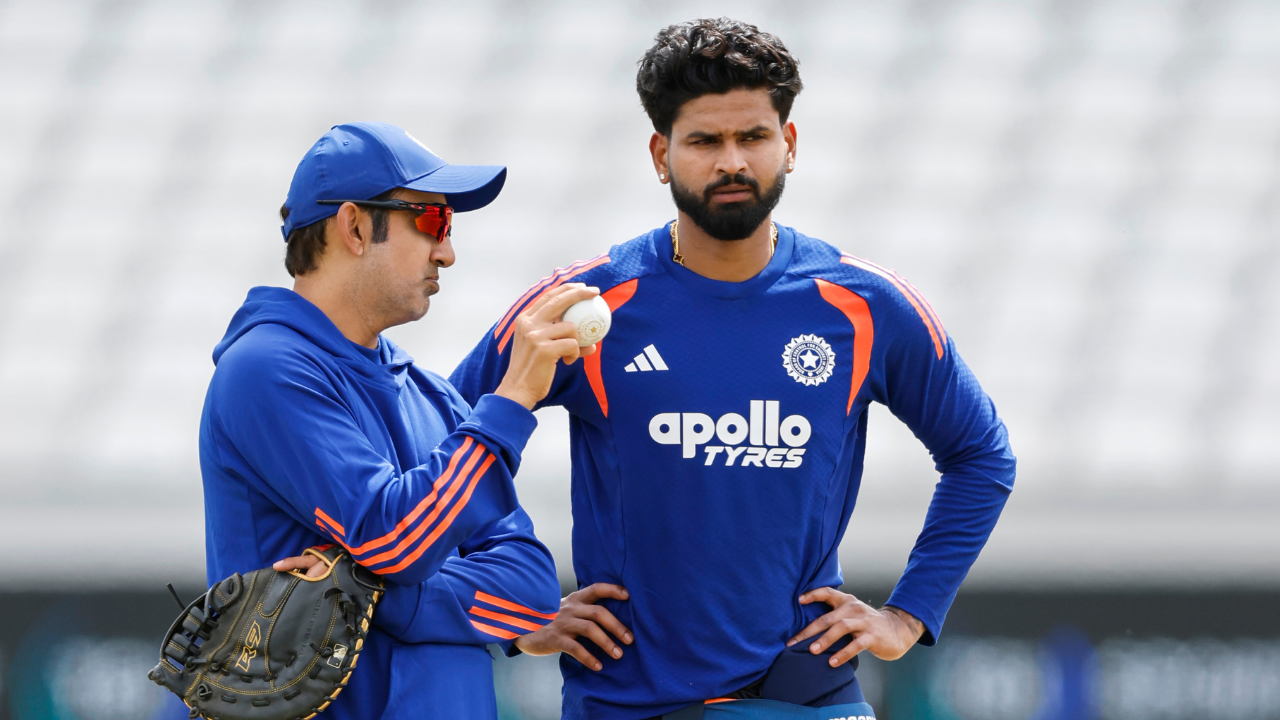
Shreyas Iyer and Gautam Gambhir (X-BCCI)
Transitional tones are back, this time in a form that India has completely dominated since winning the title in 2024. This has become an increasing pattern in the head coach’s interactions with the media, but the use of the transitional narrative seems to depend on the outcome of the series.
Immediately after being whitewashed in the Test series against South Africa at home, Gambhir spoke at length about the team being in transition in both departments and urged patience with his inexperienced players.“You would never think that something like this has happened in Indian cricket as transition happens in the bowling department and in the batting department as well. Usually when your batting is secure or your batting is experienced, your team goes through a bowling transition phase,” he said.
But with this Test team, it is clear that a shift is happening in both skill sets,” Gambhir told reporters in Guwahati.
Indian coach Gautam Gambhir (PTI Photo)
Months before that statement in Guwahati, Gambhir was in the hot seat thousands of miles away in Manchester, and the ‘T’ word came up again. The setup was very different from the second Test against South Africa, where India, despite an injury to Rishabh Pant, managed to tie the match and keep the series alive.
At that time, transformation had a different meaning.“I don’t think the team is in a transitional phase, because it is still an Indian team. This is the top 18 team that will represent India. Most importantly, it is not a transitional phase, it is just a bit of inexperience,” Gambhir said while responding to a query about moving into the Test side.Transfer has become the buzzword during Gambhir’s tenure as the team has seen significant movement across formats. Rohit Sharma, Virat Kohli and R Ashwin are no longer playing Test cricket. Rohit Sharma was replaced by Shubman Gill as captain of the ODI team. Suryakumar Yadav has been removed as T20I captain months after leading India to the T20 World Cup title. The team moved ruthlessly, made bold decisions, but the ‘T’ word remained the only constant.Its use, interpretation and interpretation has been greatly influenced by the state of the match or series. Although it was replaced by a ‘reset’ in Nottingham on Tuesday, the underlying sentiment remained the same.