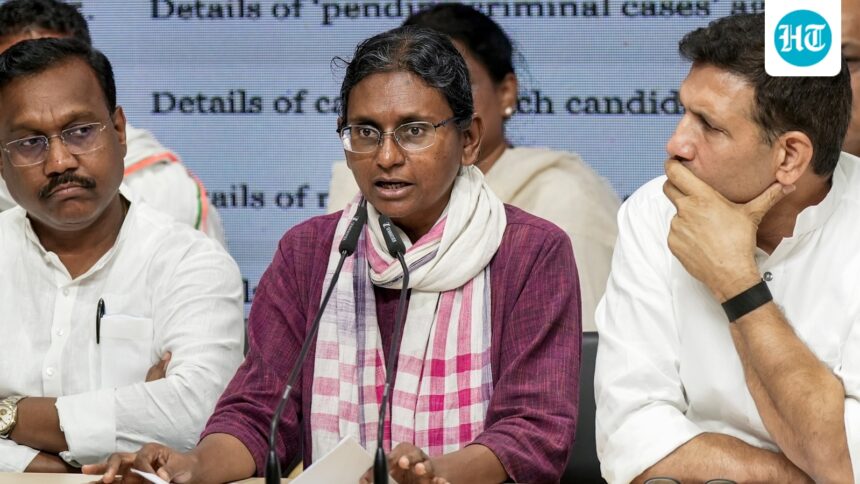
The Supreme Court on Friday rejected Congress candidate Meenakshi Natarajan’s plea challenging the rejection of her Rajya Sabha nomination in Madhya Pradesh. In its order, the Supreme Court took note of the arguments made by the Election Commission’s counsel, saying that it is necessary to disclose all pending criminal cases, at whatever stage they may be.

The court said, according to its statement: “It is recognized that any non-disclosure will result in rejection of the nomination and that the returning employee has not committed any error.” LiveLawWith reference to what was presented by ECI’s lawyer.
The Supreme Court also said that once a nomination is rejected, the only remedy is to approach the poll panel. “No matter how wrong the decision is, once a nomination is rejected, the remedy usually lies elsewhere. Is there any ruling from this court where we intervened at that stage,” the news agency quoted the court as saying. PTI.
However, the order comes days after a Congress team led by senior leaders like KC Venugopal and Abhishek Manu Singhvi met EC officials in this regard.
What was the subject of the appeal?
Meenakshi Natarajan has filed an application in the Supreme Court against the rejection of her nomination to the Rajya Sabha. While the BJP alleged that her nomination papers hide information about summons issued by the Chief Justice of Hyderabad, the Congress said Natarajan had no pending cases.
“No criminal case has come up…there is notice to it by the court on a private complaint, much before the court takes cognizance. The issue of notice has not been decided after hearing it,” Abhishek Manu Singhvi said.
Singhvi, who represented Natarajan before the Supreme Court on Friday, made similar arguments. He told the court that although a legal notice was issued, no charges were laid. “No charges have been filed, so why should she disclose? If there is a criminal case pending, she will disclose it as a candidate,” Singhvi said.
However, ECI’s lawyer said that rejecting Natarajan’s nomination was justified and that it was required to disclose all pending cases.