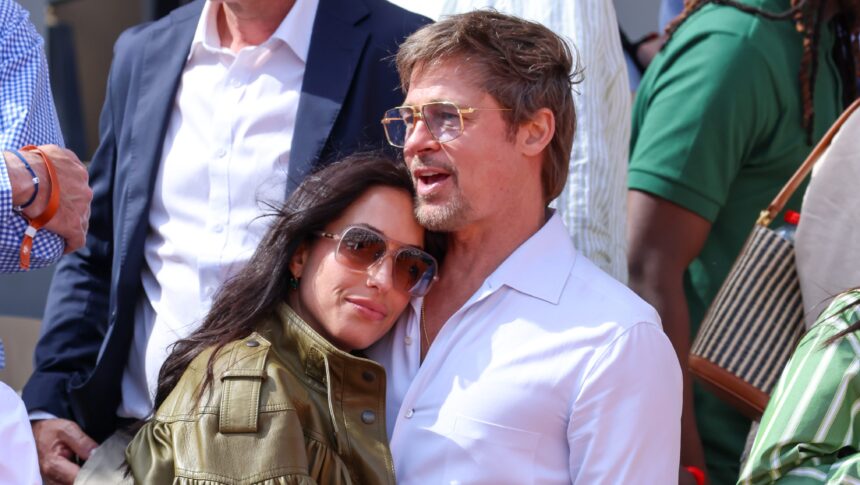

Brad Pitt He’s 62 years old, deep tan, and visibly making out with his 33-year-old girlfriend. Ines de Ramon. Meanwhile, his eldest son Maddox24, just filed legal papers to remove the word “Pete” from his name. He is the newest of the six children that Brad shares Angelina Jolie To do this.
Loud optics. Half of the family poses for photographers on yacht decks. The other half quietly remove it from their passports.
The Internet does what the Internet does. Calling Brad Cool. Call the kids brainwashed. Call Ines a distraction.
I want to sit down with something different. Because what’s happening here is something I see in my office in San Francisco almost every week, just without the boat.
The performance that everyone can see, and the part that no one can see
When a relationship becomes public so quickly, so glamorously, so full of PDA, there’s always a second story going on underneath.
Early Romanticism is a special kind of magic. Communication feels like a flawless dance, as partners complement each other’s movements, and there are no missed steps. Minds light up. Bodies relax. For a man whose private life has been a public courtroom for nearly a decade, I imagine this feeling is therapeutic.
But that’s what I notice with high-achieving clients, executives, creatives, and performers. Early in a new relationship, they don’t actually prepare themselves. They bring their representative. The public face is polished, competent, and charming. A person who knows how to be chosen.
The actor is excellent at intellectualizing the communication. He can talk about love the same way a bartender talks about mangoes. Color, origin, mouthfeel. What an actor can’t do is taste the raw thing underneath.
And the raw thing underneath, for any parent separated from their child, is grief. Maybe shame. It is likely a very ancient terror that predates the marriage he ended.
A new girlfriend can’t handle this sadness for him. No one can. This is the part of Brad’s story that no PDA will ever show, because the actor is the only version of him allowed on the red carpet.
Why Maddox hasn’t dropped the name is the headline you’d think
This is where I want to gently back away from the gossip.
When a young adult removes a parent’s title, the cultural reading is “betrayal” or “weaponizing the other parent.” Both frames are very small. They assume that a child at this age does not have his own nervous system, his own memories, his own reasons.
From an attachment perspective, the questions every child carries into adulthood are simple. Were you there for me? Am I enough for you? These questions do not go away when a child turns 18. They hide and start managing adult relationships instead.
Maddox is 24 years old. He has spent nearly a third of his life watching his parents fight in public. Whatever he does in his name, I bet his nervous system is protesting the interruption of communication that means something to him. Protest is proof of bond. Indifference would be the worst sign.
This is the harder part than people think. A father can love his children deeply and still be the source of pain they need to get away from. Both could be true. The “othering story,” where one parent is the villain and the other is the saint, never leads to anything good. If you want to know what dynamic you’re running in your own relationships, the Empathy Relationship Test is the place to start by being honest with yourself.
What does the peak of early romance actually do
The 29-year age gap and new public romance create a very specific kind of happiness. I don’t cause illness. I describe it.
The early stage of a partnership can resemble a euphoric pattern, where the rush of a sense of choice and vision becomes its own organizing force. It’s intoxicating. It also tends to collide with reality the moment two people stop running away from each other and start being each other’s primary attachment figures.
This transformation is the most difficult. Your sexy self has met your partner. Now your weak self must make love to them. A weak soul brings with it every wound that has never been healed, including a decade of family rupture.
For Brad and Ines specifically, I want them to know the gravity of that important moment. When the landscape is this bright, there is an unconscious expectation that the inside should match the outside. That you have arrived. It shouldn’t hurt anything anymore.
This expectation is a trap. The moment a natural disagreement occurs, it seems disastrous, because the standard is set at “perfection.” Susceptibility to injury goes up, not down.
What seems best is this: give up the dream of never fighting again. Stop trying to be the good person. When conflict comes, and it will, business doesn’t win. The work is to notice the moment when one of you jumps into defense, and says the harder, quieter thing underneath. the fear. Need. “Come here to me.”
This is the step. Not the best PDA. The photographers’ angle is not the most flattering. Only two nervous systems learn to repair.
The font is worth a screenshot
A relationship cannot live on sentimental promises and pretty pictures. It requires proof of work. The actual hard work of repair, with a partner and, when possible, with the children whose names you have given.
Brad doesn’t owe the audience an explanation. He may owe his children a different version of the actor that the cameras find him to be. This version is quieter. Don’t tan as well. He’s the only one who fixes anything at all.
_______________________________________________________________________________
Empathi Founder Figs O’Sullivan and his wife, Teale, San Francisco-based couples therapists and relationship experts at Stars and Silicon Valley, co-founded Empathi and built Figlet, an AI-powered relationship coach trained in their clinical work.