In short, the result of the long-awaited second season of Netflix’s chaotic comedy-drama meat inevitable.
From the opening moments of the first episode, the music is the first thing viewers hear – the dominant sound that initiates the series’ establishing shots and dialogue for the next ten minutes of the series before finally coming to a noticeable pause.
“I didn’t realize it until I was on the mix stage for the first episode, which was very close to the end of the whole recording process of the show,” says famed singer-songwriter Finneas. “We were watching the first episode, and I was like, ‘Oh my God.’” There is a lot of music in this series, and it is used prominently. Sometimes the result is actually a background character.
Like any good character, Phineas’ score contains large numbers. The 10-minute track, “Cold Open,” weaves together the calm and anxiety of being exposed to pins and needles, while “Music for Hospitals” is a bit more sinister and meandering, like spelunking in a dark cave. By contrast, “Evil Thoughts” is beautiful — almost stunning.
There is a lot of music. The 32-song soundtrack is an hour and a half long, and according to Finneas, there are a lot of songs left out. But it’s difficult to give an accurate description of the lyricless, compositional music he compiled for the show. It’s tense but whimsical, and at points almost fit for a tech news podcast.
“I agree with your ambiguity,” Phineas admits. “Whether you like something or not is your personal opinion – whether it’s good or not is subjective. But I think authenticity is somewhat objective. And I think Sony[[meat Creator Lee Sung Jin]’s performances are very original. With this uniqueness, eventually, the music became more exotic and more different from our references.
These references are planted firmly in 2010’s millennial nostalgia, which is reflected in the characters, particularly Josh Martin who plays Oscar Isaac, the general manager of an exclusive California country club and a mediocre synth player who is a huge fan of the English pop band Hot Chip. It shows in the needle drops as well, where Finneas ends his verses in a way that flows seamlessly into tracks like “Heads Will Roll” by indie rock band Yes Yes Yes and “Real Love Baby” by sarcastic lyricist Father John Misty.

“Sonny wrote that stuff into the scripts, which I appreciated and loved, so that gave me an idea of the reference era for this show being this cool 2000s stuff,” Phineas explains.
The producer revisited the first season of meat For musical references as well, but ultimately tended to give the series a “different flavor”, as the second season is not a continuation of the first story of 2023, but rather has its own unique conflict centered on Isaac and Carey Mulligan, a husband and wife whose marital problems are exploited by a younger couple, played by Charles Melton and Cailey Spaeny, whose relationship has its own share of turmoil.
meat This isn’t the first time Finneas has recorded – he also composed the soundtrack for it Repercussions, Revenge and Disclaimer — although it’s definitely his biggest gig on the small screen. Getting used to the composition is like adjusting to the temperature of the jacuzzi.
“It feels like it’s a little hot in here, maybe I should get out.” Then she stays inside for a while, saying, “I’ll never get out of this jacuzzi. I’ll stay here until I die.” The really satisfying thing about this is that you start narrowing down the goal and it comes into focus. By the time I was watching episodes seven and eight, I had collected all of these tools, versus episodes one through four, where I was still looking for things to grab.
In addition to the score, Finneas has a more direct influence on the series as well. First, “What Are You Made For,” the Oscar-winning, sad song he co-wrote with sister Billie Eilish for the movie Barbie The soundtrack plays from the speakers of Milton Meathead’s character, Austin, in episode two as he loiters around the apartment he and his girlfriend, Ashley (Spenny), share.
“It bothered Sonny and me that Charles Milton’s character was having this kind of day,” Phineas says. “This is clearly the day to make if this is the song playing when you’re lying on the couch.”

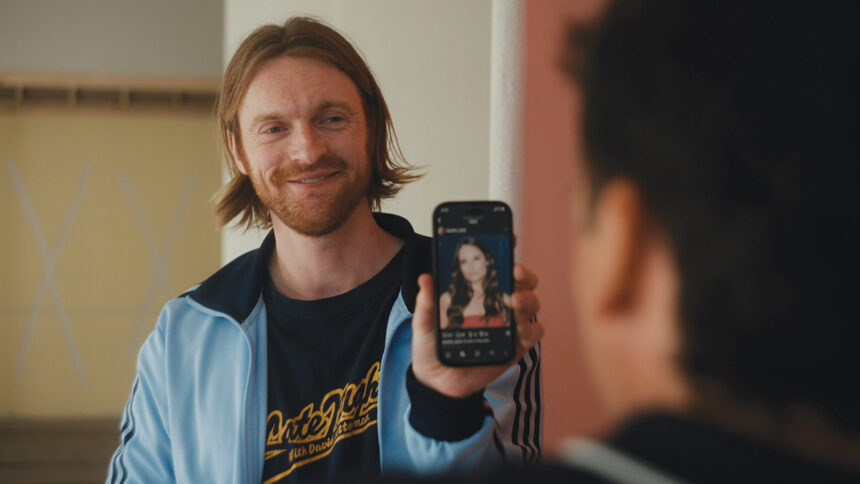
Finneas also has a cameo in episode seven, playing a douchebag version of himself who hits on his own music he wrote with Eilish while going to the gym.
“I enjoy it,” Finneas says of his less positive portrayal. “I would much rather play a bad version of myself than the best version possible. That’s almost more embarrassing. I wouldn’t listen to ‘Bad Guy’ at the gym when I’m working out. I don’t think I’d ever get excited about something I made. But that version of myself that’s completely narcissistic will. It shocked me.”
As for what he learned from scoring meatFiguring out how to work with “momentum in scenes” was the most important takeaway, the musician says.
“When we got to episode eight, I said to Sonny, ‘If I write eight more episodes of these characters, I can do it faster than I did these eight episodes because I know where I am now,’” Phineas says. “But that’s the magic: being disoriented and stumbling in the dark.”
This story first appeared in the June standalone issue of The Hollywood Reporter magazine. To obtain the magazine, click here to subscribe.