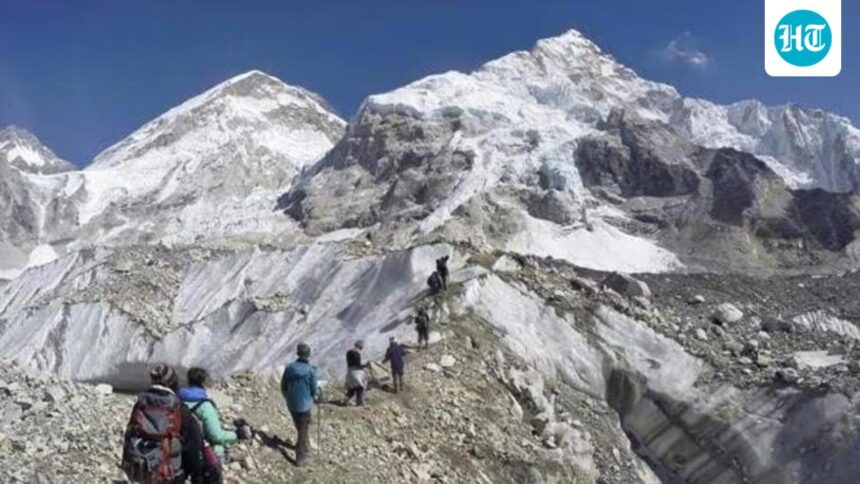
The Uttarakhand government is considering a comprehensive regulatory framework for trekking and mountaineering activities, including mandatory registration for operators, a minimum age of 14 for high-altitude trekking, mandatory mountaineering certification for guides and quotas for hiring locals.

The proposed framework seeks to improve safety standards, strengthen oversight of trekking activities and reduce environmental pressure on fragile Himalayan regions, while also boosting local employment opportunities, officials said.
The proposed guidelines, prepared by the forest department in consultation with stakeholders including the tourism ministry, State Disaster Response Force (SDRF), police, experts, trekking operators and agencies, suggest mandatory medical fitness certificates for trekkers, accountability mechanisms requiring operators to obtain weather updates before expeditions, and insurance cover for agency staff and operators, a senior forest department official said.
A stakeholder, who requested anonymity, said the proposed minimum age for high-altitude trekking is 14 years, while there will be no upper age limit. He said all trekkers must present a fitness certificate or medical certificate.
Other notable features include the formation of district-level monitoring committees, measures related to waste management, and provisions aimed at addressing capacity concerns on trekking routes.
The move comes amid growing concerns over safety standards and regulation of tour operators following several fatal accidents in Uttarakhand in recent years.
Nine trekkers from a 22-member expedition died after they were caught in a snowstorm during the Sahastra Tal trek in Uttarkashi in June 2024. An investigation by authorities found alleged negligence on the part of the trekking agency, including deploying only three guides for a trek of difficult categories, inadequate medicines, rescue and safety equipment, and failure to ensure acclimatization despite four of the trekkers being over 60 years old.
The officials also found that the trekkers were not detained at a high-altitude base camp for acclimatization, and alleged that the agency failed to coordinate with the administration for rescue and relief operations after the incident.
Twenty-nine trainees and instructors of the Nehru Mountaineering Institute were killed after being caught in an avalanche near the Dokrani Bamak Glacier in Uttarkashi in October 2022. The tragedy also struck Savita Kanswal, the first Indian woman to summit Everest and Makalu within 16 days. Since then, state authorities have been working to organize trips.
Local hiring, standard operating procedures and safety checks
BK Patro, chief conservator of forests (eco-tourism), said the proposed guidelines for regulating trekking and mountaineering activities in Uttarakhand could be presented either as a policy or a set of rules, though the final form is still under consultation.
“This is the first time that such comprehensive trekking guidelines have been developed in Uttarakhand. The aim is to avoid accidents and ensure timely rescue of victims in case such accidents occur,” he said.
Patro added that tour operators and agencies are currently registering with the Uttarakhand Tourism Development Board but will be required to register under the proposed framework for specified periods, with mandatory renewals.
He added that other proposed provisions include mandatory health checks for trekkers, age limits for guides, insurance cover for staff involved in trekking and mountaineering activities, solid waste management measures, equipment standardization and addressing capacity concerns. District-level monitoring committees will also be formed for these activities, the official said.
Patro said the proposed framework would also make it necessary for trekking agencies and operators to employ a certain percentage of local residents as employees, a move aimed at generating employment opportunities and addressing migration from hill areas.
“We have proposed every tour agency and operator to register for five years. Once the framework comes out, those already operating in the state will have to register within 60 days,” a senior official said.
The proposed guidelines stipulate qualification and age standards for trekking guides, with low-altitude guides likely to be between 18 and 60 years old and high-altitude guides between 20 and 60 years old, while those over 50 years old will need annual medical fitness certificates, he said, adding that guides will also be required to complete mandatory mountaineering courses from recognized institutes and possess at least two years’ experience with a registered agency, with high-altitude guides High needs both basics and advanced certifications.
“We want operators and agencies to ensure at least 50% employment of local residents,” he said.
He said every traveler will have to obtain a medical certificate and every agency will have to obtain necessary weather information before any expedition.
The official also said that they also proposed setting up district level committees under district magistrates and district tourism officials to oversee these activities.
Former director of the Nehru Institute of Mountaineering (NIM), Colonel Ajay Kothiyal, said standard operating procedures (SOPs) should be planned systematically on the lines of the Sikkim government for organizing trekking and other adventure activities.
“The Sikkim government’s SOPs for trekking and other adventure activities are ideal. We can also provide such SOPs. The SOPs should be in the interest of the community. It should ensure safety of trekkers, conservation of nature. All these aspects should be present in the SOPs,” he said. “Trek operators should be allowed to carry satellite phones at higher altitudes for the purpose of coordination in rescue, in case of emergency,” he added.
Rakesh Pant of Trek The Himalayas said if SOPs are introduced, it is a welcome step but their implementation is more important. “Currently, people submit their health certificates but screening must be done before starting the trek. We assess the fitness level of the participants and look for their body mass index, blood pressure, sugar and other indicators. We ask them for a medical certificate signed by a doctor, which gives a declaration of fitness. We inquire about their basic health details like whether they have blood pressure and sugar. Once the participants reach the base camp, we again check their health parameters,” he said.
Before the trip, a proper inspection of the trekking group should be done, Pant added. “If guides carry the appropriate equipment and gear needed at high altitudes, a communication device must be provided.”