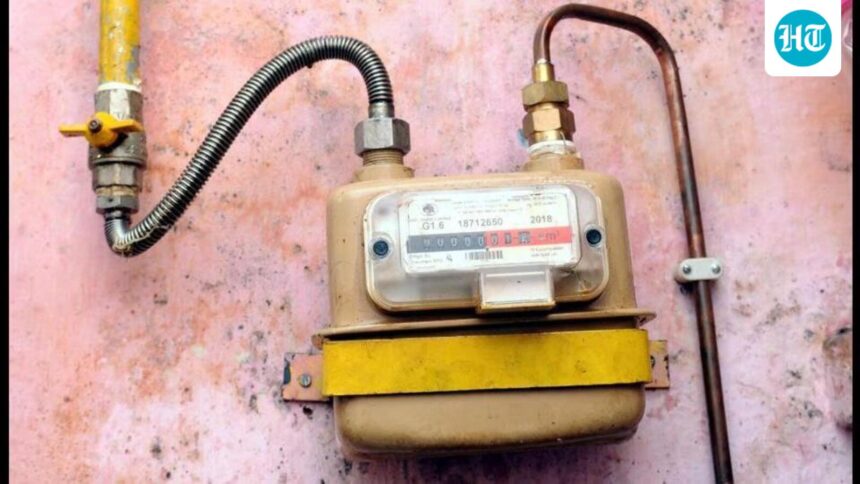
The Union Ministry of Petroleum and Natural Gas has asked oil marketing companies (OMCs) to submit reports on pipelined natural gas (PNG) deliveries as the Center plans to notify areas free of liquefied petroleum gas (LPG) amid concerns over supply disruption and rising import costs due to the ongoing conflict in West Asia. However, Bihar achieved only 30.88% of the PNG household connectivity target set for March this year.

Under the proposed mechanism, once Papua New Guinea’s infrastructure is fully operational in an area, the government will declare it an LPG-free zone, making it necessary for residents to switch from LPG cylinders to Papua New Guinea within three months. Failure to deport within the stipulated period may lead to suspension of LPG connections, officials said.
The ministry held a review meeting with heads of OMCs and senior ministers of states and union territories to assess the status of the PNG rollout as part of the Centre’s drive to reduce dependence on imported LPG, officials said on Friday.
Meanwhile, Bihar has achieved only 30.88% of its target of 3,75,751 household connections scheduled to be completed by March this year, with 31,875 applications pending till May 21.
The Gas Authority of India Limited (GAIL) has completed the PNG infrastructure in about 25 housing societies in Patna, while GAIL, which caters to 24 of Bihar’s 38 districts, has converted all 110 flats in the Dharvadi Housing Society in Muzaffarpur from LPG to PNG, officials said.
Data reviewed by Bihar Chief Secretary Prataya Amrit on May 18 showed that 10 districts — Buxar, Nawada, Madhubani, Shehar, Sitamarhi, Supaul, Gopalganj, West Champaran, East Champaran and Siwan — recorded zero achievement against targets set in 2019 for completion by March 2026.
Progress also remained minimal in areas such as Darbhanga and Saharsa. In Darbhanga, only 0.05% of the target of 31,585 connections was achieved till May 21, while Saharsa recorded a achievement of 0.44% against its target of 5,500 connections.
In Patna, 35,662 households had direct PNG connections against a target of 57,122, translating to an achievement of 62.43%. Although districts like Jamui (93.52%), Aurangabad (68.99%), Sheikhupura (68.09%), Lakkisarai (67.86%), Rohtas (66.79%) reported better percentages, their targets were relatively small, most of them less than 3,500 connections, except Lakkisarai, where the target was 7,291.
OMC officials attributed the slow implementation to multiple operational challenges, including consumers’ reluctance to switch from LPG to Papua New Guinea, shortage of skilled manpower, insufficient availability of meters, regulators and valves, and frequent damage to previously laid underground pipelines.
“Although the workers are paid according to industry standards – a daily allowance of $“1,800 plumbers and helpers – we have managed to retain less than 1% of the approximately 2,000 plumbers who have been trained to work in PNG,” a senior OMC official said on condition of anonymity.
The official added that there is also an acute shortage of skilled workers for trenching – the trenching technique used to lay underground pipelines without damaging roads or surface infrastructure.
India currently imports nearly 50% of its LPG needs, making domestic cooking fuel supplies vulnerable to geopolitical tensions. In contrast, Papua New Guinea for domestic use is largely sourced domestically, with priority given to industrial consumers, making it a more stable and secure alternative during global supply shocks.