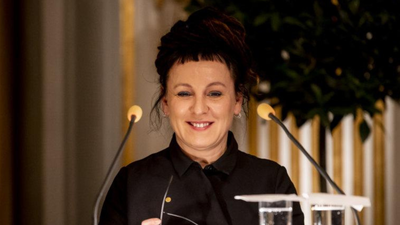
Polish writer Olga Tokarczuk, winner of the 2018 Nobel Prize in Literature, has found herself at the center of a debate about artificial intelligence after statements she made at the Impact’26 conference in Poznań were widely interpreted as an admission that she uses artificial intelligence in her writing process.
During the lecture, she described AI as a tool that can expand creative thinking and help develop ideas. She also cautioned that the technology could produce factual errors. What started as a discussion about creativity and technology quickly turned into a heated debate about the future of literature and the role of artificial intelligence in artistic work. Tokarczuk later issued a clarification, saying that her upcoming novel was not written using artificial intelligence, and that she mainly uses the technology for brainstorming, idea development, preliminary research, and fact-checking.
What Tokarczuk said about the use of artificial intelligence
According to Notes from Polish, Tokarczuk said she bought the “highest, most advanced version” of the language model, and was often “deeply shocked” by how much it expanded her thinking. She joked that she sometimes throws ideas into the machine and asks, “Honey, how can we develop this beautifully?”At the same event, she said that AI could help create a “symbiotic future” for writers and could become an “asset of incredible proportions” in literary fiction.
She also said that while writing her latest novel, due out in Polish this fall, she asked the showrunner what songs her characters might have danced to decades ago. Tokarczuk added that one of the suggestions included the wrong name, prompting her to warn that users “should be careful of hallucinations.”
Why did the statements spark violent reactions?
The reaction was exacerbated by Tokarczuk’s status as one of Poland’s most admired literary figures. As a Nobel laureate, her comments carried much more weight than an ordinary interview.
Notes from Poland reported that these statements sparked criticism from online commentators and some Polish writers.One of the strongest responses came from novelist Szczepan Tvardukh, another speaker at the Impact’26 conference. In a Facebook post, he said he would have to “lose my mind” to use the language model in literature. He also compared being in a relationship with a model to “marrying a vibrator.”
Illustration by Tokarczuk
Following the backlash, Tokarczuk issued a statement through her publisher and Lit Hub, saying her statements had been “misconstrued.”
She clearly stated that she did not write her next book using AI or with anyone else, and that she wrote on her own for decades.She added that she uses artificial intelligence “as a tool that allows for faster documentation and verification of facts,” and said that she verifies the information every time she uses it. Tokarczuk also stressed that none of her scripts, including the novel due out later this year, were written using AI except for “faster initial research.”This clarification shifted the debate away from claims of AI-written fiction and toward a broader question: How much help should writers get from generative AI tools?
Do you think artificial intelligence can enhance creativity in writing?
Wider literary discussion
This controversy reflects a larger debate across the publishing world. Some authors see AI as a research aid and brainstorming tool. Others view limited use as a threat to authorship and artistic integrity.Tokarczuk’s comments struck a chord because they presented artificial intelligence as beneficial to creativity while still defending traditional literature as a deeply human craft.
During the same statements, she said that she feels sad about the disappearance of the era of solo writing and does not believe that chat programs can match the real literary voice.Meanwhile, writer Zimovit Štčerek defended Tokarczuk and criticized the “moral outrage” surrounding her comments. He said she should be free to experiment with artificial intelligence if she wanted to.Tokarczuk’s episode shows how quickly nuance can disappear once AI enters the conversation.