Sir Tom Courtenay is 89 years old and tells a story about the day Alec Guinness showed him a strange sci-fi film script he wasn’t entirely sure about.
“He seemed unsure about it,” Courtenay recalls. “But there was something he could smell in him.” The movie, of course, was star wars. He made Guinness fabulously rich.
This is what a conversation with Tom Courtenay looks like: an almost impromptu tour through the entire period of post-war British cinema and theatre, conducted by a man who was present for most of it.
He worked with David Lean in Dr. Zhivago – where Len was seen hiding behind a hotel column in Madrid to avoid having to talk to Rod Steiger. He took over the role of Billy Liar on stage after it was created by Albert Finney, and was relentlessly compared to Finney; Then, in 1983, he made a movie with Vinny that transformed them from professional rivals to best friends.
He met Judi Dench at the Old Vic straight after graduating from drama school. He has been associated with the Guinness Book of World Records in a group Zhivago He stayed in touch for the rest of Guinness’s life. During his knighthood in 2001, Queen Elizabeth II told him that Manchester audiences might be better than London ones.
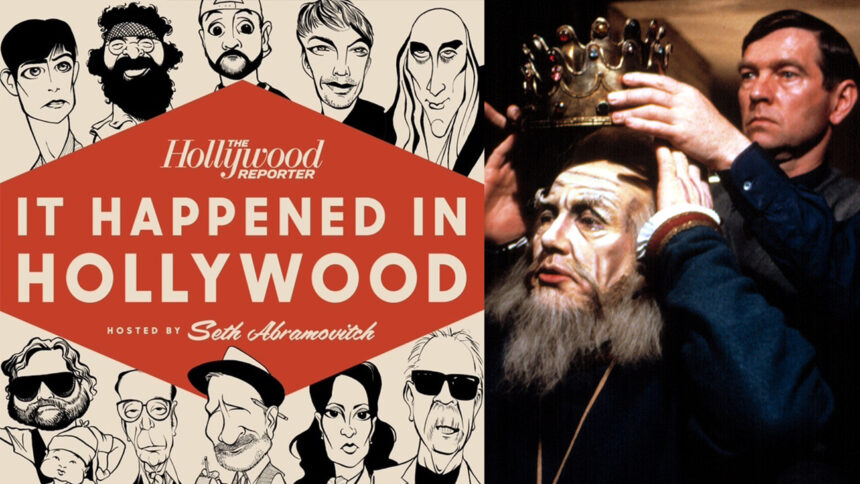
The occasion for all this is hairdoPeter Yates’s 1983 film adaptation of Ronald Harwood’s play, which brought Courtenay his only Oscar nomination and which is this week’s topic. It happened in Hollywood.
The film stars Courtenay as Norman, the loyal and slightly funny man of a declining Shakespearean actor (Finney) who is touring England during the Blitz. It remains one of the most enjoyable performances in the history of British cinema.
Courtenay did the theatrical version before the film. He and Finney, who had circled each other for two decades without becoming friends, discovered during filming that the film’s central dynamic—the two roles written, in Courtenay’s words, “to make people unfriendly”—was having the opposite effect.
“We became best friends working on it together,” he says. Vinnie loved teasing him about his lack of interest in technical filmmaking. “If there’s a black hole, he’ll find it,” Finney would affectionately say of Courtenay wandering in the shadows.
The film’s climax – a long, uninterrupted scene in which Norman collapses after the actor’s death, finally undoing years of thankless devotion – was filmed in a single take at the insistence of director Peter Yates.
“Go now,” he said, “and lie down, and don’t think about it.” “Then they lit it, and I came in and did it,” Courtenay recalls. The focus drifts a little at one point. Yeats kept it anyway.
Courtenay says what makes Norman work is something very simple: “He loves the actor more than himself. That’s the key to the role.”
This is a formula he returns to when describing his character in his latest film, Queen at sea – directed by American director Lance Hammer and co-starring Juliette Binoche – which premiered at the Berlinale earlier this year and won the Courtenay Award for Acting.
In this film, he plays a man who struggles to keep his dementia-afflicted wife at home against his stepdaughter’s wishes. Two films, separated by four decades, driven by the same principle: a love that asks for nothing and gives everything.
Courtenay rejected most Hollywood offers when they came in the 1960s. He was the face of the British New Wave – the Jean-Paul Belmondo of British cinema – and he could have parlayed that into something much more commercial. He passed.
“I felt like the only way I was going to develop as an actor was to be on stage,” he says. “Maybe I’m overdoing it. I’m overthinking things.” Wait for production Doctor Zhivago In a kind of sweet agony, you watch Len search for the right weather and plant daffodils. He was satisfied with the company: Omar Sharif, Rod Steiger, Alec Guinness.
He has no regrets about any of it, or if he does, he wears it so lightly that he doesn’t notice it. At 89, he still accepts the roles he loves, still attracts film crews who pester him about his football club, and still wins awards.
Queen at sea It is expected to be shown in art houses in the United Kingdom next September, which is the time for awards season. He doesn’t know yet about the US release.
“If I hadn’t gone on stage when I was young, I wouldn’t have learned how to act,” he says. “It’s one thing to have some talent, but it’s another thing to make the most of it.”
It happened in Hollywood Available on all major podcast platforms. hairdo (1983) is currently available to rent on Apple TV.