

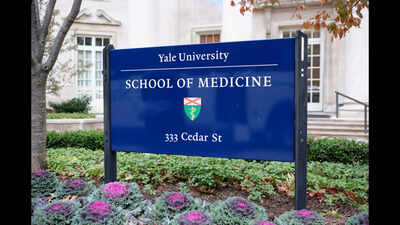
 In a letter sent Thursday to Yale’s legal counsel, Assistant Attorney General for Civil Rights Harmeet Dhillon said a federal investigation found that Black and Hispanic applicants had a significantly greater chance of being accepted than white and Asian applicants with similar academic credentials. According to the department, the results were based on applicant data from incoming medical school classes between 2023 and 2025. “Yale has continued its race-based admissions program despite the Supreme Court and a clear mandate from the public for reform,” Dillon said in a statement reported by The Associated Press. The Justice Department alleged that Yale University School of Medicine violated Title VI of the Civil Rights Act of 1964, which prohibits discrimination on the basis of race at federally funded institutions. The administration said it is seeking to reach a voluntary resolution agreement with the university but reserves the authority to pursue litigation if compliance is not achieved.
Yale defends admissions process
However, Yale defended its admissions process. In a statement reported by the Associated Press, the university said its medical school is “confident in our rigorous admissions process,” adding that accepted students demonstrate “exceptional academic achievement and personal commitment.” The case marks the second time this month that the Justice Department has moved against a major medical school over admissions practices.
Last week, federal authorities told UCLA that its medical school illegally took race into account in admissions decisions.
The Trump administration’s broader crackdown on affirmative action
The latest action comes amid broader efforts by President Donald Trump’s administration to restrict the use of race in higher education admissions. Since returning to power in 2025, the administration has repeatedly argued that race-sensitive admissions policies amount to unlawful discrimination. The Justice Department’s letter also pointed to the U.S. Supreme Court’s 2023 ruling in the Fair Admissions Student Cases involving Harvard University and the University of North Carolina, which effectively ended affirmative action in college admissions. Federal officials argued that Yale admissions scores after the ruling showed little change, which they described as evidence of continued racial preference in admissions decisions.
The Department of Justice cites GPA and MCAT data
According to the Justice Department letter, black students accepted into Yale Medical School’s most recent class had an average GPA of 3.88 and an average MCAT score in the 95th percentile. Asian students had an average GPA of 3.98, while white students had an average GPA of 3.97. Both Asian and white students reported average MCAT scores in the 100th percentile. “Based on our preliminary review of applicant-level data, Yale’s use of race increased the odds of a Black applicant receiving an admissions interview by up to 29 times compared to an equally strong Asian applicant with similar academic credentials,” the letter said, according to the AP. The department also questioned Yale’s use of comprehensive admissions processes, arguing that such frameworks were being used to continue race-sensitive selection after the Supreme Court ruling.
Lawsuits and increased federal scrutiny
The letter also cited an amicus brief Yale filed in the Students for Fair Admissions case, in which the university said it would fight to maintain diversity without explicitly considering race in admissions.
Federal officials said Yale’s ability to maintain similar levels of diversity after the ruling raised concerns about whether the institution had complied with the court’s decision. In March, a coalition of 17 Democratic attorneys general filed a lawsuit challenging a Trump administration policy requiring colleges and universities to submit data proving that race is not taken into account in admissions decisions.