If we are to learn from the lessons of history, Prime Minister Narendra Modi’s appeal to citizens not to buy gold is likely to end in bitter disappointment. In their religious texts, such as the four Vedas, Indians emphasized that gold was a divine element, and that possessing and gifting gold would lead to a wonderful afterlife. The higher the price of gold, the more we want to buy it.

According to the Hiranyagarbha Sukta of the Rig Veda, the creation of the Brahmand, or the universe itself, takes place in a womb of gold. The Hiranyagarbha ritual became the most expensive and prestigious ritual of the kings of the mysterious dynasties during the medieval period. As part of this, the Brahmins were given a golden bowl after using it as a womb from which the king emerged and the necessary rituals such as Jatakarma were performed.
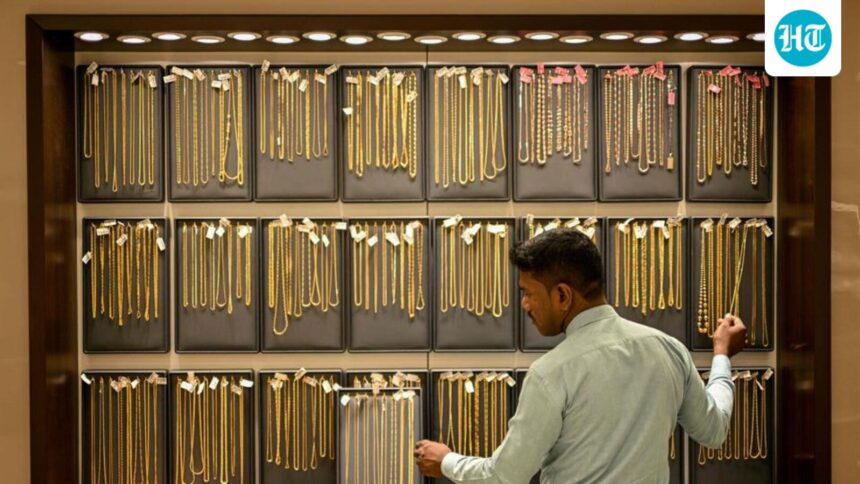
Radiant, malleable, light and non-corrosive, gold was used in jewellery, as seen in the mention of various ornaments in the Vedic texts. Some of them are pravarta or earrings, amulets, kurira or gold ornament, and nisharya or necklace of gold coins. In Tamil, the necklace is referred to as Kasu Malai.
At least four forms of gold extraction existed during the Vedic, Post-Vedic (after 6th century BCE) and Common Era periods. Ancient Indian literature identifies four different methods of extracting gold. By the alluvial method, soil was stressed from river banks; For this purpose, water of rivers like Indus, Suvarnarekha, Jambu and Ganga were used. The Arthashastra, dating from the first centuries of the AD era, mentions the extraction of gold from fluids trapped in rock crevices. In the 4th century text Gandhavuha Sutra, Kalidasa also refers to “Kanaka-rasa” or liquid gold, which can be as valuable as one unit of liquid gold is equivalent to 100 of silver or copper.
By this time, extracting gold from mines had become a major concern for the kingdoms, as evidenced by references to the akaradyaksha or mine manager, the superintendent of gold (suvarnadyaksha), the supervisor of the mint (lakshanadhyaksha), the examiner of coins (rupadharshaka) and the royal goldsmiths (suvarnika).
While Brahminical Hinduism has always adored the goddess of wealth, Lakshmi, even when it suffered setbacks after the rise of Buddhism and Jainism after the 6th century BCE, the two new religions did not do away with the irresistible goddess. They both eschewed materialism but created their own forms of Lakshmi, such as those seen in Jataka tales and sculptures at Sanchi.
India “Golden Sparrow”
Sources of gold and silver were never abundant in India. However, the quality of Indian textiles, ivory, precious stones, perfumes, and, most importantly, spices such as pepper was excellent. They were exported to the West – empires centered around the Roman Empire, Greece and Persia, among others – in exchange for gold and silver. Both land and sea routes were used for trade, but after the 2nd century AD, when the discovery of the monsoons provided an efficient means of transporting goods, ports in southern India became centers of transcontinental trade. Ships laden with Mediterranean wine and other goods came to the Malabar coast and returned laden with black gold or pepper. In his book Behind the Gold for Pepper: Players and the Game of Indo-Mediterranean Trade, Jeremy Simons writes, “We have one contract and a waybill preserved in the Muziris Papyrus, which outlines the financing and transport of large goods acquired at Muziris – the port of Malabar…”
The Romans allegedly coined the term “Golden Sparrow” (Sone ki Chidiya) for India at the turn of the AD era. In fact, they used much of their gold to buy Indian products – gold sourced from North Africa and beyond – creating the kind of crisis India is experiencing today.
“The magnitude of the precious coins received by Indians is evident from the colonial-era discovery in southern India, where a cache of minted Roman gold and silver was estimated at ‘eight workman-loads’ with 20,000 coins per porter,” Satish Deodhar wrote in his book Gold is Ancient: A Noble Metal in the Indian Economy Through the Ages. The Romans were importing unproductive luxuries that were not worth the gold that Rome was giving away and that their luxuries and women were costing them a million sesterces (Roman coins) annually. Tamil Sangam literature also mentions that the Yavanas would return to their lands with pepper and that Muziris would resonate with the noise of Roman gold which would also land in many other Indian ports, such as Barbaricum (Karachi) and Baruch.”
It is not clear what the ancient Indians did with all the gold they received in exchange for pepper, ivory, and textiles. Some of it may have been used to mint coins, as it did until at least the Gupta Empire, but what about the rest? Romila Thapar noted about the use of all this gold that came to India: “What is not clear is the role of coins in the economy. This certainly needs more work. Were they simply hoarded and sold off slowly? We are also told that the value of the gold coin bullion is much greater than the actual value of the coin. So it is believed that some of the coins may have been sold as bullion. Sold to whom? Sold where? What is the evidence for that? We don’t have it all yet.”