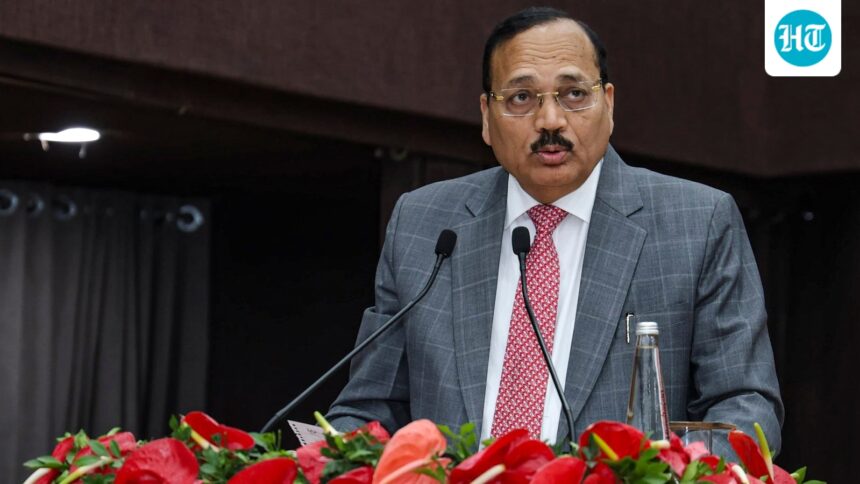
Chief Justice of India (CJI) Surya Kant on Saturday sought to clear the air around his “young people are like cockroaches” remark, saying his oral remarks had been wrongly misrepresented, and that his criticism was specifically directed at those who entered professions like the Bar (legal profession) using fake or bogus degrees.

On Friday, CJI Kant raised concerns over the number of lawyers who allegedly possess fake law degrees. He said that there were already enough “parasites” in society targeting the judiciary and others, and that lawyers should not side with such elements.
His comments describing “unemployed youth” as “cockroaches” sparked controversy, especially among young people across the country.
CJI issues clarification on ‘young people are like cockroaches’ remark.
Explaining his remarks, Kant said that a section of the media misquoted his remarks and presented them as criticism of the country’s youth.
He said, “It pains me to read how a section of the media misquoted my oral remarks made during the hearing in a frivolous case yesterday. What I specifically criticized were those who entered professions like law with the help of fake and forged degrees. Similar people have infiltrated the media, social media and other noble professions and are therefore like parasites. There is absolutely no basis in saying that I criticized the youth of our nation.”
The CJI also said that he is proud of the country’s youth and considers them “pillars of a developed India,” news agency ANI reported.
“Not only am I proud of our current and future human resources, but I am inspired by all the youth of India. It is no exaggeration to say that the Indian youth have great appreciation and respect for me, and I also see them as pillars of a developed India,” he said.
What sparked the controversy?
These comments came during a hearing before a judicial panel including the International Commission of Justice and Justice Joymalia Bagchi. The bench was hearing a petition filed by advocate Sanjay Dubey seeking contempt proceedings against the Delhi High Court over alleged delay in implementation of the Supreme Court’s guidelines on appointment of senior advocates.
CJI Kant strongly criticized what he described as growing and unnecessary attacks on the judiciary and the legal system. He said some of the unemployed youth later became “media, social media, RTI activists and other activists” and started targeting institutions.
“There are young people who are like cockroaches, who do not get any work or have any place in the profession. Some of them become media persons, some become social media, RTI activists and other activists and start attacking everyone,” the CJI observed during the hearing of a petition related to granting appointment of senior advocate, according to an earlier HT report.
The court refused to hear the petition and strongly disapproved of the petitioner’s conduct. She noted that the appointment of a senior advocate is a distinction “granted” by the court and not something that should be pursued through legal process.
A visibly upset ICJ member referred to the language the petitioner had allegedly used on Facebook and warned that such behavior did not meet the standards expected of legal professionals.
“Let people understand the kind of language you use on Facebook,” he said. “I will show you what discipline means in the profession.”
CJI on “Parasites in Society”
The court also said that there were indeed “parasites” in society attacking institutions and questioned whether the petitioner wanted to be with them.
“There are already parasites in society attacking the system and you want to cooperate with them?” Note the bench.
During the hearing, the court also raised concerns about the growing number of lawyers allegedly holding fake or questionable degrees, and said the issue needed investigation.
“Thousands of fraudulent people are wearing black robes with serious doubts about their certificates. The CBI needs to do something,” observed CJI Kant.
As the hearing continued, the petitioner apologized to the court and requested permission to withdraw his plea. The authority later allowed the petition to be withdrawn.
With input from agencies