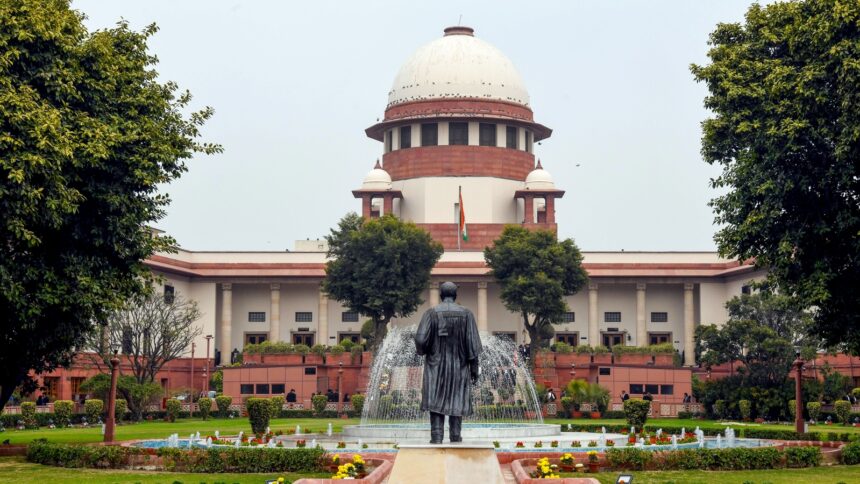
In response to the worsening energy crisis caused by conflict in West Asia, the Supreme Court on Friday ordered mandatory virtual hearings on Mondays and Fridays in June and July, while also allowing up to 50% of registration staff to work from home two days a week.

The Supreme Court judges also decided to use cars to reduce fuel consumption.
The move, directed by Chief Justice of India Surya Kant, came after a full court meeting on Friday morning, against the backdrop of a sharp rise in global crude oil prices and growing concerns in India over energy.
A circular issued by Supreme Court Chief Secretary Bharat Parashar on Friday said that all matters listed on “miscellaneous days” — Mondays, Fridays or any other days declared as miscellaneous days — as well as matters included during the partial working days of the court, “shall be heard through video conferencing only”.
The registry has been directed to ensure stable video conferencing facilities and provide timely technical assistance “to avoid any inconvenience to the honorable court,” the circular said.
The circular also said that the Supreme Court justices “unanimously decided to encourage car-sharing arrangements among themselves” to ensure “optimal use of fuel.”
In addition, the court allowed up to 50% of employees in each branch or department of the registry to work from home for up to two days per week. Registrars have been asked to prepare weekly rosters while ensuring the uninterrupted functioning of the court administration.
The circular stated that employees allowed to work remotely must remain available on the phone and be ready to inform the office whenever necessary. It also enables relevant registrants to restrict or modify work-from-home arrangements if they find the system ineffective for essential work.
The Supreme Court decision reflects the Union government’s broader call to conserve fuel amid mounting pressure on India’s import bill due to rising crude oil prices. Prime Minister Narendra Modi had earlier this week urged citizens to reduce petrol and diesel consumption, use public transport, adopt carpooling, and revive work-from-home practices wherever possible.
Addressing concerns about the energy situation earlier this week, the government reiterated the Prime Minister’s call to make every effort to conserve energy in daily life.
On Friday, India also raised petrol and diesel prices by… $3 pounds per liter – the first rise in retail fuel prices in four years – as state-run oil marketing companies sought to recoup losses from rising crude oil prices.
The Reserve Bank of India has already indicated that a prolonged conflict in West Asia may force the government to eventually pass on higher fuel costs to consumers. Reserve Bank of India Governor Sanjay Malhotra recently said that if the crisis lasts longer, it is only a matter of time before the government agrees to some price increases.
India imports more than 80% of its crude oil needs, making it particularly vulnerable to disruptions in supply routes in West Asia. The country’s merchandise trade deficit widened sharply in April as crude oil import costs rose amid the conflict.