The Chinese Film Pavilion has returned to Cannes for the fifth year in a row, and organizers have arrived bearing news of a thriving local market and a slate designed to showcase the breadth of talent back home.
The numbers alone make compelling reading. The Chinese Film Co-Production Company reports that China’s domestic box office, as of May 5, has already reached $1.98 billion – about a fifth of global revenues year-to-date. This comes after 2025, in which the Chinese market collected $7.45 billion, an annual increase of 21.9 percent. Ticket sales at urban cinemas rose 22.57 percent, and the country added 2,219 screens over the year, bringing the total to 93,187 – more than anywhere else in the world.
The five-day Labor Day weekend, which ended on May 5, added about $110 million to that amount, a modest increase from 2025. The top performer was director Cheng Wei Hao’s thriller Vanishing pointfollowed by the subject Cold War 1994 ($21.2 million), 20th Century Studios The devil wears prada 2 ($6.1 million) and the comedy Chen Sicheng Running towards death ($5.4 million).
In Cannes, the pavilion – which brings together 70 Chinese film companies including China Film Group Corporation, CMC Pictures, Bona Film Group and the Shanghai International Film Festival – will screen more than 180 titles. Among them are sports comedies Pegasus 3which has grossed nearly $649 million domestically, alongside Yuen Woo-ping’s martial arts epic Guardians Bladesexciting story intimidation From Zhang Yimou, the sci-fi star Per Aspera ad Astra, Bonnie Bears: The Hidden Protector (12y In the children’s animated film franchise) and female-focused comedies decent By Lena Yang.

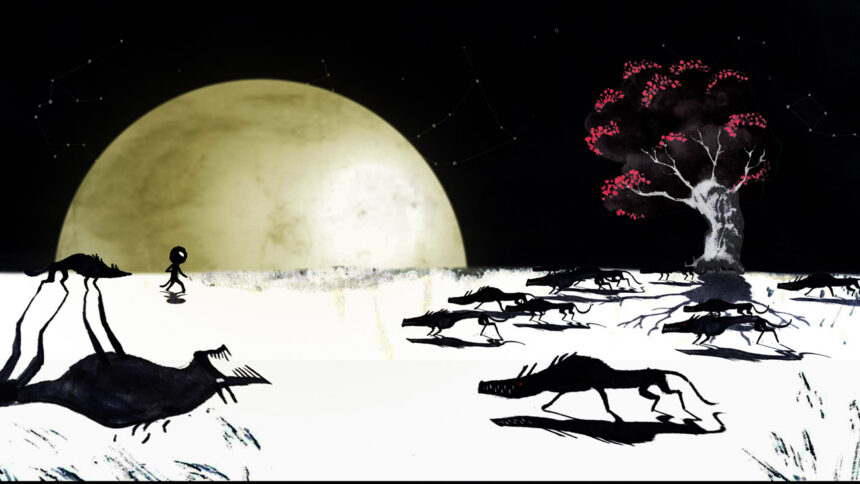
The May 13 special showcased the family drama Shanghai wontona female-focused comedy decent And artfully animated A story about fire – It has been described as the world’s first hand-drawn animation made on Xuan paper, the traditional Chinese material famous for its smooth texture.
The film earned director Li Wenyu a nomination for a Crystal Bear Award in Berlin last year, and has become one of the most talked-about films of China’s animation boom. Lee relied heavily on ink drawing techniques to achieve the film’s distinctive visual language, a process that required an unusual degree of personal involvement.
“After trying many different techniques, I found that ink painting on Xuan paper was really the best way to achieve the effects of expressive brushwork and negative space,” he says. “However, everyone handles brush and ink differently, so it is very difficult to standardize this method. In order to maintain the overall visual consistency of the film, I had to complete an enormous amount of drawing work myself. It was quite a challenge, but I managed to do it.”
The film follows a young ape who discovers his surprising origins while trying to steal fire from a ferocious beast – a journey that explores friendship, loyalty, and the courage to face fear. It arrives at a moment of extraordinary momentum for Chinese animation. Ni Cha 2 It became the highest-grossing animated film in history last year with global revenues of $2.2 billion, and China’s animation industry is expected to be worth $48 billion in 2026, up from $41 billion in 2023.
Lee believes that this growth reflects a broader creative boom. “Chinese animation today has become very diverse in its forms of expression,” he says. “In recent years, China has produced 3D animated films that have attracted global attention, and Chinese animated films have continued to appear on the lists of major international film festivals. From visual form to subject matter, Chinese animation is now thriving in many different directions and reaching a global level.”
But what inspires him most is animation’s ability to break the rules of traditional filmmaking. “What interests me most is the language of animation itself – forms of expression that belong uniquely to animation,” he explains. “The graphic expression, transformation, and use of different materials all carry tremendous imagination and can push the boundaries of traditional film language. The challenge is how to use these languages of animation to tell an animated story, and use them in a way that is both believable and subtle at the same time.”
The film will be screened at ESRA Film School on May 16, followed by a Q&A session with Lee, which will give local students a chance to interact with the film first-hand. The pavilion’s broader ambition, according to the CFCC, is to “introduce the vibrant vitality of Chinese cinema to the world through more diverse approaches, and facilitate deeper integration between Chinese filmmakers and global industry resources.”
Lee, for his part, keeps it simpler. “My film is about growth and companionship,” he says. “For me, growth isn’t just about getting older or achieving a certain type of success. It’s about having the courage to face fear.”