What does your social media algorithm show you? Maybe it’s news about the war in Iran, maybe it’s lifestyle influencers or cute pets to adopt. We are not here to judge! But no matter what type of content you’re scrolling on Facebook, TikTok, Instagram, or other social media, you’re probably using it as an opportunity to relax rather than think critically about what you’re seeing.
However, there is a problem: many social media platforms are now full of AI-generated content. Although it may not matter whether there is already a dog shelter where pets choose their new owners, it could pose a much greater disinformation challenge if false claims spread that a US military base in the Middle East was bombed. What’s more, once synthetic media becomes available, studies show that people stop trusting even verified videos.
While early AI scammers could be spotted by their obvious mistakes, they have become almost impossible to spot — the Global Investigative Journalism Network points out that detection methods that were successful just a few years ago are now outdated.
THR We discovered 10 posts on different accounts, ranging from lifestyle advice to wartime disasters. Can you tell which ones are real and which ones are created by artificial intelligence? Watch each video and make your guess, then check your answers to see how you score.
1 Influencer Nara Smith
↓ Go to answer
2 Influencer Shodogram
↓ Go to answer
3 Children say the most wonderful things
↓ Go to answer
4 Jiu-Jitsu practitioner versus bodybuilder
↓ Go to answer
5 Benefits of Tai Chi
↓ Go to answer
6 Comedian and influencer Quinlyn Blackwell
↓ Go to answer
7 The shelter is where dogs choose their new owners
↓ Go to answer
8 Iranian raid on a fuel storage facility in Bahrain
↓ Go to answer
9 Iranian missile strike on Tel Aviv
↓ Go to answer
10 Novelty spills at Coachella
↓ Go to answer
Answer key
1 Nara Smith: Real
While it may be hard to imagine spending all that time doing French dips, Smith is actually a real person, and was even named THRList of the 50 most popular influencers last fall. She brings a glamorous atmosphere to documenting her life, showcasing made-from-scratch meals and other lifestyle content. She has 12.4 million followers on TikTok and 4.8 million on Instagram.
↑ Back to the question
2 Shodo Gram: Created by AI
Shudo Gram is known as the world’s first digital model and was created in 2017. With nearly 240,000 followers, she has collaborated with luxury fashion brands like Balmain (and it’s true).
↑ Back to the question
3 Children: Created by artificial intelligence
This video of children expressing their confusion over how their new sibling was cloned, and young children throwing a tantrum because they feel cheated, is itself a hoax. This video and others like it have recently been circulating using clickbait scams.
↑ Back to the question
4 Jiu-Jitsu: Real
This video was posted by Gracie Jiu-Jitsu Apple Valley, a well-known jiu-jitsu network site led by Reiner and Rayron Gracie, to show the power of martial arts.
↑ Back to the question
5 Tai Chi: Created by artificial intelligence
We are sorry to inform you that although Tai Chi has a lot of benefits, it cannot give you six pack abs in 28 days. Many Tai Chi teachers and practitioners have called out videos like this one, which promise quick, unrealistic results. This is the hook that often leads to a link to a subscription service that turns out to be expensive and/or deceptive.
↑ Back to the question
6 Quinlyn Blackwell: Real
Blackwell is a true Gen Z influencer who started out making Vine videos and has since amassed over 13 million followers on TikTok and 4.4 million on Instagram. She’s a comedian and model who also posts fashion and lifestyle content (including a recent MAC collaboration). And she was one of THRThe 50 most influential people. It seems barely Too good to be true, right?
↑ Back to the question
7 Pet Shelter: Created by AI
Videos like this have been around for quite some time, so don’t feel bad if you see one and get scammed. Bridget Moynahan reposted this example explaining that it was created using Sora 2, but many of her followers commented that they were disappointed when they realized it wasn’t real. In good news, one shelter in Pennsylvania has recreated the trend started by artificial intelligence, e.g Newsweek I mentioned.
↑ Back to the question
8. Bahraini missile strike: real
Although the BBC and others have noted an uptick in AI-generated videos purporting to show attacks across the Middle East during the US war in Iran, this video was published by CNN, which gives its source to the Bahrain National Communications Centre. The Global Investigative Journalism Network has published this guide to how to spot AI-generated content online. It’s intended for journalists, but it’s useful for anyone concerned that they might see content modified by AI.
↑ Back to the question
9. Missile strike in Tel Aviv: Created by artificial intelligence
This widely circulated video has been debunked before New York Times. One potential advantage is that the video shows a flag in the foreground, a common feature of AI videos filmed in Israel. the times He also points out that real videos are usually quieter, and are “filmed from a distance, usually at night.”
↑ Back to the question
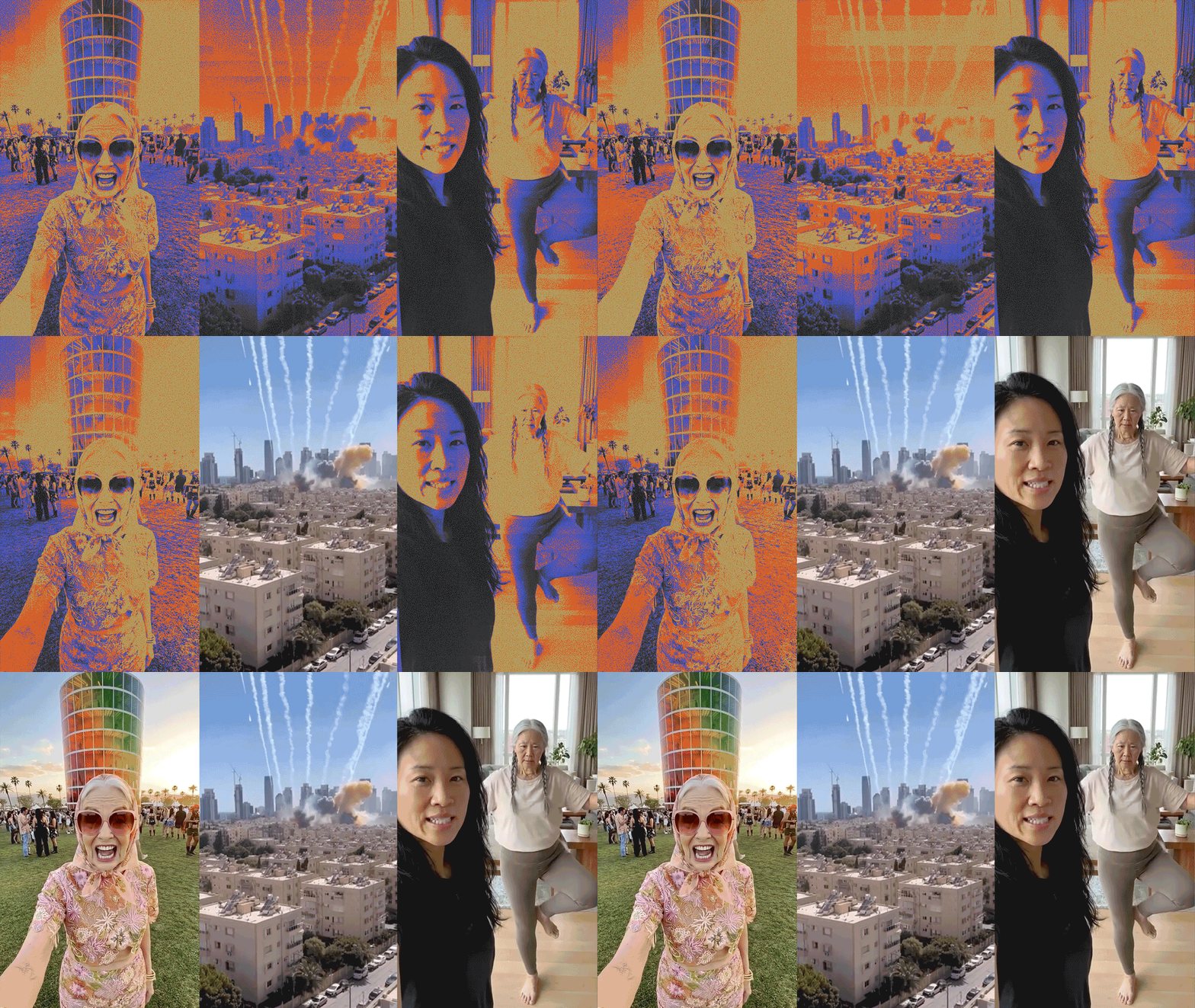
10 Novelty Spills: Created by artificial intelligence
Influencers, both real and AI, flocked to Coachella this year. Among the most entertaining of the AI group was Granny Spills, who posted photos “with” celebrities from Justin Bieber to Billie Eilish and Sabrina Carpenter, as well as videos of herself conquering the festival. The Blur Studios creation has 2 million followers on Instagram.
↑ Back to the question
This story appears in The Hollywood Reporter’s Artificial Intelligence issue. Click here to read more.