The Karnataka government’s move to restore students’ union elections has sparked a familiar mix of enthusiasm and anxiety, reopening questions about representation, political influence and the memory of the campus unrest that once dismantled the system more than three decades ago.

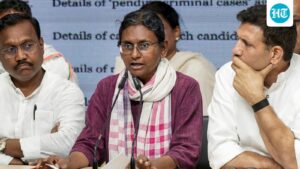
At a meeting in Bengaluru on Wednesday, ministers sat across the table with student leaders representing competing ideologies, and many of them agreed on at least one point: elections must return soon.
The government has indicated that polls will be held in line with the recommendations of the JM Lengoh Commission, a framework designed to regulate campus elections, although adjustments will be made to reflect current circumstances. Higher Education Minister Dr M C Sudhakar said: “The elections will be held this academic year with modifications to suit the current conditions in universities.”
The consultations came in the wake of Chief Minister Siddaramaiah’s budget announcement proposing to re-establish student unions to encourage leadership and democratic participation. Medical Education Minister Dr Sharan Prakash Patel described the exercise as “supplementary to sensitizing students on the democratic aspirations of the Constitution”.
For many student groups, this announcement marked the return of a space that had been absent for a long time. Between 2001 and 2016, for example, the Bangalore University Academic Council functioned without student representatives. When the students were returned to the council in 2016, they held only five seats on the 54-member body, limiting the role they played in institutional decision-making.
However, the push to revive the election also carries the weight of history. In previous decades, student unions were central to university life in Karnataka, shaping policies and mobilizing protests over issues such as fee hikes. Many political figures built their early careers through these platforms. But close ties between student organizations and major political parties meant that off-campus struggles often found their way into the classroom.
A retired faculty member from a government arts and science college in Bengaluru, who spoke on the condition of anonymity, pointed out how quickly tensions can escalate. “There was a case where statements by leaders of rival parties led to sloganeering on the campus, which soon escalated into clashes,” the faculty member said.
Over time, the nature of competitions on campus has changed, the faculty member said. “Money and influence from outside began shaping competitions on campus, and that’s when tensions began to rise,” the member added.
In some cases, the consequences were more serious. “There were cases where individuals linked to the underworld entered campus to intimidate or attack candidates before elections. It was not consistent or in every college, but there were enough such cases to raise concerns about the direction campus politics was taking,” the professor said.
By the late 1980s, such incidents began to come under legal scrutiny. A series of lower court rulings on campus violence contributed to the state government led by Virendra Patel deciding to ban party-based student union elections in 1989. While elections continued at some colleges through informal arrangements, the structure was changed, with “unions” – groups of candidates running together without a formal party affiliation – replacing recognized student organisations. Even this system was eventually discontinued by 1997.
Current efforts to re-run the elections appear to aim to balance this history with demands for representation. At Wednesday’s meeting, student organizations identified various priorities. Left groups called for organized representation, including reservation for women. Aditya N Raj of Vidyarthi JD(S) suggested allocating 70% seats for Kannada speaking students.
Other groups focused on organizing candidates. Representatives of the RSS-affiliated Akhil Bharatiya Vidyarthi Parishad (ABVP) suggested eligibility criteria such as minimum attendance of 60% and no pending FIRs or academic backlog. The proposal has drawn opposition from others, who have argued that such rules could exclude students active in the protests. “It is not fair to bar a student on the basis of attendance or FIR. Everyone should get a fair chance,” representatives of the Congress-affiliated National Students’ Union of India and Vidyarthi JD(S) said.
Even as student leaders pushed for immediate elections, some university authorities expressed concern about the potential for disruption. They noted that although it is not necessary to directly oppose the elections, it will be necessary to provide safeguards to ensure that academic activity is not affected and that universities remain free of violence.