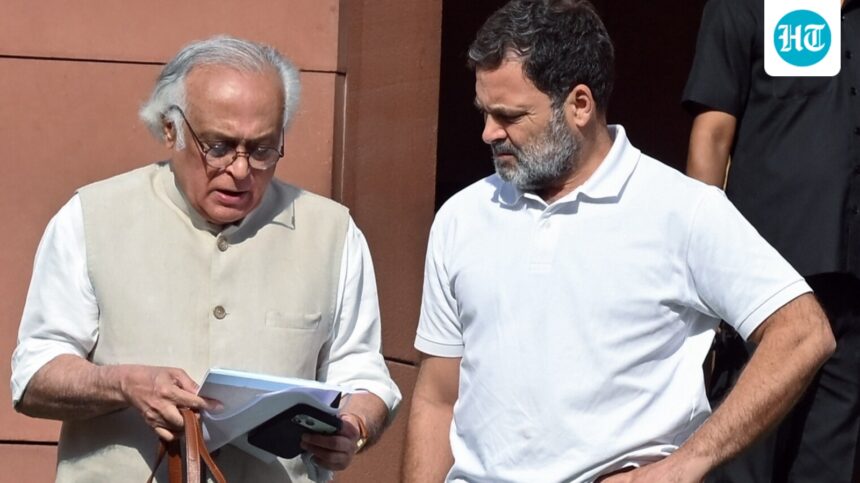
LUCKNOW: A Lucknow bench of the Allahabad High Court on Friday directed the state government to file a first information report against Rahul Gandhi, Leader of the Opposition in the Lok Sabha and Congress MP from Rae Bareli, in connection with a petition related to his citizenship.

Justice Subhash Vidyarthi issued the final order after accepting the plea of Karnataka-based Bharatiya Janata Party (BJP) worker S Vignesh Shishir seeking registration of an FIR against Rahul Gandhi over his alleged British nationality.
“The Supreme Court has directed an FIR to be lodged against Gandhi in the citizenship case,” said SP Pandey, senior advocate and Assistant Attorney General of India who represented the Union government in the court.
Pandey added that since the matter concerns the citizenship of a foreign country, central agencies may also investigate the case.
The Supreme Court is yet to upload the order on its website.
The petitioner sought quashing of an order passed by the special MP-MLA court in Lucknow on January 28, which had rejected an application directing the authorities concerned to register an FIR against Gandhi.
Those present in court on Friday included S Vignesh Shishir, state government lawyer VK Singh, Assistant Attorney General of India SP Pandey and advocate Anand Dwivedi, who represents the Union government.
While rejecting Shishir’s petition on January 28, the special MP-MLA (Lucknow) court stated that it had no jurisdiction to decide the citizenship issue. Seeking to register an FIR against Rahul Gandhi and conduct a detailed investigation, the petitioner filed charges against the Congress leader under the Indian Penal Code, Official Secrets Act, Foreigners Act and Passports Act.
The complaint was initially filed in the MP-MLA’s special court in Rae Bareli. Later, on the request of the complainant, the Allahabad bench of the Lucknow High Court transferred the case from Rae Bareli to Lucknow on 17 December 2025.
The special Lucknow court dismissed the petition on January 28. The petitioner subsequently challenged this order before the Supreme Court.