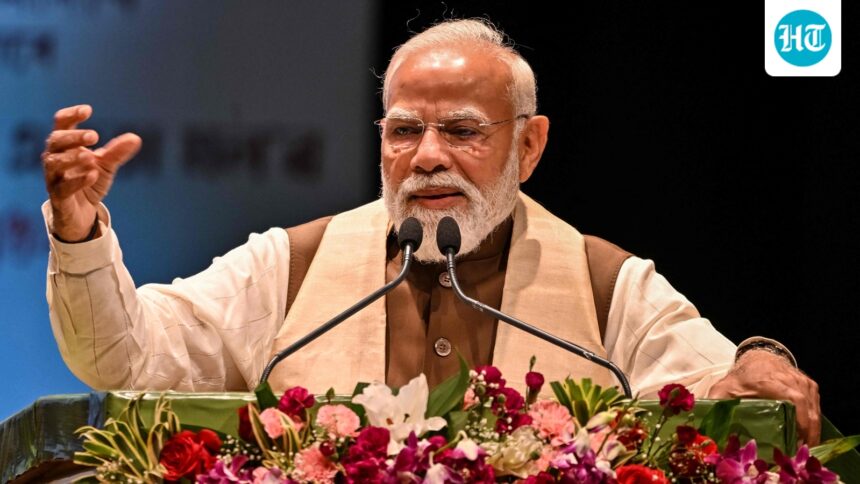
All eyes remain on the special session of Parliament after the Women’s Reservation Bill was tabled and debated on Thursday, with Prime Minister Narendra Modi urging widespread political support in the Lok Sabha. This issue has already sparked a sharp political confrontation. The BJP hailed the move as a “historic” move, while the opposition parties accused the government of dragging its feet in notifying and implementing the law, alleging that it was being used to push the “unconstitutional” delimitation process.

The Women’s Reservation Act, 2023 – which mandates a 33% quota for women in legislative assemblies – came into force on Thursday, even as key questions about its introduction continued to dominate the debate.
Here’s everything you need to know about the bill and the proposed amendment.
What is this bill?
The Women’s Reservation Bill, also known as Nari Shakti Vandhan Adhinyam or the Constitution (128th Amendment) Bill, 2023, was first introduced in 2023. Although it was passed unanimously, it was not implemented due to delay in the census process.
Also read: ‘Kabhi maaf nahi karege’: PM Modi’s warning to opposition over women’s quota bill
The 2023 legislation aims to allocate 33 percent (one-third) of seats to women in the House of Representatives and state legislative assemblies. The bill also seeks to increase the number of Lok Sabha seats to 815, of which 273 seats are reserved for women.
If the bill passes in 2023, why is it being discussed now?
The Women’s Reservation Act, 2023 was passed in 2023, but did not come into force due to delays in the census process.
The question now arises: If this draft law was already passed in 2023, why was it not implemented earlier, and why is Parliament discussing the matter again?
To simply answer the above question, an official told PTI that the bill became law in 2023 but did not become part of the Constitution as the government did not bring it into force.
Now, the government wants to amend the draft law, linking its implementation to the border demarcation process based on the upcoming population census.
Also Read: Women Quota Bill will not discriminate in favor of democracy: PM Modi in Lok Sabha | Top quotes
To implement the proposed amendments to the law, the law must officially enter into force. Hence, it came into effect from April 16.
Why is the opposition against it?
The opposition says that the draft women’s law has been linked to the draft demarcation law that will redraw parliamentary and parliamentary electoral districts. Southern states are more concerned about the bill, saying it may reduce their representation in Parliament.
Congress leader Mallikarjun Kharge criticized the bill, saying the opposition “will not allow Parliament to be hijacked by flawed delimitation bills disguised as the Women’s Reservation Bill”.
“We stand united and will fight this deceptive attack on our democracy with all our might,” he wrote in a post on X.
Congress leader Shashi Tharoor also clarified the opposition’s concerns, saying: “The government has a plan to redraw constituencies and increase seats in areas where the ruling party is strong.”
Also Read: Women’s Reservation Act, 2023 comes into force ahead of vote on its amendment in LS
“And they are using women’s reservation as an excuse to bring about this change… by trying to amend the constitutional amendments they have already made in 2023.”
What does the government say?
The government says it is important to link the two bills in order to implement the 33 per cent reservation plan for women by 2029, when the next Lok Sabha elections are held.
It should be noted that even after the proposed amendment in the draft law (which links the border demarcation process to reservation) was approved, the reservation cannot be implemented in the current Council. It will be implemented only after the demarcation process is conducted based on the upcoming census, an official said. PTI I mentioned.
Prime Minister Modi’s speech to Lok Sabha
In his address to the Lok Sabha, Prime Minister Modi stressed the importance of this bill, saying, “We are 30 years late” in passing it. He made a strong case in favor of the bill, saying its passage would help India’s push towards Vixit Bharat.
“A developed India not only means good infrastructure, but also women’s participation in policy making,” he said.
He also warned the opposition, saying that the women of this country will not spare those who oppose the draft law.
“As a friend – I have some advice for those who are against this – whoever has objected to reservation for women in any field, women have not been spared,” Modi said, adding that the women’s reservation bill should not be given a political narrative.