

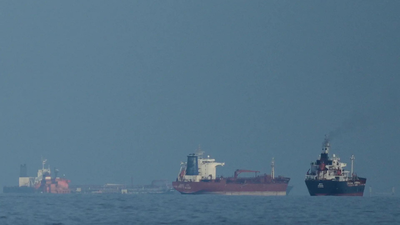
Image used for representational purposes
Iran’s Islamic Revolutionary Guard Corps has asserted its overall control over the Strait of Hormuz, even as it notes that civilian maritime traffic remains permitted under regulated conditions.“All traffic…is under the full control of the armed forces,” the Revolutionary Guards Naval Command said in a statement carried by Agence France-Presse, accompanied by footage showing the targeted ships within sight. The warning escalated further with the message that “the enemy will become trapped in a deadly vortex in the strait if he makes the wrong move.”
He watches
Iran’s military’s deadliest warning to the United States; “One wrong move will turn Hormuz into a deadly vortex.”
This confirmation came after US President Donald Trump ordered a US naval blockade of the strategic waterway, a move that sharply raised tensions in the region.Despite the tough rhetoric, the Iranian Revolutionary Guard sought to allay fears of a complete lockdown. In a separate letter, it stated that “contrary to the false claims of some enemy officials,” the Strait of Hormuz is “open to the harmless passage of civilian ships in accordance with specific relevant regulations.” However, he stopped short of clarifying what those regulations entail.The statement also drew a clear red line on military action, warning that “any military ships intending to approach the Strait of Hormuz under any pretext will be considered a violation of the ceasefire and will be dealt with severely.”
Meanwhile, Trump set a long-term goal in a social media post, stating that Washington aims to remove mines from the strait and restore full commercial access. He stressed that until then, Iran should not benefit economically from its grip on the road.Iran’s effective blockade of the strait began after the outbreak of conflict with the United States and Israel on February 28, disrupting one of the world’s most important oil transport corridors and raising global energy prices.Although a two-week ceasefire was agreed upon last week, its continuity remains uncertain, especially after the recent US-Iranian talks in Islamabad failed to achieve progress, with Vice President J.D. Vance, who was leading the delegation, leaving Islamabad.