


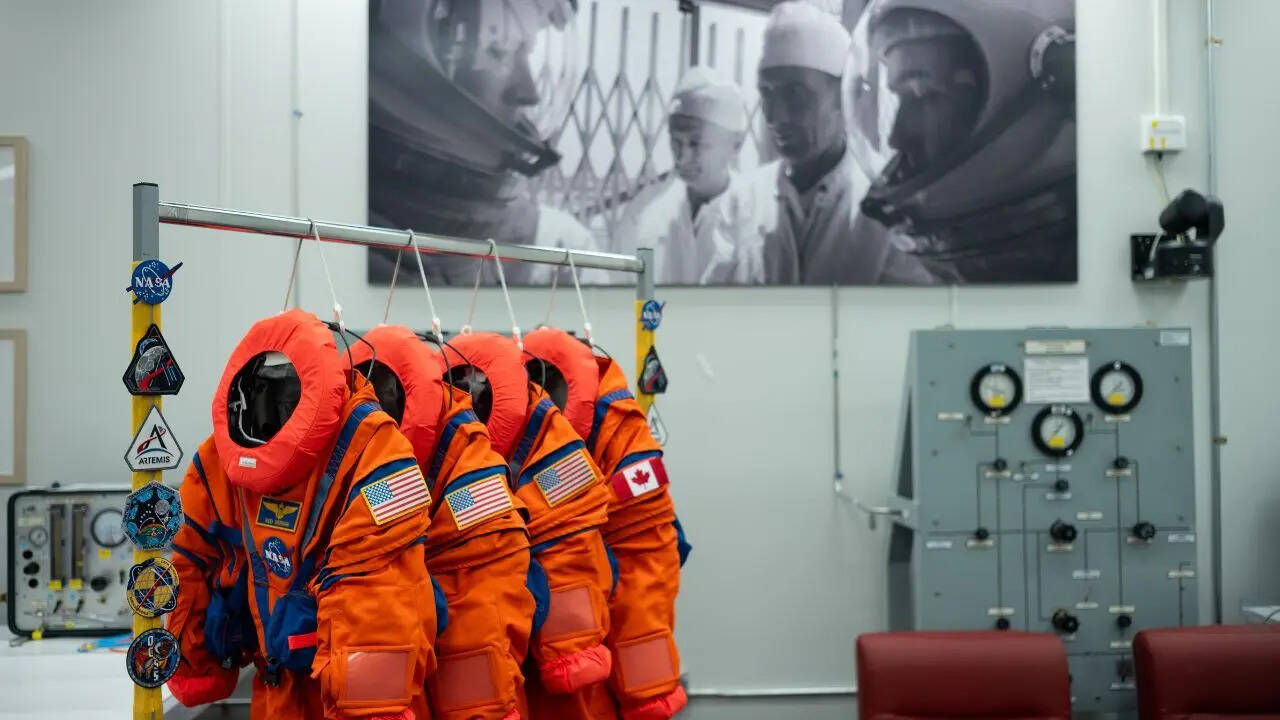
The Artemis II mission attracts attention not only for its technical features, but also for something that is immediately noticeable. The crew, including Reed Wiseman, Victor Glover, and Christina Koch of NASA, along with Jeremy Hansen of the Canadian Space Agency, wore bright orange suits that immediately stood out.
A bold color may catch the eye first, even though it’s not a stylistic decision. These suits are designed with safety in mind, and have been developed through years of testing and improvement. Every detail seems focused on protecting the astronauts during critical phases of the mission, including launch and reentry, where conditions can quickly become unpredictable and demanding in space.
Mission Artemis II: What’s behind those bright orange suits?
Color often surprises people. Known as international orange, it is a shade chosen for visibility rather than appearance.
Experts say the idea is simple. Make your crew easy to spot in any environment. Whether inside a spacecraft, outside during recovery, or in an emergency scenario, color helps locate astronauts quickly.This is not the first time such a shade has been used in aviation or safety equipment. Similar tones appear in life jackets, emergency equipment, and high-visibility work clothing. The goal remains the same. Reduce the chance of ignoring someone in critical situations.
The suits worn by the Artemis II crew follow the same logic.
Computer: NASA
The importance of Artemis II’s specially designed orange suits
The suits, officially referred to as the Orion Crew Survival System, are designed for protection during multiple phases of a mission. Launching and re-entry are clear moments of danger. The suit is designed to support the body under pressure changes and provide breathable oxygen when needed.These suits can reportedly keep a crew member alive for days if the cabin environment is compromised.
This includes providing an enclosed atmosphere and maintaining life support. It’s not something astronauts expect to rely on, but the system is there as a safeguard. The design also supports navigation inside the spacecraft. This matters more than people might assume.
Training inside the suits before setting off
Before the mission, the astronauts spent a lot of time getting used to the suits. They practiced wearing it quickly. They also learn how to attach life support systems and move comfortably while wearing them.There are small but important details. Eating and drinking through helmet ports is one of them. It sounds simple, although it requires coordination and familiarity. The crew has also been trained to get in and out of their seats while they fit, which can be awkward in cramped cabin conditions.
Artemis II mission role
Artemis II is a critical test mission within NASA’s Artemis program, marking the first manned orbit of the Moon in more than five decades since the Apollo program.
Its primary role is to verify the performance of the Space Launch System and the Orion spacecraft carrying astronauts. The mission focuses on testing life support systems, navigation and crew operations in deep space conditions. It is also intended to ensure the reliability and safety of the spacecraft ahead of future lunar landing missions. Ultimately, Artemis 2 lays the foundation for a sustainable human presence on the Moon and supports long-term ambitions to send astronauts to Mars.