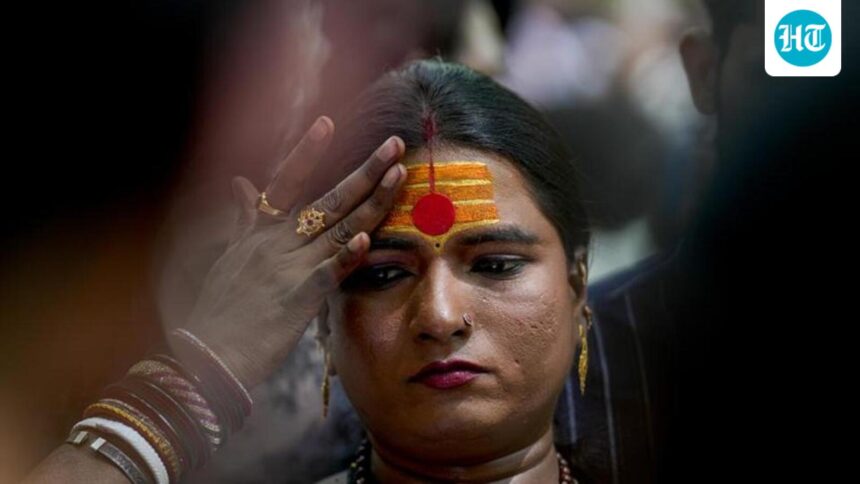
Transgender identities have long been part of India’s social and cultural landscape. The recent passage by Parliament of the Transgender Persons (Protection of Rights) Amendment Bill, 2026 has reignited issues surrounding gender identity, self-identification and dignity. Among the most important changes is what relates to the definition of a “transgender person.” The 2019 law adopted a broad and inclusive definition, explicitly recognizing a group of transgender people. But this amendment replaces this with a narrower formulation; Recognizing some social and cultural identities such as Hijra, Kanar, Aravani, and Gogta, while excluding many others.

In ancient times, members of the transgender community were often integrated into religious and community life, while in the Middle Ages their roles became more complex and sometimes politically significant. Transgender individuals participated in religious ceremonies, temple service, and broader cultural practices. As always, understanding the historical recognition of gender diversity – especially when it comes to the third gender – is essential to situating contemporary discussions of transgender identities in India.
Transgender recognition in ancient India
Virendra Mishra, in his work Transgenders in India, highlights that early texts such as the Kama Sutra and Manusmriti refer to Tritiya Prakriti, or the “third sex”, along with Bhum Prakriti (male) and Stri Prakriti (female) which recognize gender diversity. According to Manusmriti, the sex of a child is believed to depend on the relative amount of male and female “seeds” at conception. It was believed that a greater proportion of male seed would produce a male child, while a greater proportion of female seed would produce a female child. If the two are present in equal amounts, it is believed that the result will be either a child of the third sex or the birth of male and female twins.
Read also: History City | Hormuz and Al-Nukhidha’s connection to India
In Brahmanical and Buddhist thought, gender was understood in terms of the presence or absence of specific primary and secondary sex characteristics, as well as the ability to reproduce. As postulated by Lenward Zwilling and Michael G. Sweet, individuals who lacked reproductive capacity—often described as impotent—were classified as nabumsaka, a category understood as the third sex.
Jain thought treated sex differently from the Brahmanical and Buddhist traditions. According to Michaelraj, he distinguished between dravyalinga (biological sex) and bavalinga (psychological sex). While dravyalinga refers to physical sexual characteristics, bhavalinga describes the inner or psychological disposition of an individual. Zwilling and Sweet also state that “as early as the fifth century AD, the Jains themselves used terms such as trtuya (“third”) and trairasika (“third heap,” after an ancient Jain heresy) to refer to persons of the third sex. The class of singers, dancers, and prostitutes known as hijras are the contemporary representatives of the non-male and third sexes of earlier times.”
Hindu mythology has also reflected ideas about gender fluidity through characters such as Ardhanarishvara (a fusion of Shiva and Parvati), Shikhandi (a trans man and killer of Bhishma in the Mahabharata), and Mohini (an avatar of Krishna), presenting non-binary or fluid gender identities as part of the divine order and contributing to their social recognition. According to one popular legend, when Rama left for exile, he asked the men and women accompanying him to return home. Upon his return after 14 years, he found a group still waiting at the border. They explained that since his instructions were intended only for men and women, and they did not belong to either group, they chose to remain there. Moved by their loyalty, Rama is said to have granted transgender people the ability to offer blessings on auspicious occasions such as births and marriages, a tradition that continues today, known as Badhay.
Migration in the Middle Ages
If we focus on a specific subcategory, the term hijra is believed to have entered common use in the Indian subcontinent via the Urdu language during the Mughal period in the 16th century, although scholars such as Jessica Hinchey question the lack of evidence enabling a comparison of this term with Odia Maicha or Telegu Koga.
However, historical records indicate that transgender people held important positions under the Delhi Sultanate and then the Mughal Empire, often serving as trusted members of the royal family. A notable example is Taj al-Din Izz al-Dawla, known as Malik Kafur, who was a prominent general under Ala al-Din Khilji, and led campaigns against the southern kingdoms and the Mughals in the 14th century. The trust placed by Khilji in Kafur was harshly criticized by historian Ziauddin Barani. However, according to Abraham Erali, Barani’s “criticisms are not entirely credible, because he was strongly prejudiced against Malik Kafur, whom he always described as an ‘evil man’, perhaps because he was not a Turk but a Hindu Muslim and a eunuch.”
During the Mughal era, Abul Fazl’s Ain-i-Akbari, for example, provides detailed accounts of the roles the hijras played in the Mongol administration, serving as guards of the royal harem, performers, and sometimes even as diplomatic envoys. Many of them served as guards of the royal courts and guardians of the harem, while some became close aides to the queens and influential figures within the court. They were known as Khwaja Sira, and were seen as loyal and trustworthy, allowing some to accumulate a great deal of power, wealth, and prestige. In some cases, they rose to prominent roles as administrators, political advisors, teachers to kings, and even military commanders.
This does not mean that there was no abuse. As Gavin Hambly traces through his study of Ain Akbari and sixteenth- and seventeenth-century European sources, the subhs of Bengal were the main source of eunuchs for the Mughal Empire, particularly Goraghat and Sylhet. He claims that although the demand for eunuchs had existed centuries before, the practice gained particular currency during the reign of Firuz Shah Tughlaq, “whose policy was to send slaves to Delhi in lieu of revenues.” The Mughal Emperor Jahangir abhorred this “eunuch veneration” and made attempts to ban it, but to no avail.
Read also: History City | Mamata’s Bhowanipore constituency is as old as it is fascinating
Another term is khojasaras, or “enslaved eunuchs who worked in households and in state bureaucracies,” Hinchey notes. Many hijra communities also view Khwajasara as an important part of their historical lineage, particularly in Pakistan, where Khwajasara is often the preferred term of identification over hijra.
Hinchey also highlights historian Lawrence W. Preston’s study of King Sahi of Satara (I708-49), and asserts that under Maratha rule, migrant Vatandars were recognized in every sub-region and granted hereditary rights (watan) to collect donations, which were passed down through their lineage. Migrations also provided small cash allowances (varsasan) and rent-free land grants (enam), which were usually inherited through Guru Chela’s lineages. Preston notes that although immigrants were seen as socially privileged, the state created mechanisms to ensure their economic support, mirroring trends seen in early modern South Asia at the time.
Criminalization under colonial rule
With the consolidation of colonial rule under the British East India Company and later the British Raj, the situation of transgender communities in India changed dramatically. As Hinchey points out, “In 1865, the British rulers in northern India decided to bring about the gradual ‘extinction’ of transgender migration.” Previous systems of patronage and recognition were gradually dismantled, contributing to the further marginalization of the community Migration has increased. Colonial officials also imposed moral frameworks influenced by the Victorian period; Gender and sexual diversity are viewed with suspicion. Laws such as Section 377 of the Indian Penal Code (1860) criminalize same-sex relations, while the Criminal Tribes Act (1871) specifically targets “eunuchs”, requiring their registration, placing them under surveillance, and restricting their public activities.
Colonial discourse often portrayed them as immoral or deviant, which reinforced social stigma. Administrative practices, such as census classifications that recognize only male and female categories, have erased gender diversity from official records. These policies have significantly reshaped the social and economic conditions of transgender communities, and their effects have continued to impact patterns of marginalization even after India’s independence.
HistoriCity by Valay Singh is a column about a city in the news based on its documented history, legends, and archaeological excavations. The opinions expressed are personal.