India will begin its long-awaited census from Wednesday, with the population now estimated at more than 1.4 billion, and the scale of the measure is unparalleled – both in scale and complexity.

More than three million officials will be deployed across the country over the next year, reaching cities, towns and remote areas alike. For a country already suffering from the pressures of rapid population growth — from housing shortages to electricity and food supply pressures — the census is expected to play a crucial role in shaping future policy decisions, Agence France-Presse reported.
The government described the $1.24 billion operation as a “major operation of national importance” that could support “inclusive governance and evidence-based policy formulation”. Besides the numbers, the data collected is expected to influence how resources are allocated and how social welfare plans are designed, the report said.
Read also | Amid declining fertility rate, Andhra Pradesh shifts focus to ‘population welfare’
India’s urban centers are already feeling the pressure. Many major cities continue to suffer from water shortages, worsening air and water pollution, and increasing slum populations. Against this background, conducting an accurate and up-to-date population census becomes even more important.
The last census was conducted in 2011, when India’s population reached 1.21 billion. The planned update for 2021 was postponed due to the COVID-19 pandemic, leaving a large data gap. Since then, global estimates – including those from the United Nations – indicate that India has overtaken China as the world’s most populous country.
Two stages, one huge mission
The census will be conducted in two phases, combining traditional methods and digital tools.
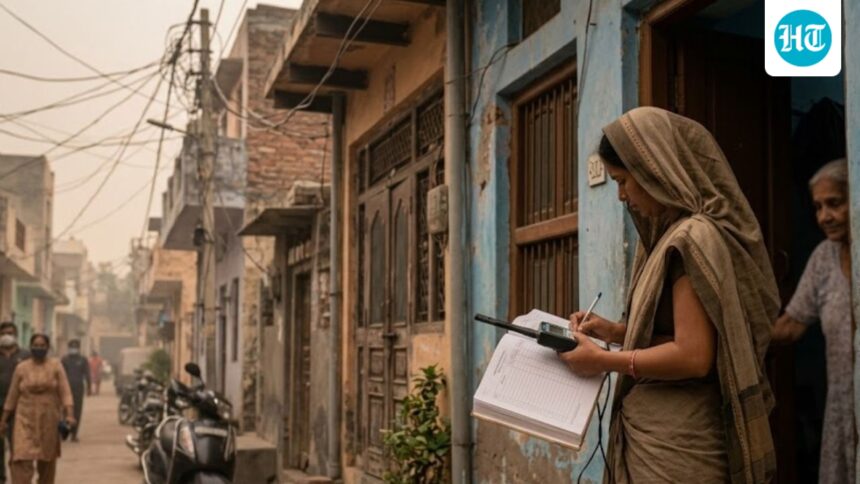
The first phase, which begins Wednesday and continues until September, will focus on housing conditions and access to basic amenities. Census takers will make door-to-door visits, while residents will also have the option of submitting details online through a dedicated app. This platform will be supported by satellite imagery and will be available in 16 languages, reflecting India’s linguistic diversity.
The second phase will move to population data, collecting demographic, social and economic information.
The inclusion of caste data will be one of the most closely watched aspects of this census, a very sensitive and politically important issue in India.
Social class continues to influence access to education, jobs and resources, despite decades of political interventions. However, collecting and publishing such data has historically been controversial. The caste survey conducted in 2011 was never published, with authorities citing discrepancies.
The last time India collected comprehensive caste data as part of a census was in 1931, during British rule. Since then, successive governments have avoided updating these figures, citing administrative challenges and the risk of inflaming social tensions.
Given India’s geographical diversity, the census schedule has been modified to suit different regions. In most parts of the country, the population will be counted in the weeks leading up to March 1, 2027, the official reference date.
However, in the high Himalayan regions, including the disputed Jammu and Kashmir region, the census will be conducted early, before October 1, 2026, to avoid disruptions caused by heavy snowfall.
Conducting a census in a country of this size is not easy. Even India’s 2024 general elections – often described as the world’s largest democratic exercise – were held in seven phases over six weeks. In comparison, the census would extend over months and require coordination at a deeper level.
(With AFP inputs)