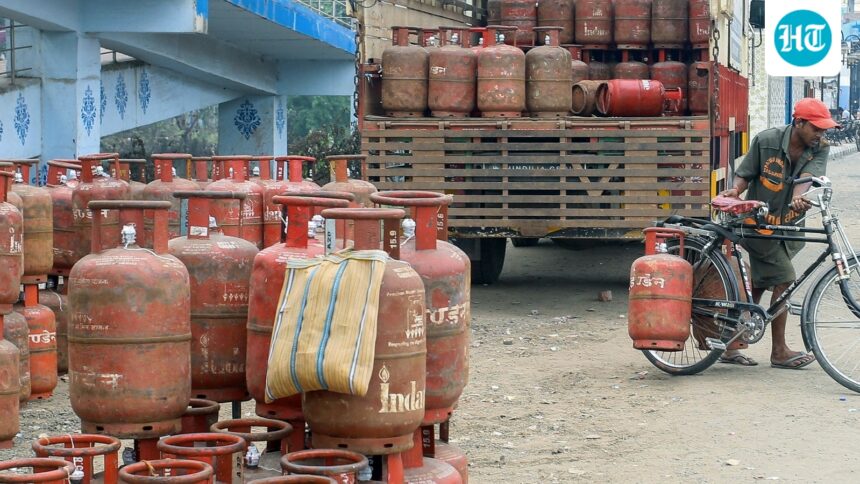
The government has ordered households in areas with pipelined natural gas infrastructure to switch from LPG cylinders to PNG connections within three months of receiving the notice, or face disruption to gas refilling supplies – a move prompted by mounting pressures on LPG imports in India in the wake of the conflict in West Asia.

The order, issued Tuesday under the Essential Commodities Act and titled the Natural Gas and Petroleum Products Distribution Order of 2026, directs local gas distributors to notify households via registered or express mail where pipeline infrastructure already exists.
If the household does not apply for a PNG connection within three months of receiving this notice, “the supply of LPG to this address will cease,” the Gazette notice said. Applications can be submitted by the legal occupier or owner of the building.
Read also | LPG crisis: Odisha government streamlines processes to speed up deployment of PNG in cities
The order provides one exception: LPG supplies will not be cut off if the distributor issues a no-objection certificate proving that it is not technically feasible to provide a piped connection to that address.
Sujata Sharma, Joint Secretary, Oil Ministry, confirmed the matter at an inter-ministerial press conference and termed it a security measure for supplies. “Our dependence on LPG imports is much higher than our dependence on PNG or LNG imports. We produce 50% domestically as far as Papua New Guinea is concerned. Therefore, it is in the interest of the nation that we switch from LPG to PNG,” she said.
The mandatory switch only applies to areas that already have gas pipeline infrastructure. The government estimates that six million consumers could make the switch; Sharma said 0.22 million have already done so.
India currently has 16.2 million domestic connections to PNG – against more than 332 million LPG consumers, a number that has risen from 140 million in 2014, including 105.6 million poor households with subsidized connections under the PM Ujjwala Yojana.
Read also | Switching from LPG to PNG: What it means and how to switch | Step by step process
India imports more than 60% of the LPG it consumes, and Qatar alone accounts for 47% of total LPG imports. The Iranian attack on the Ras Laffan Industrial City in Qatar – in addition to ongoing challenges to ships sailing in the Strait of Hormuz – has led to a complete halt to those supplies since March 18, intensifying the government’s efforts to reduce reliance on gas cylinders.
The LPG directive to PNG is part of a broader notification that also requires landowners – individuals, government bodies and housing associations – to grant right of way for the laying of gas pipelines, a measure aimed at removing disputes over land access and approval delays that have long hampered the expansion of pipelines across the country. HT reported on this ruling on Wednesday.