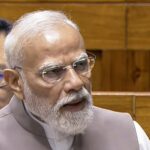
In a list of measures that helped India during the energy crisis caused by the ongoing war in West Asia, Prime Minister Narendra Modi specifically mentioned E20 gasoline. He linked this to the fact that because 20% ethanol was mixed in gasoline, India had to import less oil.

For oil, India depends largely on the Gulf region, which is engulfed in an increasingly widening war sparked by the US-Israeli attack on Iran on February 28. In his speech to the lower house of parliament, which lasted about 20 minutes, he said, “In this time of crisis, the country’s other preparations have proven to be very useful: in the past 10 to 11 years, unprecedented work has been done in the field of ethanol production and blending.”
“A decade ago, the country’s capacity to blend ethanol was only 1%. Today, we are close to achieving 20% ethanol blending into petrol. As a result of this, last year we had to import about 4.5 crore barrels of less oil,” he added.
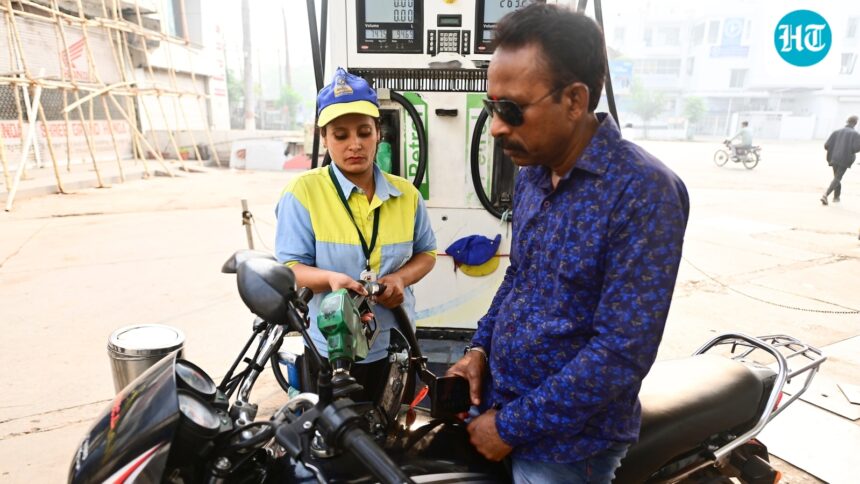
The stated idea behind E20 fuel — 80% gasoline and 20% ethanol — is to lower oil import bills, reduce carbon emissions, and support sugarcane farmers who supply the ethanol for the blend.
But the standardized supply of E20, which India achieved last year, has also courted controversy over the years, with a number of motorists claiming that it leads to damaged engines and lower mileage, especially in older vehicles.
Roads Minister Nitin Gadkari and Oil Minister Hardeep Singh Puri have repeatedly denied this and warned against misinformation on the issue.
At the same time, the Indian Distillers Association (AIDA) offered to supply a mixture of more than 20% ethanol to mitigate the effects of the war. The government demanded that the ethanol blending rate be gradually raised to 30%.
In a letter to Nitin Gadkari, AIDA Deputy Director General Bharati Balaji said on Sunday: “Now with the Middle East [or West Asia] Given our involvement in the war and oil prices starting to rise, we as an ethanol industry are prepared to provide more than 20 percent ethanol which will proportionately reduce the import of crude oil. India has achieved its E20 ethanol blending target ahead of schedule, in 2025, a target set by Prime Minister Modi’s administration to reduce fuel import bills and emissions.
AIDA also called for the introduction of flex-fuel vehicles capable of running on 100% ethanol, similar to Brazil; Promoting ethanol-based cookstoves for home and commercial use; And exploring blending ethanol into diesel as well.
India’s ethanol sector now has a cumulative production capacity of around 2,000 crore litres, with over 380 dedicated distilleries in operation and 33 more in the pipeline, news agency PTI reported on Sunday.
Why the controversy over E20?
However, reports of low mileage and engine damage continue.
The government has been gradually rolling out the E20 model since 2023, when other blends such as E5 and E10, which are seen as compatible with older cars, were also introduced. However, these mixtures have now been completely removed from all approximately 90,000 filling stations in India.
However, only cars and two-wheelers manufactured after April 2023 are E20 compliant. Multiple reports have shown that older vehicles, if using E20 fuel, may suffer from engine knocking, corrosion, decreased fuel efficiency, and deterioration of rubber hoses and plastic tubing.
Some manufacturers offer special parts to make older vehicles able to use E20 without damage.
Vehicle owners complained of a 6-8% drop in mileage. This means they will end up spending more per kilometre, even if the ethanol itself is cheaper. Ideally, since ethanol itself is cheaper than gasoline, it should make the blended fuel less expensive. However, in practice, E20 is roughly the same price as regular gasoline if not higher if it has more features.
According to the Society of Indian Automobile Manufacturers, E20 reduces mileage but does not pose a safety risk. “Millions of vehicles have been running on E20 for some time,” BK Banerjee, executive director of SIAM, said at an event in New Delhi in August 2025. “There has been no vehicle malfunction or vehicle malfunction reported.”
Banerjee said the claims of 50% reduction in mileage are baseless and misleading.
The SC rejected Gadkari’s petition
The case reached the Supreme Court last year, but it dismissed a public interest litigation (PIL) challenging the Centre’s ethanol blending programme, which mandates the sale of E20.
The petitioner referred to the 2021 NITI Aayog report, which it said raises concerns about older vehicles that are not E20 compliant. Lawyer Shadan Firasat said the petitioner was not against ethanol blending, but was only seeking an ethanol-free gasoline option for vehicles manufactured before 2023.
But India’s Attorney General, R Venkataramani, said the petitioner was just a “name lender”, adding that there was a huge lobby behind the G20 opposition.
Gadkari has also spoken out against the alleged lobby at some events over the past two years.
In the Supreme Court, the government’s lawyer said the E20 policy benefits the country’s sugarcane farmers and saves foreign exchange.
After hearing the submission, CJI Gavai rejected the PIL.
The Oil Ministry insisted that the E20 provided “better acceleration and ride quality,” and benefited farmers; In addition to reducing carbon emissions by about 30% compared to E10 fuel.
“This is not even a discussion,” Gadkari said. “I don’t know if I should say this, politically — it seems like the oil lobby is manipulating it.”