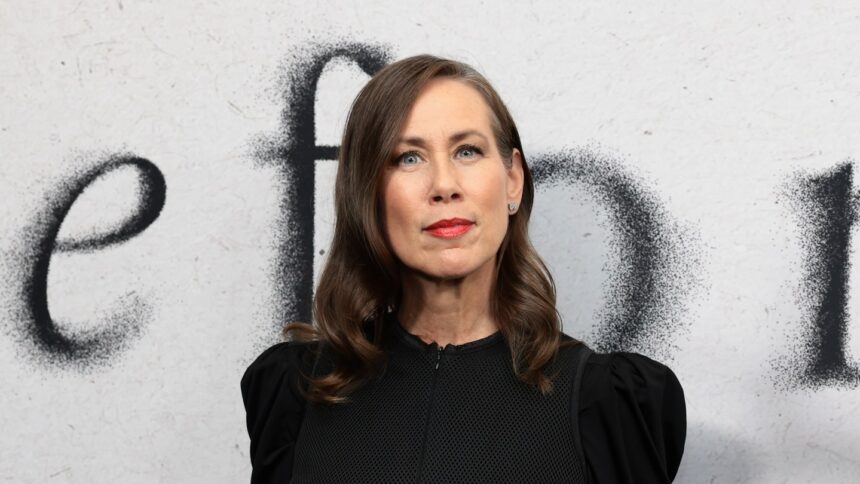
“Of course, the first rule of NDAs is don’t talk about NDAs,” says Miriam Shor. But with her new documentary My non-disclosure agreementwhich is premiering at this year’s SXSW Film Festival, Shor does just that.
Shor is no stranger to non-disclosure agreements, or NDAs, a legally binding contract intended to prevent parties from disclosing certain information. As a performer with credits that span across prestige television (most recently with the Apple TV+ sensation). Multiple) to the Marvel Cinematic Universe, Shor was required to sign non-disclosure agreements before projects to protect confidential details. “There are trade secret non-disclosure agreements,” she says. “You don’t want me to talk about the latest superhero movie? I’m like, ‘I get it!’
Schor believed that non-disclosure agreements were being reconsidered and dropped in the wake of the MeToo movement, which saw many women breaking signed agreements to speak out against their experiences of sexual harassment and assault, often in the workplace. But then, several years ago, Schor signed a nondisclosure agreement that made her question her personal understanding and public awareness of a seemingly ubiquitous legal document.
“I had to sign [the NDA] “It silenced me from talking about my personal life,” says Shor. “It wasn’t as intense or painful as what happened to the participants in the film, but the silence was very uncomfortable.”
However, Shor does not feel the need to violate this non-disclosure agreement. She says the actual circumstances leading up to the signing of this particular agreement were not as troubling as “the fact that people were telling me I couldn’t speak.”
After going down her self-described rabbit hole, speaking to lawyers, journalists and individuals who signed and broke non-disclosure agreements, Schor was steadfast in pursuing the subject as a documentary. “I became a dog with a bone, really,” she says.
While in the past she has directed episodes of her own long-running television series Younger Schor has never attempted to make feature films, let alone make feature documentaries. She wanted an experienced partner and found one in Julian Dresner.
When meeting with Schur in a New York City park in the spring of 2021, early in the Covid pandemic, Dresner wasn’t sure nondisclosure agreements could make a compelling documentary. Dresner, whose credits include the Emmy-nominated documentary Personal statementHe likes to avoid making non-fiction films that rely on talking heads and stories that involve a lot of legal issues.
But after more research and speaking with employment attorney Vince White, co-directors, “we realized there was another way — a much harder way — to tell this story,” Dresner says. “We can learn about the risks from the point of view of the person who was facing them, and follow them all the way until they break the NDA, if they decide to,” she adds. to My non-disclosure agreementwhich will be screened in the festival’s feature documentary competition, the filmmakers take a first-person perspective on how nondisclosure agreements are weaponized.
Following MeToo and continuing into the 2020s, there was a wave of reports that came after individuals — from Harvey Weinstein accusers to Facebook whistleblowers — broke their nondisclosure agreements. I’m filled with these stories New York Times, The New Yorker, The Wall Street Journal, Business insider And many other publications, including this one.
Schor points out that these stories focus on why people signed NDAs in the first place, from harmful business practices to settlements for various violations. “What we realized along the way — and also what seemed to be underreported — is the human cost of being silenced,” she says. Because of this, My non-disclosure agreement It focuses on the emotional toll that comes with being legally muzzled and balancing personal morality with the constant threat of retaliatory lawsuits.
The doc focuses on three subjects from different industries, as they go through the process of violating their non-disclosure agreements. Ashley Kostial signed a non-disclosure agreement with her employer, software company SAP, after she was raped by a colleague during a business trip to Plano, Texas. Along with Costile, there’s Ifeoma Uzoma, the former Pinterest employee turned whistleblower who spoke out about racial discrimination within the tech company, and Lachlan Cartwright, a former National Enquirer journalist who spoke out about the magazine’s arrest and murder tactics at the behest of powerful men, including President Donald Trump.

Over the course of several years, Schur and Dresner, along with producer Elizabeth Woodward of the production company Wella, followed their subjects as they spoke to journalists, anonymously or on the record, met with their lawyers and fought for legislation against violations of nondisclosure agreements.
Filming took place with more subjects, but participants periodically exited the documentary after deciding not to break their non-disclosure agreements. “We had to realize that when we were filming, they might not end up being in the movie if it would put them in danger,” says Schur.
In the middle of production, a lawsuit was filed against one of the characters. “There is currently a lawsuit. It is ongoing and she felt she could no longer add to the potential damage because she is fighting the lawsuit,” says Dresner. However, this woman wanted to stay in the documentary, in any way she could. The directors were able to hide her identity as “Jane,” change her voice, and visualize her face and body. The on-screen effect is ghostly, with Jane acting as a ghost to many stifled by non-disclosure agreements.
The filmmakers’ goal for their documentary, which is seeking distribution outside of SXSW, is to raise awareness of the threat and abuse of nondisclosure agreements. “People like to label NDAs as a women’s problem a lot of times, because of the ‘me too’ movement,” says Schorr. “Or they just want to make it someone else’s problem. The truth is, it’s quite universal.”
Schorr and Dresner point out that boilerplate NDA language has kicked off a variety of seemingly unnecessary legal agreements (see: residential leases).
During production, Dresner needed interviewees to sign statements in order to be filmed. “We got the form, and it had a non-disclosure agreement,” she recalls. Shor interjects, “Which we obviously removed!”