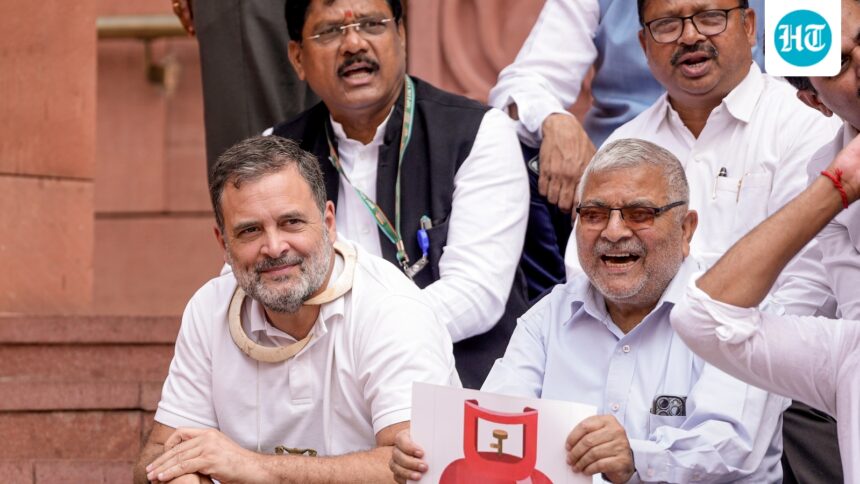
Leader of the Opposition in Lok Sabha Rahul Gandhi said on Thursday that the ongoing war between the United States, Israel and Iran could have far-reaching consequences, warning that the conflict in West Asia could greatly affect India.

Speaking in Lok Sabha, Gandhi warned that any disruption or closure of the Strait of Hormuz would directly impact India’s economy and energy supply. He said concern about the availability of LPG was already widespread and could worsen if the conflict escalated. Stressing that energy security is essential for any country, Gandhi also questioned why India should allow the United States to influence decisions about where it buys gas from.
Rahul Gandhi said: “The foundation of every country is energy security. Allowing the United States to decide from whom we buy oil, from whom we buy gas, and whether we can buy oil from Russia or not. We can decide our relationship with various oil suppliers. This is what was traded off. Why would a country the size of India allow any other country, or the head of another country, to give us permission to buy Russian oil, to decide with whom we establish our relations.”
What does the government say about closing the Strait of Hormuz?
Earlier on Thursday, the Ministry of External Affairs informed that Jaishankar spoke to his Iranian counterpart Abbas Araqchi regarding shipping safety and energy security in India.
These statements came amid a series of attacks on commercial ships crossing the Strait of Hormuz, a crucial route for global oil trade. MEA spokesman Randhir Jaiswal said the talks focused on ensuring the safe passage of ships and maintaining stable energy flows through the region. “The Foreign Minister and the Iranian Foreign Minister held three talks in the last few days. The last conversation discussed issues related to shipping safety and energy security in India. Beyond that, it would be too early for me to say anything,” he said.
The MEA also said that around 9,000 Indian nationals, including students, sailors, professionals, businessmen and pilgrims, are currently in Iran and receiving assistance amid the deteriorating security situation. Many Indians, most of them students, have already returned home, while others in Tehran have been moved to safer locations within the country.
Jaiswal said the government is facilitating the movement of Indians wishing to leave Iran via land routes to neighboring countries such as Azerbaijan and Armenia, where they can board commercial flights to India. Assistance is being provided for visas and land border crossings, and many Indians have already been helped to move safely across the border, he said.
The spokesman urged Indian citizens planning to leave Iran via land routes to carefully follow the advice issued by the Indian Embassy.