

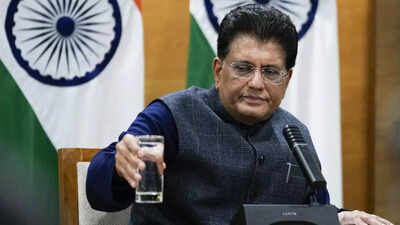
File photo: Union Commerce and Industry Minister Piyush Goyal
NEW DELHI: The United States is expected to reach trade agreements with partners, including India, in the next three-four months, once it finalizes its strategy to deal with legal issues related to tariffs, a senior government official said on Saturday.The official said New Delhi is “committed” to the deal, but final details will be worked out once there is clarity in the capital on how US President Donald Trump intends to impose tariffs in the future after the US Supreme Court struck down the use of the International Emergency Economic Powers Act to impose additional duties.While Trump used powers under Section 122 of the Trade Act to impose an additional 10% tariff on all countries, he will likely increase the tax to 15%, which could be imposed for up to 150 days.
Trump could also invoke other provisions, including some that have never been used, to impose tariffs on trading partners.The US administration has announced its intention to increase customs duties to 15% in the coming days, but it is studying the implications of deals such as those concluded with the United Kingdom and the European Union, where they agreed to reduce duties.The official said India has been able to strike good deals for its farmers, including opening the market for commodities such as mangoes, without making any farm or dairy commitments.
To allay fears that local producers of apples and walnuts would be hit under the agreement, the official said the quantities allowed were far less than what were actually imported and that they came with safeguards. Moreover, in the case of products like cotton, the Indian textile industry needs long-staple fibres.Separately, at the Raisina Dialogue, Commerce and Industry Minister Piyush Goyal asserted that India got the best trade deal compared to its competitors. “What is a trade deal? You are trying to get an advantage or preferential access for yourself, for your goods, for your services, compared to your competitor. And we got the best deal among all the competing countries. I mean whether it is in our neighbourhood, Pakistan or Bangladesh; or if we look at the Asian region, among all the competitors.
..”