Are Indians, as individuals and as a community, kind or cruel towards animals? On the surface, compassion should come naturally. Many worship the cow as a mother, revere the monkey as a manifestation of Hanuman, and celebrate the elephant-headed Ganesha as a symbol of wisdom. However, beneath this reverence often lurks a troubling contradiction – even when we exalt animals in faith and folklore, the way we treat them in everyday life is actually quite different.

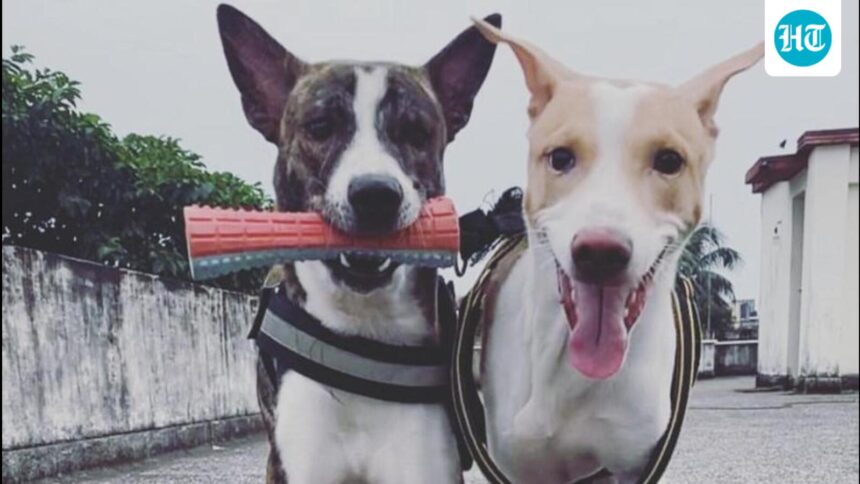
Let me start with a confession. I love animals, and I especially love dogs. For years, we’ve had at least five dogs as pets in our house, and even now, we have four. It has also been my family’s practice, whenever possible, to adopt stray dogs – our local breed.
Ironically, in a country that is quick to call Swadeshi (indigenous) in other contexts, we display an almost colonial remnant in our preference for foreign dog breeds. The tough, intelligent and resilient Indian “untouchable” – now called the “Indy” – is often overlooked. This is despite the fact that the Indy is wonderfully adapted to our climate, is resistant to many diseases, low maintenance, and, in terms of pedigree, is arguably more “pure” than many purebred dogs.
Indeed, if lineage means a continuous line of descent, India stands on enormous ground. For centuries, its breed has evolved naturally in the Indian subcontinent, without being tampered with aesthetic fads. In contrast, foreign breeds are often the product of deliberate inbreeding to accentuate certain traits—flat faces, unusually short legs, and excess fur—sometimes at great cost to their health.
Why then this reluctance to adopt the Indies? The answer lies in our constant anxiety about social hierarchies.
We have internalized the idea that the importer is superior. The foreign dog becomes an agent of class mobility. Walking a Labrador in the colony’s garden is, in subtle ways, a display of one’s aspirations. Indie music is tragically associated with the street, the ordinary, and the “less.”
Sadly, even in our compassion for animals, hierarchy intrudes. A purebred dog receives air conditioning and gourmet food; Indie is turned away as a nuisance. In the rising middle class – the engine of aspirational India – choosing a pet is often a statement, denoting “access”, cosmopolitanism and proximity to the West. The dog becomes an accessory in the theater of status.
Sultana, an independent woman, came from the street into our driveway and was adopted. When I was appointed High Commissioner to Cyprus, she accompanied us, passing through Dubai in a wonderful pet lounge.
After less than two years of my stay in Cyprus, I received a phone call from Shri Brijesh Mishra, Principal Secretary to Prime Minister Atal Bihari Vajpayee. He told me that the Prime Minister had a request: he wanted me to take over as director of the Nehru Center in London.
I said I was honored that the Prime Minister thought of me. I will be the first Indian Foreign Service Officer to be offered this assignmentas it was until now a political appointment, with predecessors such as Gopal Gandhi and Girish Karnad.. However, I requested 24 hours to give my final answer. Mishra was a little upset, but we agreed to talk the next day.
In my time, I first checked with my wife and mother if they had any objections to moving to London. They didn’t. Then I called the British High Commissioner in Cyprus to ask him how I could take Sultana with me. He examined me and told me that a sample of her blood would need to be flown to Athens. If she is approved, a microchip will be implanted in her neck, and after six months she can enter London without quarantine. Then I conveyed my acceptance to Shri Mishra.
Sultana underwent a blood test and a chip was implanted in her neck. We then left her in Cyprus with dog-loving friends, as well as a member of our domestic staff. A few months later, Sultana entered our home in tony Mayfair and accompanied me on my daily walks in Hyde Park.
From London, I was sent back to Delhi, and three years later, I left to take up the position of India’s ambassador to Bhutan. Sultana accompanied us along with three other dogs that we acquired during our stay in Delhi. She was in her element, enjoying the spacious and beautiful property of India House. But sadly, she died just before I left Bhutan, having lived – for a dog who once wandered in from the street – an eventful and globe-trotting life.
One of the dogs we have now is Lucy, who is an independent dog. When she was a puppy, she was found injured in the street in our neighborhood in Delhi. A Lithuanian diplomat picked her up, treated her, named her Lucy, and later put her up for adoption. We did not hesitate to respond.
Although I love all dogs, including pedigree dogs, this column is a special plea for readers to consider adopting Indian dogs. This simple act of kindness can save these beautiful dogs from the uncertainties of street life and bring immense joy in return.
(Pavan K Varma is an author, diplomat and former Member of Parliament (Rajya Sabha). Views expressed are personal)