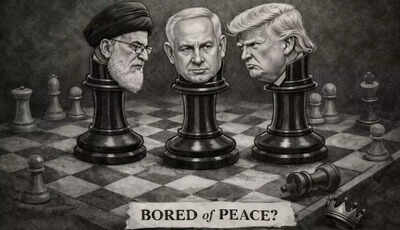
In the final episode of Yes Minister – before the show turns into Yes, Prime Minister with Jim Hacker promoted as Prime Minister of Great Britain as a “compromise candidate” – the Minister has a brilliant idea where he decides that he will take the money from the sale of a popular art gallery and pour it into the local football club, which would make him very popular in his constituency.
This clearly horrifies Sir Humphrey Appleby, because the idea of taking money from the arts and giving it to football is his idea of civilization being destroyed by barbarians.So, he came up with an ingenious plan to prevent Hacker from doing this by making him the Minister in charge of Art. When a colleague wonders whether this is a good idea, given that Hacker is a “trash”, Sir Humphrey points out: “The Industry Secretary is the laziest man in town, the Education Secretary is illiterate, and the Employment Secretary is unemployed.”
Well, if art gets funding, why not football? | Yes, Minister BBC Comedy Greats
Now, to continue in this vein of the Dilbert Doctrine – the most incompetent member often becomes the responsible director – the member states of the Trump Peace Council, handpicked to bring peace in Trump’s new world, appear to be at war. The Peace Council was launched to great fanfare at the World Economic Forum in Davos as an alternative to the United Nations, with a golden slapstick Photoshopped version of the UN logo and a $1 billion entry fee.
The countries that signed the agreement can be broadly divided into two groups: Uncle Sam arm-twisting to join the effort to bring peace to Gaza, and smaller countries hoping to curry favor with Trump. The first consists of the United States (with Trump as permanent president), Israel (Uncle Sam’s trust fund), Gulf and Middle Eastern states that can’t say no (Saudi Arabia, the United Arab Emirates, Qatar, Bahrain, Jordan, Egypt, Kuwait, Morocco) and smaller states hoping to curry favor with Trump (Azerbaijan, Pakistan, Kazakhstan, Uzbekistan, Indonesia, Vietnam, Hungary, Kosovo and Argentina).At the time of writing, approximately half of the members were actively engaged in a war-like situation. For those following events, the United States and Israel are part of an ongoing skirmish with Iran. This particular battle also includes five other members: Saudi Arabia, the United Arab Emirates, Qatar, Bahrain, and Jordan.
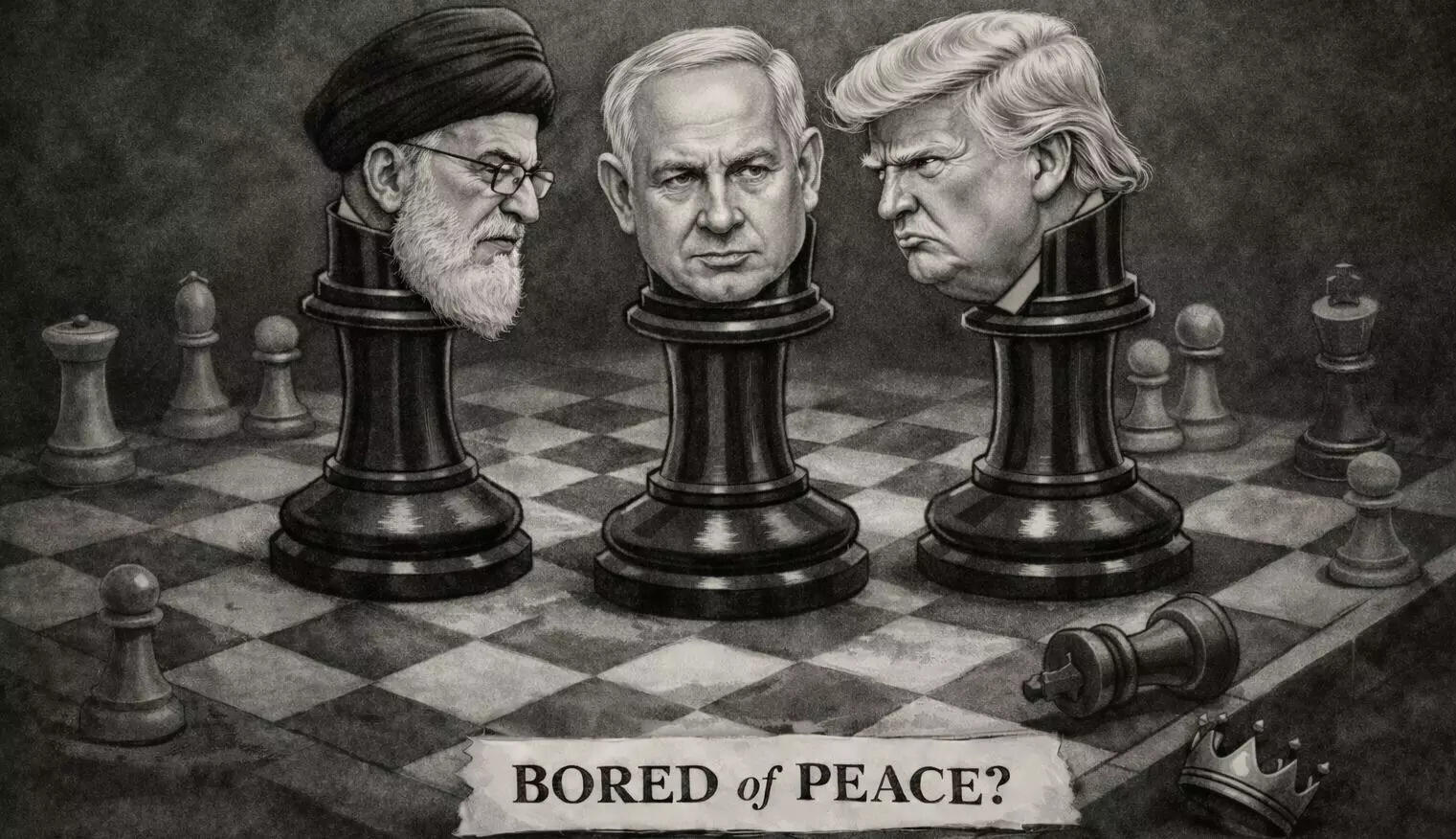
For those lucky enough to live a life that doesn’t involve monitoring the situation, here’s what happened in the Middle East and South Asia.One day after J.D. Vance told the Washington Post that there was “no chance” of a long-term war in the Middle East, which meant squat because Trump ran on a ticket promising to ensure that America was not the world’s policeman, the United States and Israel launched attacks on Iran to “eliminate” Tehran’s missiles and nuclear program, and to bring about a change in government.
Incidentally, the aforementioned nuclear program was also ostensibly eliminated in June last year during Operation Midnight Hammer.Iran responded by launching waves of ballistic missiles and drones at Israel, and at US military targets in the Middle East including Bahrain (home of the US Fifth Fleet) and Al Udeid Air Base in Qatar. Additional strikes were directed at the United Arab Emirates and Kuwait. Iranian missiles also crossed Jordanian airspace on their way to Israel and targets linked to the United States, prompting the Jordanian army to activate its air defense systems.On the other hand, Pakistan, the only South Asian member of the Peace Council, finds itself at odds with Afghanistan.
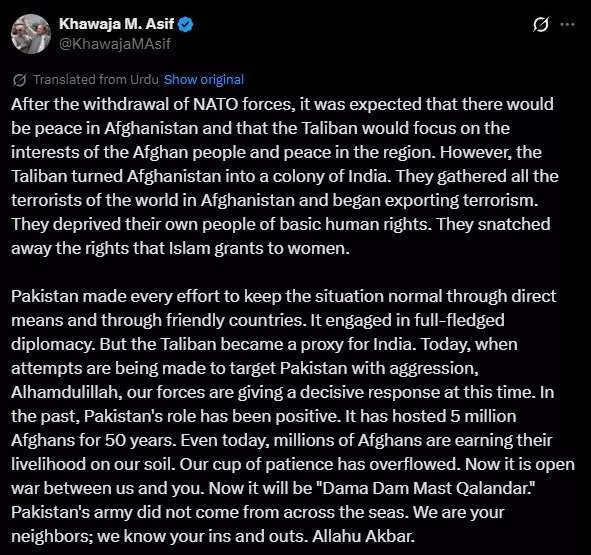
Days after the Taliban came to power in 2021, the then ISI chief, Lieutenant General Faiz Hameed, told reporters, while sipping tea: “Don’t worry, everything will be fine.”As with other Pakistani tea-related endeavors, it was certainly not acceptable. Pakistan had hoped there would be a distinction between the “good” and “bad” Taliban, but as Hillary Clinton pointed out all those years ago, it is foolish to believe that one can keep snakes in the backyard that will only bite one’s enemy. The current situation puts Pakistan at odds with the Taliban-led Afghan government, the Pakistani Taliban, and even the Balochistan Liberation Front (which also receives support from the Taliban). This division comes due to the attacks carried out by the Pakistani Taliban on Pakistan, and Pakistan’s anger at the Taliban government for not curbing them and acting with impunity from Taliban territory.In one of his posts, Khawaja Asif, Pakistan’s Defense Minister, claimed that Islamabad’s “cup of patience” had run over, and now it would be “Dama Dum Mast Kalandar” as a warning to Afghanistan, which may be the first time that a Sufi song, also repurposed as a Bollywood number (Tu Cheez Badi Hai Mast Mast), has been used in a declaration of war.Pakistan launched air strikes and drone attacks inside eastern Afghanistan in what it claimed were Pakistani Taliban camps. The Afghan Taliban responded by firing artillery and attacking Pakistani military positions along the Durand Line border, which further escalated. Of course, the problem is also exacerbated by Iran’s weakness and inability to help Pakistan “manage” the Taliban.
To sum up the irony – given the Pakistani military establishment’s control over Pakistani politics – its military spokesman, Lieutenant General Ahmed Sharif Chaudhry, told the New York Times: “This is not a government.
“They are warlords.” Talk about the pot calling the kettle black. Of course, it would be wrong to suggest that there is nothing particularly ironic – or even new – about international organizations standing behind values that conflict with what they claim to uphold. Pakistan, the source of the majority of terrorist attacks in the world, is one of the vice-chairmen of the United Nations Counter-Terrorism Committee. Iran, where women are tortured for not wearing the hijab, chaired the UN Human Rights Council’s Social Forum on Advancing Human Rights.
In Saudi Arabia, where women cannot go out without a guardian or even drive, she served on the United Nations Commission on the Status of Women. China, which is accused of detaining a million Uighurs in Xinjiang, is a member of the United Nations Human Rights Council.This surrealism was neatly summed up by a Vietnamese politician many years ago (and by the way, Vietnam is also part of the peace council and is not currently at loggerheads with anyone). When asked why Hanoi did not trust the UN, former Foreign Minister Nguyen Cu Thach quipped in the 1980s: “… During the last 40 years, we have been invaded by four of the five permanent members of the UN Security Council.
“And beat them all. At the height of anti-Vietnam protests in the United States during the 1960s and 1970s, the slogan was: “Make war, not peace.” It appears that the Trump Peace Council has already done so I’m tired of peace.