The era of “thin equals healthy” is fading. Doctors warn that a very low body mass index can increase the risk of osteoporosis, fractures and early muscle loss. Bones need resistance to stay strong. Without muscle, density declines faster after age 35. The new slogan is clear. Build muscle, not just lose weight.
Orthopedic experts see younger adults with premature osteoporosis and stress fractures. The common denominator is low muscle mass due to aggressive dieting and lack of strength training.
Significantly low body weight, insufficient muscle mass, aggressive dieting without strength training. At Apollo Hospitals, Dr Deepthi Nandan Reddy, senior consultant orthopedic surgeon, sees this transformation first-hand. “People focus too much on the number on the scale, but bones respond to strength and load, not just thinness,” says Dr. Deepthi Nandan Reddy. “If someone is underweight and has low muscle mass, the bones are not exposed to enough stress. Over time they become brittle.”
We have ignored biology
Dr. Deepthi explains that bones are not fixed scaffolds but living tissues that regenerate in response to mechanical stress. Pulling muscles, not aesthetics, is what keeps them dense and flexible. After age 35, bone density naturally declines, but chronic calorie restriction, low protein intake and sedentary habits can accelerate bone loss. While women are more at risk after menopause, men with a very low BMI are at increased risk as well. “Muscles act like armor and an armature for the skeleton,” says Dr. Deepthi. “It improves posture, balance and joint stability. People who maintain muscle mass are less likely to fall, and even if they do, their bones are better protected.” The new consensus in orthopedics is clear: fragility is not just about age. It’s about composition.
Sarcopenia wake-up call
Dr. Ishani Chaudhary, an orthopedic surgeon and musculoskeletal ultrasound expert, sees what she calls an “invisible epidemic.” Using ultrasound to objectively assess muscle quality, she reported a staggering figure, “Nearly 90 percent of urban Indians show signs of muscle atrophy, measurable muscle wasting, on ultrasound.”
For Dr. Ishani, the obsession with looking thin had a structural cost. “A healthy body is not an appearance. It is what lies on the inside – balanced muscles, healthy body fat, strong bones, and well-functioning organs.” She explains that muscle is the body’s built-in anti-aging system.
“Developing muscle is our ticket to fighting aging naturally. Bones respond to mechanical loading generated by muscle. Resistance training induces bone changes and improves bone density.”
Strong muscles also take pressure off the joints, reducing the wear and tear that leads to arthritis. It improves balance, reduces the risk of falling, and protects against fractures. There are also beauty profits. “Strong muscles improve skin elasticity and create a youthful appearance. A toned appearance is a byproduct of strength,” says Dr. Ishani.
Develop muscles first
Both experts recommend the following:
· Strength training two to three times a week
· Squats, lunges, resistance bands, light weights, and strengthening the trunk muscles
· Gradually increase loads over a period of months
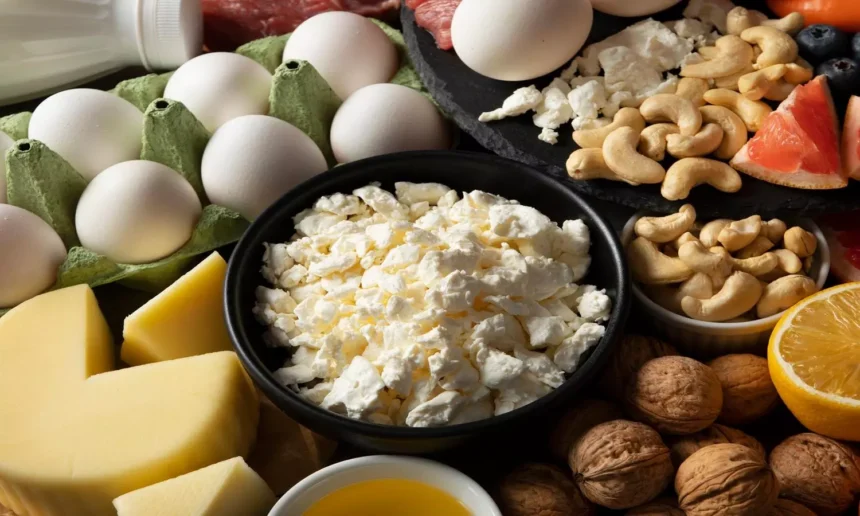
· Eat a sufficient amount of protein daily
· Sufficient amount of calcium and vitamin D




![korean-style-spicy-tofu-and-fried-brussels-sprouts-[vegetarian]-–-one-green-planet](https://globalindiabroadcastnews.com/wp-content/uploads/2026/02/21036-korean-style-spicy-tofu-and-fried-brussels-sprouts-vegetarian-one-green-planet-300x200.jpg "korean-style-spicy-tofu-and-fried-brussels-sprouts-vegetarian--one-green-planet | GIBN")