The Supreme Court said that the grant of bail or anticipatory bail cannot be linked to financial deposits or similar financial conditions, terming the practice “very unfortunate” and cautioning courts against insisting on such conditions as a precondition for freedom.
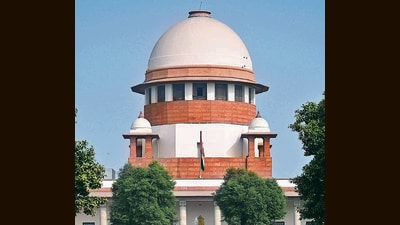
Supreme Court bench observes while setting aside Jharkhand High Court orders which effectively made anticipatory bail conditional on accused depositing more than ₹9 lakh for alleged business liability (HT Photo)A bench of Justices JB Pardiwala and KV Viswanathan observed while quashing Jharkhand High Court orders that effectively made anticipatory bail conditional on surrender of the accused. ₹9 lakhs per alleged business liability.
The court emphasized that bail decisions must be based on the merits of the case and the governing legal principles, not on whether the accused is willing or able to post money or make a bond. If there is a case for bail, the court must grant it; If not, it must be rejected, but requiring payment of conditional orders has no place in bail jurisprudence, the bench said.
The present case arose out of an FIR registered in June 2023 at the Adityapur police station in Jharkhand, alleging disciplinary provisions relating to cheating and criminal breach of trust. The complainant claimed to be an unpaid vendor in a commercial transaction involving the purchase of kraft paper, alleging that an amount ₹9,12,926.84 was not paid by the accused father-son duo.
After the sessions court refused anticipatory bail, the petitioners approached the High Court, which passed two orders, first in January 2025 and again in November 2025, directing them to file affidavits showing proof of payment of the alleged dues, failing which their anticipatory bail application would automatically be dismissed.
More Read

Taking serious exception to this approach, the Supreme Court noted that the High Court had acted in total disregard of criminal jurisprudence and binding precedent, particularly its July 2025 judgment in Gajanan Dattatraya Gore v. State of Maharashtra, where such practices were expressly prohibited.
“It is very unfortunate that despite this Court saying in so many words that no amount should be deposited for granting regular bail or anticipatory bail, the High Court insisted on payment of the said arrears,” the bench noted in its order last week.
Granting the special leave application, the court directed that in case of arrest, the father-son duo should be released on bail on such terms as the investigating officer deems fit and thereafter produce bail before the appropriate court.

Notably, the Supreme Court directed its order to be forwarded to the Registrar General of the Jharkhand High Court, with directions to place it before the Chief Justice, indicating institutional concern over the continued repetition of such orders despite the Supreme Court’s express directive.
In Gajanan Dattatraya Gore, the Supreme Court clearly held that no trial court or high court shall grant bail — regular or in advance, on an undertaking or assurance to deposit money. The court warned that such practices lead litigants to “take the court for a ride”, undermine judicial dignity and subsequently lead to avoidable cancellation of bail when the undertaking is breached.
Reiterating those directions, the bench insisted that the “pay-to-bail” system must be stopped, and courts across the country must decide bail applications strictly in accordance with law, uninfluenced by financial considerations unrelated to criminal proceedings.