India faced a 50 percent tariff, of which 25 percent was added as a penalty for New Delhi’s purchases of Russian oil.
India and the US have finalized their interim trade deal, which will bring down tariffs against New Delhi to a final 18 percent. In a text shared by Union Commerce Minister Piyush Goyal, the framework between India and the US “represents a historic milestone in our country’s partnership.”
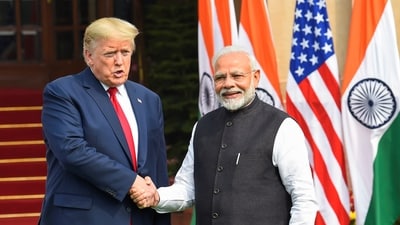
The trade deal was first announced on Monday by US President Donald Trump, who said Prime Minister Narendra Modi had agreed during a phone call to stop buying Russian oil. (PTI/File)Some of the key highlights of the interim framework include the reduction of US tariffs on Indian goods. India faced a 50 percent tariff, of which 25 percent was added as a penalty for New Delhi’s purchases of Russian oil. Follow live updates here.
Also Read | ‘Make in India will boost jobs’: PM Modi welcomes India-US trade deal
Here are some key takeaways from the interim framework –Tariffs have been reduced on both sides. US agrees to reduce tariffs on India The final 18 percent With India-US trade agreement. Additionally, India will eliminate and reduce tariffs on all US industrial, food and agricultural products.Once the interim framework is implemented, the US will end reciprocal tariffs on Indian products such as pharmaceuticals, gemstones and diamonds, and aircraft parts.Non-tariff barriers An India-US trade agreement on medical devices, agricultural products and information and communication technology products will also be addressed.India will address barriers to trade in US medical devices, eliminating restrictive import licensing procedures that delay market access for American ICT products or impose quantitative restrictions. Further, within six months of the entry into force of this agreement, India will also assess whether US-developed or international standards are acceptable for the purpose of entering the Indian market for US exports.India also agreed to assess its long-standing non-tariff barriers to trade in US food and agricultural products.According to the structure and the US President Donald Trump’s announcement on Truth SocialIndia agreed to buy $500 billion of US energy products, aircraft and aircraft parts, metals, coal and technology goods over the next five years.Digital trade will be a key aspect of trade agreements with both countries to address “discriminatory or countervailing practices”.India and the US will also work towards increasing trade in technology products such as graphics processing units (GPUs) for data centers and expand joint cooperation in the technology sector.In the event of any change in tariffs imposed on Indian or US goods, the framework calls for both countries to revise their commitments accordingly. Both countries will work to expand market access through negotiations for BTA.During these talks, the US also confirmed that its existing tariffs against Indian goods will be considered and work will be done to see if they can be reduced or abolished.Danita Yadav is part of Hindustan Times’ digital news team. Aiming to cover news without noise, Danita specializes in international affairs and global news. When not working, you can find him geeking out over books, music, and BTS.Read more