


Hundreds of early career researchers have warned the UK could lose a generation of scientists after significant cuts to physics projects and research facilities were announced.
Scientists working in particle physics, astronomy and nuclear physics have been told their grants will be cut by almost a third, with project leaders asked to report back on how their research is doing with cuts of up to 60%.
At the same time, the UK scrapped plans for four major infrastructure projects to save more than £250m. Projects include an upgrade to a detector on the Large Hadron Collider at CERN near Geneva and an electron-ion collider under development with researchers in the US.
While costs are driven by facilities, cuts to physics grants are being sought by science funding body UK Research and Innovation (UKRI).Do fewer things better” and prioritize applied research over more basic science.
in a An open letter To Professor Ian Chapman, UKRI’s chief executive, more than 500 researchers wrote: “The current combination of uncertainty, delay and reprioritization of early career paths risks losing a generation from the UK research and industrial ecosystem.”
Dr Simon Williams, a 29-year-old postdoc at Durham University, is studying applications of quantum computing in theoretical physics and is looking for a second postdoc position. “The only options I realistically had were overseas,” he said. “As things stand, I’m more likely to find a position in Germany than in the UK. There are far more viable and sustainable opportunities abroad.”
Dr Claire Rigouzzo, a 26-year-old researcher at King’s College London, accepted a post in Europe after finding nothing in the UK. Early-career scientists face one of the toughest job markets in years, but the knock-on effects are widespread, she said. She says senior academics are worried about not being able to attract the best researchers. “Students will also realize that science is no longer a priority,” she added. “Morality is very low across the board.”
UKRI has around £9 billion to be distributed through research councils this year to cover physical sciences and engineering, life sciences and medical research. The Science and Technology Facilities Council (STFC) funds physics research as well as major facilities such as the Diamond Light Source in Oxfordshire.
STFC needs to make savings of £162m by 2030, after seeing rising electricity costs at its national facilities and increased subscriptions to international projects such as CERN and the European Space Agency at foreign exchange rates. Funders are also committed to projects that they can no longer afford.
Another King’s researcher, Dr Lucien Huertier, 37, is about to see his contract end in September and has started looking for jobs in China. “No UK university would want to open up lecturer positions in curiosity-driven research unless such lecturers could attract more national funding,” he said. “My wife and daughter must follow.”
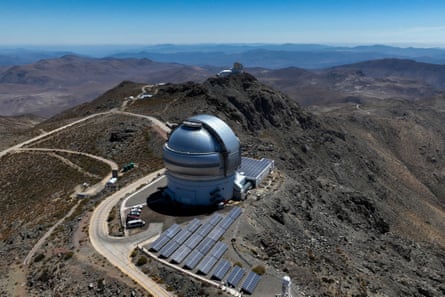
The loss of the grants means the UK faces a situation where the UK has spent huge sums on overseas projects, such as the Rubin Observatory in Chile, which comes into operation this year, but has no UK astronomers to work on it. “The timing of these proposed cuts, just as the telescopes are starting to be delivered, couldn’t be worse,” said Professor Catherine Haymans, Astronomer Royal of Scotland.
Professor Mike Lockwood, president of the Royal Astronomical Society, urged the Government to step in to avert a “disaster” in science. “You lose a whole generation,” he said. “There’s a lot of commitment on the facilities side and young researchers are taking the brunt of that. As a country, we can’t afford to let that happen.”
Speaking to reporters, Chapman defended the moves. “Some things get missed when you make choices, but when you don’t make choices, everybody misses out because you can’t stifle everybody and nothing is internationally competitive because it’s all underfunded,” he said.