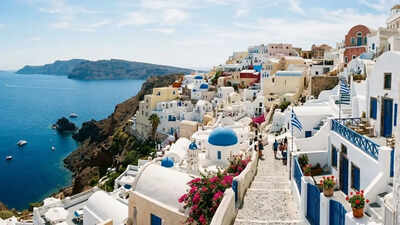
The famous blue and white houses of the Cyclades are a great example of functional design. This aesthetic was born of necessity, not artistic choice. Although today’s travelers may think these colors honor the Greek flag or reflect the Aegean Sea, their true origins lie in survival needs.
This architectural style developed due to several factors: health problems, harsh Mediterranean weather, and important political decisions of the 20th century. As reported in Alexis, limestone’s antimicrobial properties helped fight cholera outbreaks, while white paint kept the homes cool under the hot sun. These islands show how practical solutions to difficult circumstances have turned into an iconic cultural emblem recognized around the world.
A deadly cholera outbreak in 1938 turned Greece’s islands white and blue
The white walls of the Greek islands came from the struggle against disease. In the late 1930s, Greece dealt with a terrible cholera outbreak. As noted in Elexis, in 1938, the Ioannis Metaxas administration issued a national order. The islanders had to use lime to paint their homes. Lime contains calcium hydroxide which works well as a disinfectant; It covered surfaces and stopped the spread of bacteria. This transformation transformed the islands from their original earth-toned, volcanic stone appearance to the bright white landscape we know today.
How white walls act as a natural air conditioner
Aside from health, white acts as a basic but very effective air conditioning system. In areas where temperatures rise sharply in summer, white walls bounce a lot of the sun’s rays. Scientific studies confirm that these surfaces reflect sunlight and prevent the thick stone walls from absorbing heat and sending it into the rooms. This keeps the inside cool when it’s hot outside, as stated by Elxis.
Why was it? Lulaki powder Locals’ choice
Historically, people chose a certain blue color for their doors and windows because it was the cheapest option available to them.
Locals had access to the famous blue washing powder “Lulaki”. They mixed it with lime and ended up with a bright blue paint that everyone can afford. Then, when the military took power in 1967, they decided that this color would be everywhere on the islands. It has become a habit to make all buildings look the same to create a sense of national unity and pride through architecture.
Strict rules of modern Greek construction
Today, choosing blue and white isn’t just about style or health concerns; It is mandatory by law. As mentioned in Elexis, the Greek government eventually realized that this distinctive color scheme had become an important symbol for attracting tourists. To protect the islands’ cultural heritage and maintain architectural consistency, they introduced regulations. Cyclades building codes now strictly enforce these colors.
This ensures that any new buildings or renovations maintain the architectural harmony recognized throughout the world.