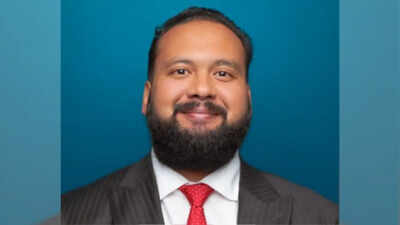
An Indian-American political strategist has launched a new civic data initiative in the US ahead of the 2026 midterm elections. It has been developed to map and better understand the political presence of the Indian-American community.Anang Mittal is a business communications strategist on Capitol Hill. He introduced the platform last month. This initiative is called the American Indian Voter Atlas. It is a nonpartisan tool that collects and displays information about Indian American voters and their political influence across the United States.
What the program does
The platform aims to be a public-facing resource. It is not associated with any political party and focuses on compiling data from federal, state, and local sources into one accessible dashboard.
The project’s website, Voratlas.io, offers information to help people learn how American Indians are represented across the United States. It displays population trends, voting activity, and election data that are typically spread across different government sources.Indian Americans are among the fastest-growing indigenous immigrant communities in the United States, with more than 4 million people of Indian descent now living in the country, according to Census estimates.
Over the past two decades, members of the American Indian community have become more visible in public life, with many serving at the local, state, and federal levels of government.
Does the atlas show political bias?
Mittal said the Voter Atlas does not provide policy recommendations or predictions beyond what the data show. It ensures that the tool is designed to be neutral and bipartisan, and aims to debunk misinformation and combat racist rhetoric by providing factual, publicly available civic data.Such tools may be useful to journalists, researchers, and policymakers interested in understanding American Indian voter behavior and participation. The platform comes as data-driven tools play an increasing role in elections, helping campaigns and analysts more accurately target outreach and understand voter demographics.